

By Dr. D.K. Giri
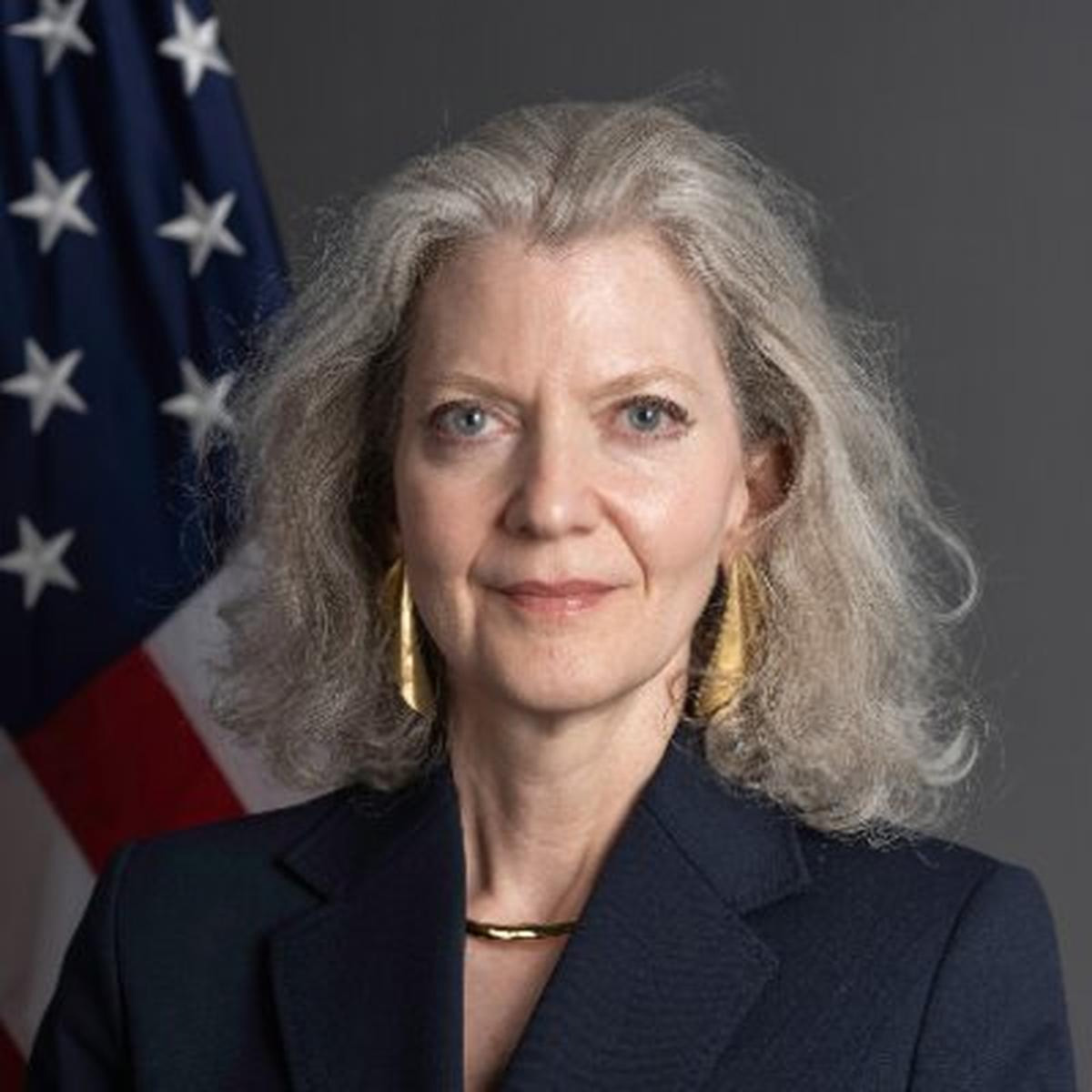
US Under Secretary of State for Political Affairs, Allison Hooker’s visit to India from 7-11 December, day after Russian President Putin left raised the antenna of observers of India-America bilateralism. The purpose and timing of her visit could be interpreted in two ways. One, despite the ‘trade face-off’ between the two countries, Hooker’s visit could be an attempt to keep the political and strategic ties going.
Second, coming immediately, day after, Putin departed could also mean that President Donald Trump was concerned about Putin’s footprint in India at a time when he is trying to somehow broker a ceasefire between Russia and Ukraine, and save his face. He had declared in his election campaign that, having got elected, he would end the said war in 24 hours. That may have been an electioneering gimmick, but the world will hardly forget that he has not made any tangible breakthrough in his mediation, let alone doing it in a day.
Admitting that reading Trump’s mind is not easy for anyone, including perhaps himself; he is equally concerned about China’s growing military might and capabilities which now rival those of the United States. The key driver of strategic convergence between India and the United States has been China’s increasingly asserting military posture. Not only that, Beijingis making sporadic incursions into the disputed India-China border as well as China’s “largest naval build-up in history, expanding network of dual-ports across the Indo-Pacific as part of broader strategic ambitions, China’s growing military, economic and diplomatic footprints throughout Asia and beyond.
In the first term, Donald Trump focussed his attention on China as the main rival. However, there was no Russia-Ukraine war at that time. That is how Quad initiative was taken to counter China. Quad became the main vehicle for deepening India-America relations improving cooperation in defence interoperability, intelligence sharing, joint military exercises, and India’s integration into US-led initiatives on space cooperation, critical minerals, semiconductor supply chains, and artificial intelligence. So, it is understandable that after finishing ‘business’ in New Delhi, Under Secretary Hooker will visit the Indian Space Research Organisation (ISRO) in Bengaluru.
In fact, the US-India partnership has steadily evolved since the late 1990s after the revocation of sanctions following India’s nuclear test, and the landmark 2008 Civil Nuclear Agreement. Since then, bilateral cooperation has expanded across defence, technology, energy and regional security with both countries increasingly aligning their strategic perspective and approach to the Indo-Pacific.
This relationship was based on mutually beneficial economic opportunities in both countries and strategic coordination, particularly in the Indo-Pacific in the wake of China’s rise and increasing assertiveness. The latest was the bilateral agenda initiated by Donald Trump and Prime Minister NarendraModi during their 2025 meeting. The agenda included cooperation through the Quad, in MiddleEast initiatives and wider global affairs.
February 2025 agenda was meant essentially to consolidate and taking forward three decades of deepening alignment between Washington and New Delhi. All this was carefully built on bipartisan consensus in both countries and now being torpedoed by Donald Trump’s u-turn on India – imposing high tariff on India upto 50 per cent, now threatening to put tariff on Indian rice. And worse, for India, Washington’s renewed engagement with Pakistan especially Trump’s outreach to Pakistan’s military leadership.
Let us assess whether US Under Secretary’s visit will lend a thaw in the currently strained relationship between the two countries. Her visit ‘was focused on advancing US-India strategic partnership, deepening economic and commercial ties including enhancing American exports and fostering collaboration in emerging technologies including artificial intelligence and space cooperation’. Hooker met the senior Indian officials to discuss regional security, economic cooperation and shared priorities in the Indo-Pacific, including through the Foreign Office Consultationswith Foreign Secretary VikramMisri.
According to the US perspective, Under Secretary Hooker’s visit marks another step forward in progressing President Trump’s priorities for a strong US-India partnership and a free and an open Indo-Pacific. From US Administration point of view, it sounds optimistic. The growing relationship between two countries was indeed one of the most consequential partnerships of the 21st century.
But New Delhi has been cautious and calibrated in its approach towards Washington, mainly owing to Trump’s capricious behaviour and his surprising re-embrace of Pakistan, which is a terrorist hub of the world. The same Donald Trump had derided Pakistan in his first term saying that Islamabad took lots of dollars and double-crossed Washington.
In Bengaluru, Hooker discussed with ISRO’s ‘dynamic space leaders’, and with energy and technology sectors to foster innovation in US-India research partnerships exploring further opportunities for broader cooperation. The Under Secretary stated that United States’ attempt was to deepen cooperation with India in multiple sectors while supporting India’s rise as a technology leader. She expressed appreciation for Foreign Secretary’s continued partnership as both the United States and India ‘pursue shared priorities that deliver tangible benefits for the American people and complement India’s national objectives’.
Overlapping US Under Secretary’s five-day visit (7-11 December), the new US Deputy Trade Representative, Rick Switzer arrives in India on 10th, at the time of writing of this piece, and will stay upto 11 December. From the US Embassy briefings, it appears that Switzer’s visit is to familiarise himself with Indian Central Government officials. He is scheduled to meet several of them as per the statement of the External Affairs Ministry Spokesperson RandhirJaiswal, who also said to the media, “As you are aware, both governments remain engaged with a view to concluding a fair, balanced and mutually beneficial multi-sectoral, bilateral trade agreement”.
On the day of arrival of US Under Secretary on 7 December, New Delhi’s viewpoint was articulated by External Affairs Minister S. Jaishankar, “Trump Administration’s functioning was radically different from his predecessors; every government and every American President has their own way of approaching the world”. However, he expressed confidence that a Balanced Bilateral Trade agreement (BTA) could be secured.
According to him, the potential trade deal could materialise ‘soon’ while reiterating India’s red lines on negotiations which were meant to safeguard the interests of farmers, workers and small businesses. Jaishankar appreciated that US Under Secretary’s visit was happily coinciding with joining of hands between Delhi and Washington to cooperate on counter terrorism. He added that Quad grouping joined in Delhi to work on ways to expand cooperation, combat terrorism under the framework of Terms of Reference among Quad members.
Finally, it is interesting to note that DhruvaJaishankar (son of S. Jaishankar), a leading foreign policy expert and the Executive Director of the Observer Research Foundation (ORF), America, submitted a statement to the US House Foreign Affairs Committee having a key congressional hearing on Wednesday, 10 December. His statement highlighted the growing concerns that disputes with India suddenly stirred up by Donald Trump could undermine the growing bilateral partnership between the two countries. New Delhi is pursuing a wait-and- watch policy towards America. —INFA
 Follow our WhatsApp channel
