

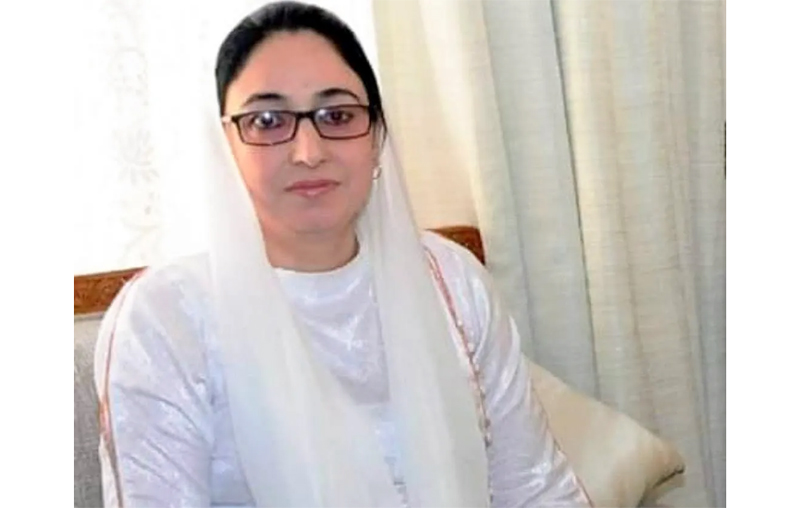
Excelsior Correspondent
SRINAGAR, Apr 5: Jammu & Kashmir Waqf Board Chairperson Dr Syed Darakhshan Andrabi today said that the recent judgment of the High Court of J&K and Ladakh on the Kishwar shrines has reinforced the legal framework governing Waqf properties and set a precedent for similar cases.
The court has brought to a close a decades-old dispute over the ownership and management of the shrines of Shah Farid-ud-Din Ziyarat and Shah Asrar-ud-Din Ziyarat in Kishtwar, ruling that these are Waqf properties and not private ancestral estates.
In a detailed judgment, Justice Sanjay Dhar held that claims of hereditary ownership by individuals managing the shrines could not be sustained in law. The court observed that the properties fall under the category of “Waqf by user”, as their long-standing religious and charitable use is sufficient to confer Waqf status even without formal dedication.
Commenting on the verdict, Dr Andrabi said the ruling has clarified the position that continuous use of religious institutions for pious and charitable purposes brings them within the ambit of Waqf law. She added that the court’s reliance on revenue records, which consistently describe the shrines as Waqf properties, further strengthens this legal interpretation.
She also noted that the court observed challenges to earlier Waqf laws had become infructuous following their repeal and replacement by the Waqf Act 1995.
Dr Andrabi said the judgment is likely to influence similar disputes, particularly in cases where properties used for religious purposes are claimed on hereditary grounds by individuals.
 Follow our WhatsApp channel
