

Excelsior Correspondent
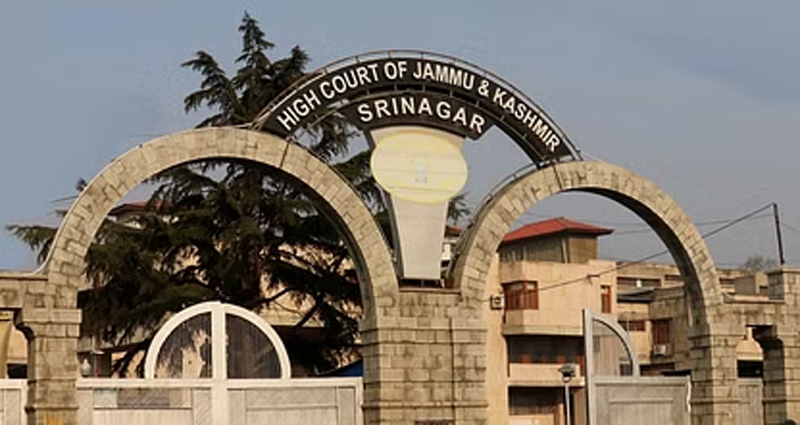
SRINAGAR, July 18: The High Court of Jammu & Kashmir and Ladakh has dismissed a writ petition filed by the Srinagar International Airport Taxi Stand Driver’s Union, ruling that the petition was legally untenable and procedurally flawed.
The judgment was delivered by Justice Wasim Sadiq Nargal while hearing a petition filed by Union through its President Mohd Ashraf Lone. The petitioner had sought the court’s intervention to restrain unauthorized and unlicensed taxi operators from operating within the airport premises, alleging breach of a structured licensing regime under which the petitioner had secured operating rights.
The Union, represented by Advocate Danish Majid Dar, argued that unverified and unlicensed cab operators were allowed to operate in the airport’s arrival and pickup zones and these operators bypassed the security, verification and financial obligations imposed on the licensed taxi service.
It was submitted that influx of unauthorized cabs since November 2024 had caused substantial commercial losses and diluted the exclusive rights under the license agreement and despite written representations to the Airport Director in February 2025, no corrective measures were taken.
After hearing both the sides, Justice Wasim Sadiq Nargal rejected the petition citing multiple legal and procedural grounds. “The petitioner failed to establish any actual interference in the licensed space or any concrete infraction of the lease terms. Mere apprehensions were insufficient to sustain a writ petition”, the High Court said.
Justice Nargal noted that the reliefs sought by the petitioner went beyond the rights and obligations defined in the license agreement. “The contract permitted the Authority to issue additional licenses and relocate space without challenge”, the High Court said, adding “the petitioner failed to implead any of the unlicensed taxi operators as party respondents”.
Citing the Supreme Court’s ruling in Moreshar Yadaorao Mahajan Versus Vyankatesh Sitaram Bhedi, the High Court held the petition was fatally flawed due to non-joinder of necessary parties.
“Clause 29 of the license agreement provided a clear dispute redressal mechanism-first to a Dispute Resolution Committee (DRC), and subsequently to arbitration. However, the petitioner bypassed this contractual route, which was binding and enforceable”, the High Court said, adding “since the issue arose purely from a private contract with no statutory or constitutional violation, the writ jurisdiction under Article 226 was not attracted”.
The High Court also relied on the Supreme Court’s judgment in BPCL Versus P. Soundarya (2025), emphasizing that courts should refrain from interfering in contractual and tender matters unless exceptional circumstances exist. With these observations, the High Court held that the petition was “utterly misconceived and devoid of any merit,” and dismissed it in limine (at the threshold).
 Follow our WhatsApp channel
