

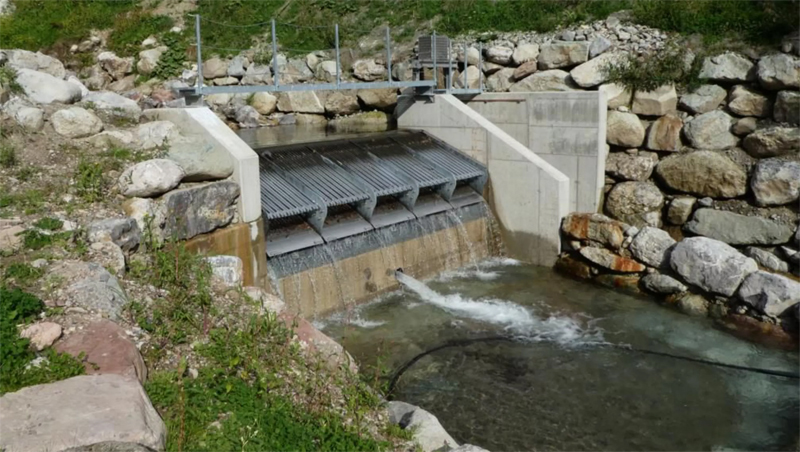
The issuance of Letters of Intent for 20 small hydroelectric projects across the Union Territory marks more than just another administrative milestone for Jammu & Kashmir-it signals a decisive shift toward a pragmatic and self-sustaining energy strategy. For decades, J&K has paradoxically remained power-deficient despite being endowed with one of India’s richest hydroelectric potentials. The new wave of small hydro projects, ranging from 0.70 MW to 2 MW, may appear modest in scale but carries profound implications for the UT’s economic, administrative, and developmental trajectory. The significance of these projects lies in their feasibility and financial model. J&K is in no position to fund mega hydropower projects independently-neither fiscally nor institutionally. Large dams and multi-hundred-MW projects require massive capital investment, extended gestation periods and complex geological studies. Historically, the UT has relied on central agencies such as NHPC to tap its hydro potential, often receiving only a marginal share of the generated power. This has entrenched J&K’s dependence on expensive power purchases from the central grid, further straining its financial resources.
In contrast, small hydro projects fit perfectly into J&K’s developmental realities. Their relatively low capital requirement makes them attractive to private players, as seen in the Swiss Challenge Method-driven bidding process, where originators were given the first right of refusal. The Independent Power Producer model ensures that investment, construction, risk management, and timely completion responsibilities rest primarily with private developers-not the cash-strapped UT Government. This alone makes the small hydro strategy both realistic and forward-looking.
However, the prescribed seven-year timeline for project completion is excessively stretched, given that these are micro- and mini-hydropower schemes with limited capacity. The Government’s assurances on facilitating land acquisition, statutory clearances, and road connectivity should ideally compress the timeline significantly. Timely completion is not merely a contractual expectation-it is central to restoring public confidence in JAKEDA’s implementation capacity and in the broader Draft Hydro Power Policy 2025, of which these 20 projects serve as a real-world testing ground.
If executed efficiently, these projects can unlock a cascade of benefits. Small hydro projects require minimal submergence, cause negligible ecological disturbance, and pose little geological risk-especially compared to mega hydro stations in seismically sensitive Himalayan terrain. Their modular nature means that even if one project suffers a breakdown, the grid remains largely unaffected. Moreover, small hydro installations can be commissioned swiftly, creating distributed clean-energy pockets across J&K’s remote and hilly districts. For far-flung rural areas such as Kishtwar, Reasi, Anantnag, Doda, and Pulwama-the sites of the proposed projects-the economic impact could be transformative. Construction activity will create local employment and spur demand for logistics, earthwork, machinery, and ancillary services. Once operational, these projects will provide a stable electricity supply, directly improving agricultural processing, cold storage, rural industries, and digital connectivity. Reliable local power will also make these areas more attractive for private investment, setting the foundation for decentralised economic development.
Most critically, these 20 projects represent the first serious attempt to decentralise hydropower generation in J&K under a clearly articulated policy framework. Their success-or failure-will heavily influence investor sentiment for the forthcoming Hydro Power Policy 2025. If JAKEDA demonstrates administrative clarity, timely facilitation, and transparent monitoring, it can open the floodgates for private investment in dozens of similar projects across the UT. For an energy-deficient region, such a breakthrough could be nothing short of revolutionary. Yet challenges remain. Mountainous regions are vulnerable to cloudbursts, flash floods, and monsoon-induced landslides. Adequate geological surveys, flood protection, and environmental safeguards must be embedded into every stage of execution. Ultimately, the Chief Minister’s push for micro and small hydro is not just a policy preference-it is an economic necessity. J&K cannot hope to achieve energy security, industrial growth, or fiscal stability without strengthening indigenous power generation. Small hydro offers the UT its best chance to chart a realistic path toward self-reliance. These 20 projects may well become the spark that ignites a new era in J&K’s power sector-one where the UT finally begins to harness the energy potential it has long possessed but rarely utilised.
 Follow our WhatsApp channel
