

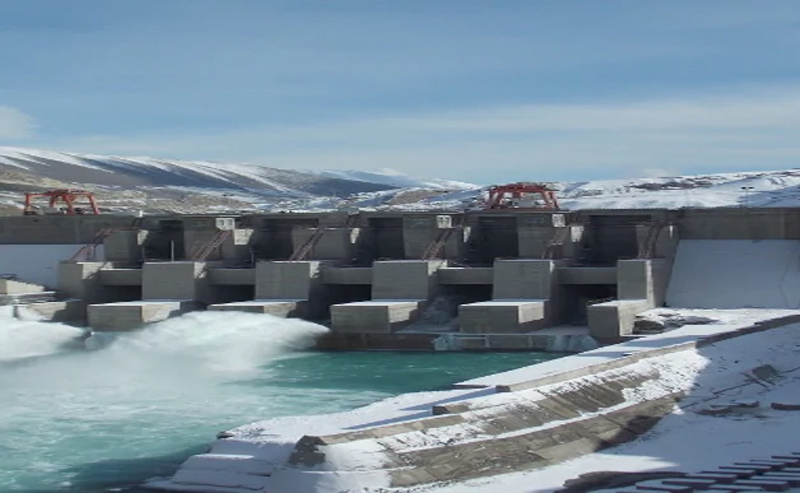
The UT of Jammu and Kashmir, endowed with an estimated hydropower potential of 18,000 MW, finds itself in the paradoxical position of being unable to harness the full potential of this immense resource. Currently, the UT has managed to tap into only 3,540.15 MW of this potential, leaving the bulk of it untapped, despite decades of efforts. This stark underutilisation of hydropower not only points to inefficiencies but also exacerbates the ongoing power crisis that plagues the region. The hydropower potential is mainly from three key river basins – Chenab, Jhelum, and Ravi. Yet, even in these identified basins, the harnessed power falls short. The Chenab basin, which holds 76 percent of the total hydropower potential, currently only contributes 2,033.05 MW. The Jhelum basin contributes 1,378.1 MW, and the Ravi basin only a meagre 129 MW. These figures illustrate a stark underachievement, one that has profound implications for J&K’s energy security, economic development, and long-term sustainability.
The reasons for this underperformance are multifaceted, involving Pakistani hurdles in the shape of Indus Water Treaty and our own political, bureaucratic, technical, and environmental factors. Despite the clear potential, progress has been slow, with several key projects either delayed or yet to be completed. One of the most critical issues is the slow pace of execution. There are currently 15 projects in progress with 7,768 MW of capacity. However, these too face significant delays. The total capacity of 3,063.5 MW from six ongoing projects is far from sufficient to meet the power demands of the region. Adding to this, two projects of 141 MW are still in the award stage, and seven more projects, collectively worth 4,563.5 MW, are still in the DPR or clearance stage.
The Chenab basin has seen some developments through joint ventures. These joint ventures are constructing projects of 3,014 MW, which are expected to be completed by 2027. However, the fact that this vast resource has not been utilised more effectively until now raises questions about the priorities and governance structures that have shaped the hydropower landscape in the region. Furthermore, the region’s power infrastructure continues to struggle with outdated technology, frequent disruptions, and power shortages. As a result, J&K is heavily dependent on power imports from neighbouring states, contributing to financial and logistical challenges. The lack of reliable and sustainable power generation not only affects domestic consumption but also hampers industrial development, tourism, and overall economic growth in a region that has long faced terrorism and economic challenges.
To rectify this, a more coordinated and aggressive approach is needed. J&K must focus on fast-tracking the approval and implementation processes for the ongoing and upcoming projects. The projects under DPR and clearance stages should be expedited. Moreover, efforts should be made to streamline the approval processes, reduce bureaucratic red tape, and ensure that the technical, environmental, and financial barriers are addressed promptly. Public-private partnerships should be encouraged more vigorously, as these collaborations have the potential to bring in much-needed investment and expertise to fast-track development. The success of existing joint ventures like CVPPPL and RHPCL could be emulated in other basins to ensure the maximisation of the region’s hydropower potential. Additionally, the 2021 MoU with NHPC, which includes the development of 1,856 MW Sawalkote and 258 MW Dulhasti projects on a BOOT basis, should be closely monitored to ensure it bears fruit within the agreed timelines.
The power sector in J&K needs a major overhaul in terms of governance and policy. Political will, coupled with strong administrative support, is crucial to overcoming the long-standing hurdles in hydropower development. Clear strategies for integrating hydropower generation with the region’s broader economic and infrastructure plans are necessary to ensure that the full potential of this resource is realised. A collective action to harness the vast hydropower potential that lies dormant is the need of the hour to ensure a brighter, more energy-secure future for the region.
 Follow our WhatsApp channel
