

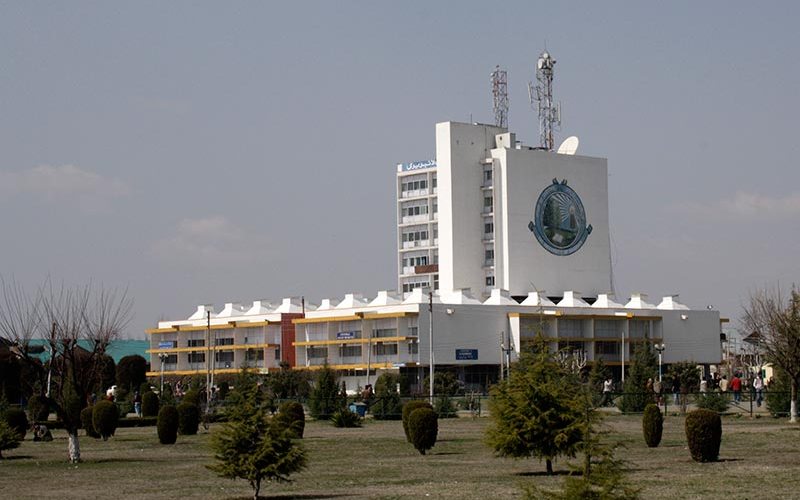
The decision to designate the University of Kashmir’s Persian Department as a Gyan Bharatam Cluster Centre marks a quiet but momentous intervention in the preservation of Jammu and Kashmir’s civilisational memory. In a region layered with centuries of intellectual, spiritual and cultural traditions, conserving manuscripts is not merely an academic exercise; it is an act of safeguarding identity itself. Few regions in the subcontinent have witnessed such a rich interplay of cultures, faiths and languages-Sharda, Sanskrit, Persian, Arabic, Pahari and several local tongues-many of which have faded from everyday use. Manuscripts written in these scripts are often the only surviving witnesses to social practices, philosophical debates, scientific knowledge and literary traditions from eras when no electronic or digital media existed. To dismiss them as irrelevant relics is to underestimate their value as primary historical sources that shape our understanding of who we were and how we evolved.
The challenge of conservation, however, is daunting. Manuscripts in J&K are scattered across Government repositories, religious institutions, shrines, Khanqahs, Gurudwaras, temples and private households. Individuals or religious bodies rarely possess the technical expertise, financial capacity or scientific infrastructure required for preservation. Repeated natural calamities-most notably the devastating floods of 2014-have already inflicted irreparable damage. In this context, the Gyan Bharatam initiative entrusted to Kashmir University assumes exceptional significance. By establishing a centre of excellence for nomination, conservation and digitisation, KU offers the region a structured, credible and long-term mechanism to rescue its written heritage. The Persian Department’s inclusive approach-extending beyond Persian to Sharda and Sanskrit-deserves particular appreciation. It reflects an understanding that Kashmir’s heritage is plural, layered and interconnected. Equally commendable is the emphasis on capacity-building through certificate courses and training programmes that engage youth, transforming preservation from a niche scholarly pursuit into a shared societal responsibility.
Digitisation further multiplies the impact of this initiative. It not only protects fragile originals from physical decay but also democratises access, allowing scholars and future generations to engage with texts that would otherwise remain locked away or unreadable. Translating Sharda manuscripts into contemporary languages is especially crucial, bridging the gap between past knowledge and present understanding. Government bodies, religious institutions and private custodians must come forward to collaborate to transform Jammu and Kashmir into one of the nation’s richest repositories of preserved and digitised manuscripts-a living archive of India’s intellectual and cultural continuum.
 Follow our WhatsApp channel
