

Dr Ashwani Mahajan
After a long period (about five years) of first continuously increasing, and then high repo rate, the Reserve Bank of India has for the first time cut the same by 0.25 percent points, from 6.5 percent to 6.25. This decision was taken in the recently concluded Monetary Policy Committee (MPC) meeting. Experts believe that this will make borrowing cheaper, which will reduce EMIs on housing and other types of borrowings, and will boost housing and consumer demand. At the same time, borrowing for business will also become cheaper, which will accelerate growth.
Membership Also Makes A Difference
Recently, after the completion of the tenure of three members of the Monetary Policy Committee (MPC), the Government has appointed three new members in the MPC. Although it is not known who said what, it seems that along with the new members, some old members have also supported the reduction in the repo rate. It is noteworthy that in the last two MPC meetings, only two external members Ashima Goyal and Jayant Verma voted in favour of rate cuts, arguing that RBI’s insistence on keeping rates high has been harming growth. The arrival of new members in the MPC cleared the path for rate cuts. This time, due to a slight decrease in inflation, the repo rate has been reduced by 0.25 percentage points. With indications and estimates of low inflation in the future, we can expect further cuts in the repo rate; which will boost the economy by expanding demand.
What were the other obstacles in reducing the interest rate?
Change in policy interest rates or maintaining status quo, is a major dimension of the Reserve Bank’s monetary policy. Policy interest rates play an important role in the economy around the world. These include bank rate, repo rate, reverse repo rate, etc. In 2016, the Government decided that the interest rate will be determined by the Monetary Policy Committee, which has 6 members apart from the Governor of the Reserve Bank. In case of a tie, the vote of the Governor of the Reserve Bank is decisive. The Monetary Policy Committee came into existence for the first time on 27 June 2016. It was decided that Monetary Policy Committee would determine the policy interest rates, keeping in mind the inflation rate in the country. It was decided that the target should be kept to keep the inflation rate within the limit of 4 percent plus minus 2 percent. In technical terms this is called ‘inflation targeting’.
Generally, the Reserve Bank of India’s MPC announces the policy rates of interest based on its perception about inflation. But along with this, it also has to keep an eye on the demand and supply of credit in the economy. In this case, the main objective of the Reserve Bank of India is to prevent inflation from going out of its limit. Although inflation targeting started only from 2016; but before 2014, the Reserve Bank of India had been using the Wholesale Price Index to target inflation. In 2014, when Raghuram Rajan was the Governor of the Reserve Bank of India, a committee headed by Urjit Patel, the then Deputy Governor of the Reserve Bank of India, recommended the use of Consumer Price Index instead of Wholesale Price Index to target inflation. Notably, the weightage of food products in the Consumer Price Index is 46 percent, while the weightage of food products (including manufactured food products) in the Wholesale Price Index is only 30 percent. That is, it can be said that the use of Consumer Price Index, in which food products have a higher weightage, is now being used by the Monetary Policy Committee, mandatorily.
The NDA Government led by Narendra Modi inherited high inflation. Both the Consumer Price Index and the Wholesale Price Index were rising rapidly. Due to high inflation, the repo rate remained significantly high between 7.25 and 8.5 percent in the last 3-4 years of the UPA Government (July 2011 to 2014). The inherited repo rate of 8.00 percent was brought down to 6.00 percent by August 2017 in the initial years of the NDA Government, with the cooling down of inflation. But after the formation of the Monetary Policy Committee in 2016, the repo rate based on the CPI inflation target started increasing despite the reduction in the Wholesale Price Index based inflation. It remained between 6.00 and 6.5 percent till June 2019, fluctuating slightly. In the later years of the NDA Government, CPI also declined significantly, and remained near 3 percent, with the repo rate barely remaining at a low of 4.00 percent for a long period between May 2020 and May 2022.
But thereafter, due to high inflation, especially CPI inflation, the repo rate rose steadily to 6.5 percent by February 2023 and remained at this level till the last Monetary Policy Committee meeting. Although wholesale inflation also came down several times during this period, the Monetary Policy Committee did not reduce the repo rate due to the CPI inflation targeting monetary policy.
Differing Opinions on Inflation Targeting Monetary Policy
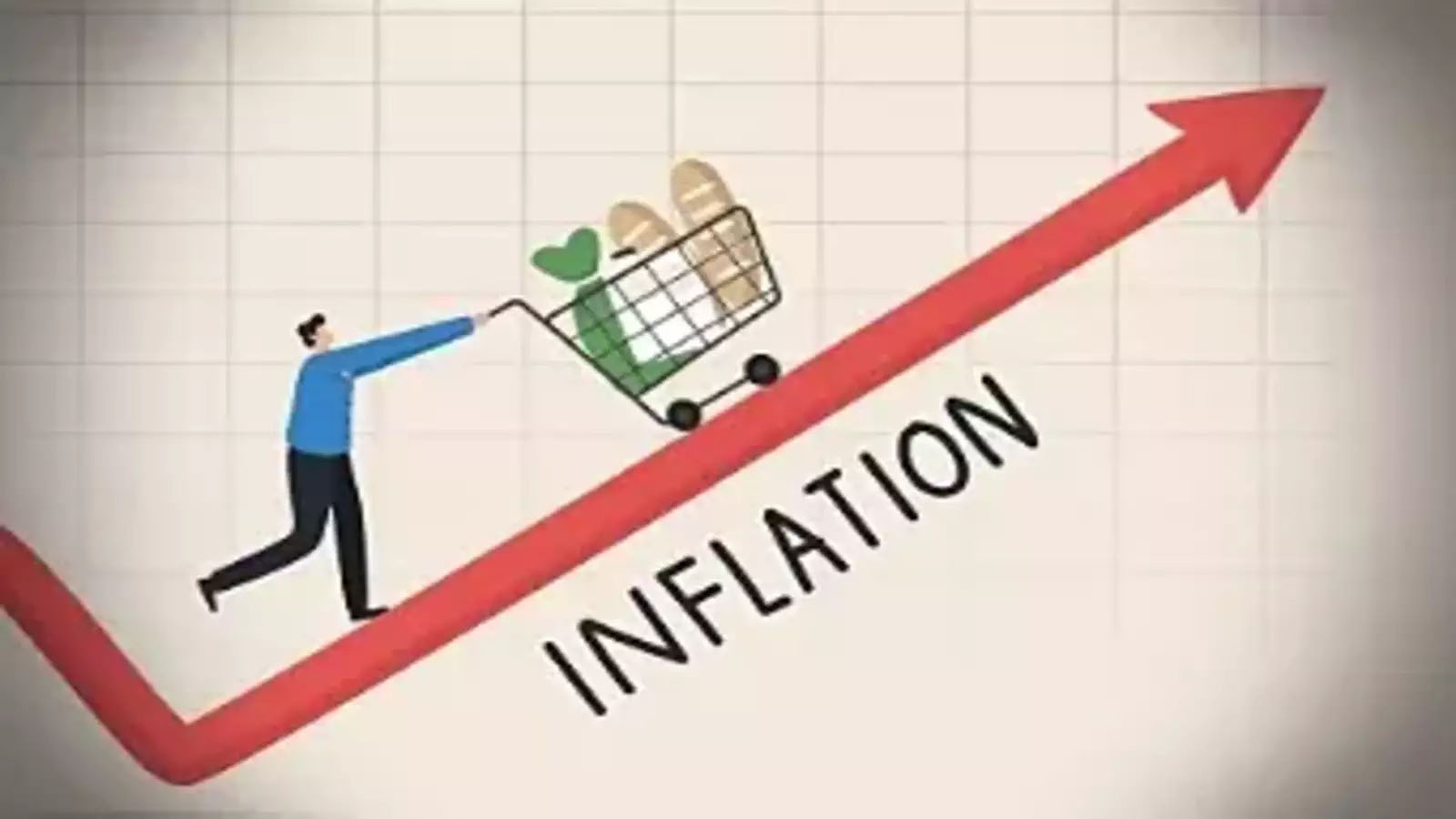
Many economists have now started questioning the CPI based inflation targeting. While it is important to keep inflation under control to safeguard the interests of the masses; as it affects the poor the most, the suitability of CPI or even WPI as the anchors for inflation targeting is being questioned.
Firstly, the idea of inflation targeting is imported from the West. We understand that the objectives of monetary policy in a developing country like India include growth, employment and upliftment of the poor and the underprivileged. No monetary policy is complete without addressing these objectives. Any monetary policy that is devoid of these concerns is unbalanced. Therefore, monetary policy without keeping the growth objective in mind is certainly incomplete.
Secondly, if we see, there have been many occasions when despite the MPC strictly following CPI based inflation targeting, inflation has not only remained uncontrolled but also crossed the red mark of 6 per cent on many occasions. This proves the fact that CPI is not a good anchor, as compared to WPI. We understand that CPI is heavily influenced by food prices. Food prices move more due to seasonal factors and not due to the fundamentals of the economy in general. There have been many occasions when onion and tomato prices have been the major drivers of inflation. Such cases are dealt with by direct measures and not by indirect measures like monetary policy. Therefore, if we try to target inflation based on seasonal factors and fix interest rate policy accordingly, we will be making a mistake.
Third, while CPI alone does not seem to be an appropriate anchor for inflation targeting, the Wholesale Price Index too is not an appropriate target. Therefore, some suggest that there should be a combination or a mix of these two indices.
Is CPI-based inflation targeting an agenda of the International Monetary Fund?
While developing countries are debating over inflation targeting, there is a debate not only about the necessity of inflation targeting, IMF has been pushing for CPI anchored inflation targeting monetary policy for developing countries. This is something that must be objected to.
(The author is Ex-Professor, PGDAV College, University of Delhi)
 Follow our WhatsApp channel
