

‘Tourists sometimes forced into uncomfortable situations’
*578 illegal constructions detected at destinations
Excelsior Correspondent
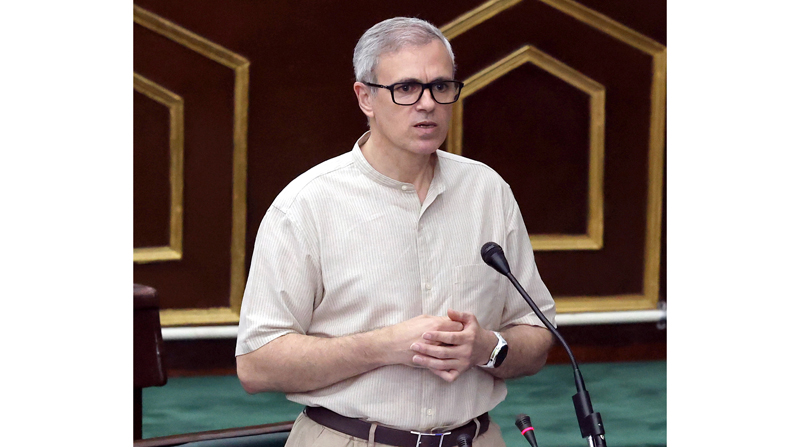
JAMMU, Apr 1: Chief Minister Omar Abdullah today said harassment of tourists in Jammu and Kashmir is not widespread but admitted that sometimes they are forced into uncomfortable situations on being asked to purchase warm clothing unnecessarily, overcharging and being approached aggressively by the service providers. He said the Government will adopt a Rajasthan-style behavioural training model for tourism stakeholders to improve the experience of holidaymakers visiting J&K to ensure that they repeatedly come to the UT.
Follow the Daily Excelsior channel on WhatsApp
Replying to written questions followed by supplementaries raised by Congress MLA Irfan Hafiz Lone and National Conference legislator Tanvir Sadiq, Omar, who holds charge of the Tourism Department, said the tourists whether they come to Kashmir, Shri Mata Vaishno Devi and Shri Amarnath shrines should be such that they come to the UT again and again.
“If experience of the tourists is good, they will come again and again,” he said but added that tourists are sometimes forced into uncomfortable situations.
“In some places, visitors are made to rent heavy winter clothing like long coats and boots even in high temperatures, leaving them uncomfortable. In other instances, tourists are aggressively approached by service providers – such as pony operators – who insist they use their services, even when unnecessary. Sometimes, they are quoted one price on display boards but later asked to pay more. This coercion and overcharging should be shunned to make the tourists visit again,” Omar said.
Asserting that harassment of tourists is not widespread, he said even a single incident is unacceptable as it damages the overall tourist experience. From January 2025 till date, 508 complaints have been received, of which 413 have been disposed of, he added.
The Chief Minister said the Government is working on a program inspired by a successful initiative in Rajasthan, where behavioral science-based training – developed in collaboration with IIT – was used to improve the conduct of tourism stakeholders.
“We want to ensure that such negative tendencies (harassment of tourists) do not grow, and that we provide a better experience to tourists so they return happily,” he said, adding that training and capacity-building programmes are regularly conducted for tourism stakeholders, including hotel staff, guides, Shikara operators, taxi drivers, and vendors.
Omar said a proposal for mandatory certification of stakeholders is also under consideration. Click here to watch video
Maintaining that addressing these issues is not solely the Government’s responsibility, he said elected representatives from tourist areas like Gulmarg, Sonamarg, Pahalgam and others must work alongside the Government and all stakeholders in the tourism sector.
He stressed that maintaining cleanliness at tourist destinations is critical, as poor hygiene discourages repeat visits.
“Creating employment opportunities for youth through the tourism sector remains a priority, but quality will not be compromised,” he said and clarified that applications pending in Gulmarg hill resort have not been delayed due to procedural lapses, but because the number of existing permits is sufficient in view of the current tourist inflow.
Omar said it aims to ensure that permits are not concentrated in the hands of a single individual or family as it has often been observed that one person secures multiple permits across activities – such as pony rides, ATVs, and guiding services – resulting in limited distribution of income.
He said that as tourist arrivals in Gulmarg increase, the number of registrations and permits will also be expanded accordingly.
Meanwhile, in written reply to another question of PDP MLA Waheed-ur-Rehman Parra, Omar said the Tourism Development Authorities granted 807 building permissions in the last three years while detecting 578 illegal constructions in J&K.
He said that 245 permissions were issued in 2023-24, 147 in 2024-25, and 415 in 2025-26.
He further provided a category-wise breakdown, stating that 544 permissions were granted for residential houses, 121 for commercial buildings, 26 for hotels, 14 for huts, and two for guesthouses.
“The registrations for homestays are handled separately by the concerned Directorates of Tourism in Jammu and Kashmir. As of now, 2,613 homestays have been registered with a total bed capacity of 19,328,” he added.
Regarding illegal and unauthorised constructions, Omar stated that multiple cases have been identified across key tourist destinations, with action taken including sealing, demolition, and penalties.
According to official data, 578 illegal constructions have been detected in tourist destinations in Jammu and Kashmir.
In Gulmarg, 21 illegal structures were identified, of which 20 were sealed and one demolished. In Pahalgam, 28 illegal constructions were reported, with 13 sealed and action underway in the remaining cases.
Patnitop saw demolition of 15 illegal structures, while several others were stopped at the initial stage, the CM said.
Similarly, four unauthorised constructions were penalised in Verinag, while in Doodhpathri, 147 illegal constructions were identified with notices issued and FIRs registered, he said.
In Sonamarg, five illegal constructions were detected, and 358 notices were served in Bhaderwah.
Omar informed that GIS-based inventories of authorised constructions are being maintained in tourist areas, including Sonamarg, Gulmarg, and Pahalgam, where approved Master Plans are operational.
In other areas, geo-coordinates of proposed assets are being collected before granting permissions to ensure monitoring and regulatory oversight, he said.
Regarding audits, the CM said that a special audit of illegal constructions in Pahalgam was conducted by the Comptroller and Auditor General (CAG) in 2025, and its report is awaited. In Sonamarg, audit and vigilance inquiries have been carried out, though findings are yet to be formally shared with the department, he added.
 Follow our WhatsApp channel
