

Interest Subvention Scheme to continue
NEW DELHI, May 28: The Centre on Wednesday raised the Minimum Support Price (MSP) for paddy by 3 per cent (Rs 69) to Rs 2,369 per quintal, while up to 9 per cent rise in pulses and oilseeds rates for the 2025-26 kharif marketing season.
Follow the Daily Excelsior channel on WhatsApp
The Agriculture Ministry’s proposal on MSP for the new kharif season was approved in the meeting of the Cabinet Committee on Economic Affairs (CCEA) chaired by Prime Minister Narendra Modi.
The announcement comes amid southwest monsoon reaching earlier than usual, giving a boost to the sowing of kharif crops, which contribute over 50 per cent of India’s total annual foodgrain production.
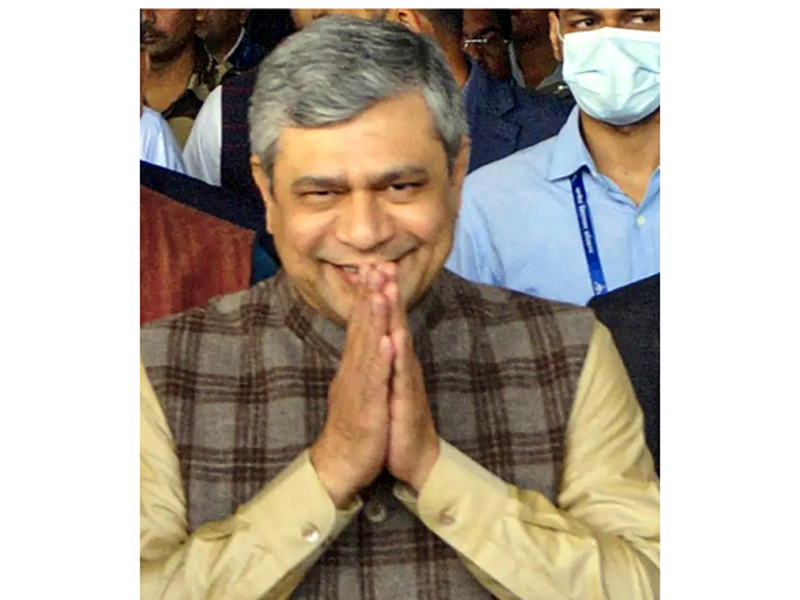
Briefing media after the Cabinet meeting, Information and Broadcasting Minister Ashwini Vaishnaw said, “Two key decisions were taken for the welfare of farmers — kharif crops MSP and interest subvention scheme.”
In the last 10-11 years, there has been a “massive” increase in the support price of 14 kharif crops in line with the recommendation of the Commission for Agricultural Costs and Prices, he said.
For the 2025-26 kharif marketing season, the support price for ‘common’ and ‘A grade’ varieties of paddy has been increased by Rs 69 each to Rs 2,369 per quintal and Rs 2389 per quintal, respectively.
Among other cereals, the support price of ragi has been raised by by Rs 596 to Rs 4,886 per quintal, jowar by Rs 328 to Rs 3,699 per quintal (hybrid) and Rs 3,749 per quintal (Maldani),maize by Rs 175 to Rs 2,400 per quintal and bajra by Rs 150 to Rs 2,775 per quintal for 2025-26.
Pulses MSP has been increased by up to 5.96 per cent, while that of oilseeds by up to 9 per cent from over the previous year to boost domestic production and reduce the import dependency.
The support price for tur has been increased by Rs 450 to Rs 8,000 per quintal, urad by Rs 400 to Rs 7,400 per quintal and moong by Rs 86 to Rs 8,768 per quintal for the said period.
Similarly, groundnut MSP has been raised by Rs 480 to Rs 7,263 per quintal, soyabean by Rs 436 to Rs 5,329 per quintal, sunflower seeds by Rs 441 to Rs 7,721 per quintal for the 2025-26 kharif marketing season.
Sesamum support rate has been increased by Rs 579 per quintal to Rs 9846, while that of nigerseed by Rs 820 per quintal to Rs 9,537 for 2025-26.
Among cash crops, cotton MSP has been increased by Rs 589 per quintal each to Rs 7,710 (medium staple) and Rs 8,110 (long staple), respectively, for 2025-26.
In recent years, the Government has been promoting the cultivation of crops other than cereals, such as pulses and oilseeds, and nutri-cereals/shree Anna, by offering a higher MSP for these crops.
The increase in 2025-26 kharif crops MSP is in line with the Union Budget 2018-19 announcement of fixing the MSP at a level of at least 1.5 times the All-India weighted average cost of production.
The expected margin to farmers over their cost of production is estimated to be highest in the case of bajra (63 per cent), followed by maize (59 per cent), tur (59 per cent) and urad (53 per cent). For the rest of the crops, margin to farmers over their cost of production is estimated to be at 50 per cent, the minister added.
The highest absolute increase in MSP over the previous year has been recommended for nigerseed, followed by ragi, cotton, and sesamum.
Meanwhile, the Government also approved continuation of Modified Interest Subvention Scheme (MISS) for 2025-26 under which farmers get short-term credit at affordable rate through Kisan Credit card (KCC).
The decision regarding continuation of MISS for fiscal year 2025-26 with existing 1.5 per cent interest subvention was taken by the Union Cabinet, Vaishnaw said.
The continuation of the scheme will cost exchequer Rs 15,640 crore.
MISS is a Central Sector Scheme aimed at ensuring the availability of short-term credit to farmers at an affordable interest rate through KCC.
Under MISS, farmers get short-term loans of up to Rs 3 lakh through KCC at a subsidized interest rate of 7 per cent, with 1.5 per cent interest subvention provided to eligible lending institutions.
Additionally, farmers repaying loans promptly are eligible for an incentive of up to 3 per cent as Prompt Repayment Incentive (PRI), effectively reducing their interest rate on KCC loans to 4 per cent.
For loans taken exclusively for animal husbandry or fisheries, the interest benefit is applicable up to Rs 2 lakh.
An official release said that no changes have been proposed in the structure or other components of the scheme.
There are more than 7.75 crore of KCC accounts in the country.
The continuation of the support is critical to sustaining the flow of institutional credit to agriculture, which is vital for enhancing productivity and ensuring financial inclusion for small and marginal farmers, the release said.
Institutional credit disbursement through KCC increased from Rs 4.26 lakh crore in 2014 to Rs 10.05 lakh crore by December 2024.
Overall agricultural credit flow also rose from Rs 7.3 lakh crore in 2013-14 to Rs 25.49 lakh crore in 2023-24.
“Given the current lending cost trends, median MCLR (Marginal Cost of Funds-based Lending Rate) and repo rate movements, retaining the interest subvention rate at 1.5 per cent remains essential to support rural and cooperative banks and ensure continued access to low-cost credit for farmers,” the release said.
It further said the Cabinet’s decision reinforces the government’s unwavering commitment to doubling farmers’ income, strengthening the rural credit ecosystem, and boosting agricultural growth through timely and affordable credit access. (PTI)
 Follow our WhatsApp channel
