

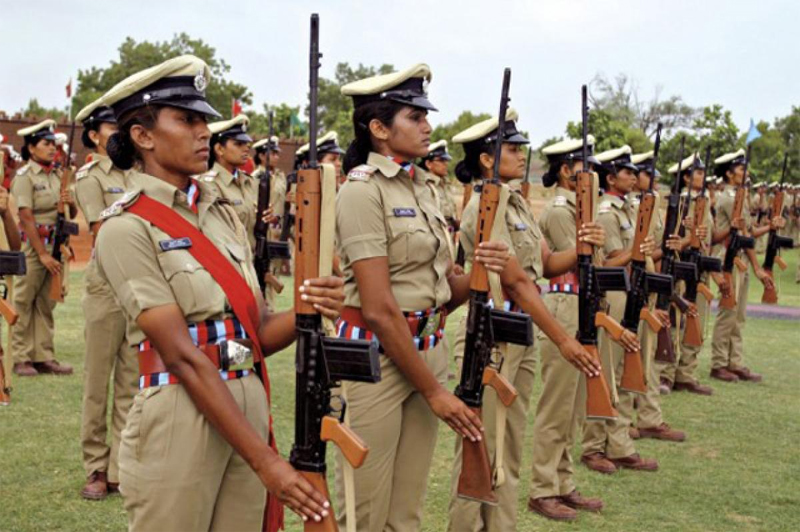
The India Justice Report 2025 paints a concerning picture of gender inequality within India’s police force, highlighting that despite the growing recognition of the need for diversity in law enforcement, women remain under-represented, particularly in senior ranks. With 90percent of women in the police serving in the constabulary, this report underscores a systemic issue that requires immediate attention and reform. As per the IJR 2025, India has approximately 2.4 lakh women in the police force. However, a mere 960 of these women hold IPS ranks, a paltry representation given the total authorised strength of 5,047 IPS officers. This disparity highlights the deep-seated gender bias that continues to permeate the police hierarchy. The fact that only about 4percent of women in policing hold senior roles, such as Deputy Superintendent or Superintendent, reveals the stark divide in opportunities for women to climb the career ladder. The women in the constabulary positions are often lower in status, less likely to be promoted, and more likely to face workplace discrimination and bias. While the overall number of women in law enforcement has increased, the concentration of women in lower ranks raises questions about the barriers to career advancement. These barriers are not only systemic but also cultural, reflecting the deeply ingrained patriarchal structures within both the police force and Indian society at large.
Despite growing awareness about gender diversity in law enforcement, the report shows that no State or Union Territory in India has met its targets for women’s representation in the police force. This is a reflection of the gap between policy intentions and the actual implementation of gender-inclusive measures. Governments and law enforcement agencies have failed to create an environment conducive to the promotion of women within the police, and this lack of progress is concerning given the importance of a diverse police force. Moreover, the issue of gender diversity in law enforcement is not simply about equality. It is about improving the effectiveness of the police in handling complex social issues, particularly those involving women. A gender-diverse police force is more likely to approach issues such as gender-based violence, sexual harassment, and domestic abuse with a nuanced understanding of the challenges women face. The failure to integrate more women into leadership positions within the police force perpetuates gender inequality and undermines the effectiveness of law enforcement in addressing women’s issues.
More concerning are regional disparities in the performance of states in terms of justice delivery. Karnataka emerges as the top performer, a position it has held since 2022. The southern states, particularly Andhra Pradesh, Telangana, Kerala, and Tamil Nadu have consistently outperformed other regions in terms of gender diversity, infrastructure, and staffing across sectors, including the police force. Karnataka’s example is particularly significant, as it stands out for its focus on both women’s representation in law enforcement and its overall performance in justice delivery. These southern states offer important lessons in how state policies can encourage greater gender inclusivity. The relatively higher representation of women in these states’ police forces is likely due to targeted recruitment efforts, the establishment of women-specific help desks in police stations, and the commitment to improving infrastructure that supports female officers. However, while the southern states are making strides, the national picture remains troublingly inconsistent, with many other states falling far behind in achieving gender parity.
While the IJR 2025 highlights several positive developments, such as the increasing number of police stations with Women Help Desks and the growing representation of women in the judiciary, the overall picture remains one of systemic inequality. The findings of the IJR 2025 should serve as a wake-up call for policymakers and law enforcement agencies. Gender-sensitive reforms are not merely a matter of quotas or targets. The Indian police force must move beyond tokenism and implement policies that increase the recruitment of women and ensure that women have the support and resources to succeed in their careers.
 Follow our WhatsApp channel
