

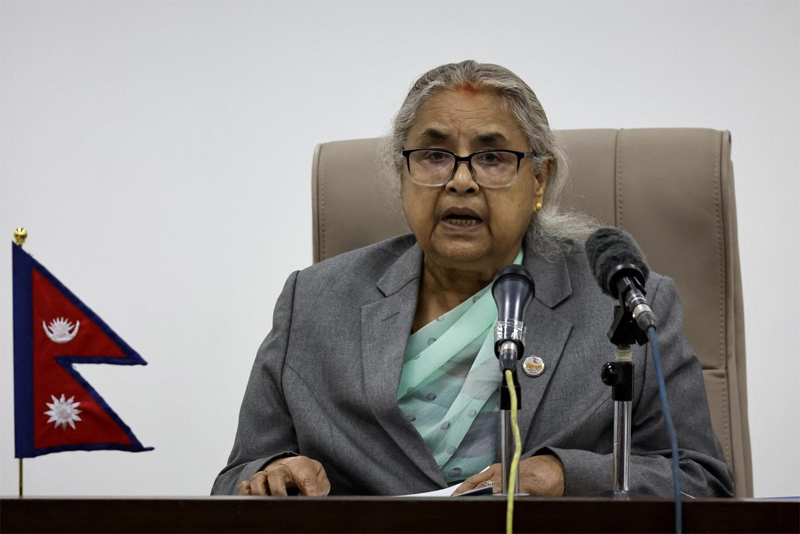
KATHMANDU, Mar 8: A high-level commission to probe the killings, arson and damages during the Gen Z protests in September last year submitted its report to Nepal’s interim government on Sunday, blaming lack of good governance and inefficiency by the then administration.
As the probe report was submitted to the interim Prime Minister Sushila Karki at the PM Office at Singhdurbar, neither the commission chief nor the government released any names of persons responsible for shooting at Gen Z protesters and other related issues.
A total of 76 people were killed during the two day protest – 22 youths on September 8 while 54 others on the next day.
A week after Sushila Karki took over as the interim prime minister, a decision by the cabinet on September 21 led to the formation of the judicial inquiry commission led by former Supreme Court justice Gauri Bahadur Karki to probe into the incidents related to the September Gen Z protests.
The incident occurred mainly due to lack of good governance and inefficiency shown by then government administration, chair of the commission, Gauri Bahadur Karki, said.
People were frustrated due to politicisation of government institutions, including bureaucracy and judicial bodies, he said.
“Those involved in shooting the Gen Z youths and issuing orders as well as those who didn’t act to stop the killings, have been recommended for legal action,” chairman Karki told media persons after handing over the report without giving other details.
The Commission prepared the report fulfilling their duty honestly and whatever facts they received during the investigation were included in the report without any prejudice, he said, and pointed out, “Now it is up to the government to implement the recommendations.”
The county may witness another Gen Z movement if the government failed to implement it, he added.
The probe commission was initially given a three month period by the Cabinet to investigate the human and material losses of the Gen Z movement of September 8 and 9 for completing the task. This period was later extended three times, giving an additional 75 days and was originally supposed to be submitted before the March 5 general election.
The general elections were necessitated after deposed prime minister K P Sharma Oli resigned on September 9, following the violent Gen Z protests against his government over corruption and a ban on social media. (PTI)
 Follow our WhatsApp channel
