

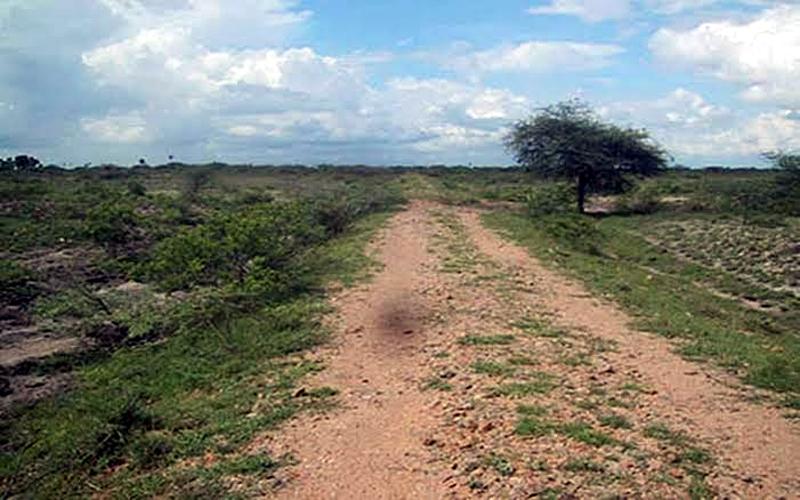
The issue of Gair Mumkin Khads has lingered for decades in Jammu and Kashmir, entangling thousands of kanals of land in a bureaucratic and legal deadlock. What should have been resolved years ago through scientific demarcation and practical policymaking has instead turned into a story of official apathy, delays, and endless committees. The recent decision of the Chief Minister to constitute a ministerial committee, after three levels of bureaucratic committees failed to deliver, shows both the urgency of the matter and the lack of seriousness with which it was handled in the past. The issue goes back to revenue records prepared during the Maharaja’s time, when lands were meticulously documented. Vast tracts were allotted to individuals, sometimes running into thousands of kanals, and were properly entered in the revenue records. With time, families split and properties were divided, but the records remained unchanged. Even more significantly, entries such as Gair Mumkin Khad, Nullah, or Darya-which originally denoted watercourses, ponds, or rivulets-no longer match ground reality. In the last few decades, natural water bodies have disappeared due to urbanisation, construction, and climate change. What once were rivulets or seasonal nullahs have vanished, yet the land continues to be classified in revenue records as unusable.
This mismatch between ground reality and official records has created a peculiar situation. Landowners find themselves unable to sell, mortgage, or construct on their properties. Registries are not permitted, banks refuse loans, and even Government-approved projects face hurdles because land cannot be legally transacted. Thousands of kanals worth crores of rupees remain in limbo, unused and unproductive. The problem is not limited to private landowners; it has stymied public projects as well. Ironically, J&K-a Union Territory with a vast geographical area-is facing an acute land shortage simply because usable land is locked in obsolete records.
Recognising this crisis, the High Court intervened in 2014, and later the Government framed a water policy to bring clarity. In 2022, the Administrative Council took a welcome step by deciding to delineate and demarcate these lands scientifically. District, Divisional, and UT-level committees were formed, timelines fixed, and advanced technologies like drones, Google Maps, digital terrain models, and hydrological modelling were to be deployed. Yet, despite these detailed frameworks, three years later, little progress has been made. The task, admittedly Herculean, required meticulous examination of every khasra, but the problem lies less in technical difficulty and more in bureaucratic inertia. Officials either ignored private land cases or dragged their feet, focusing largely on state lands. Monitoring mechanisms failed, and despite repeated instructions, district-level reports remained unsatisfactory. This has left thousands of landowners frustrated with their investments locked up.
Now, with mounting public pressure and repeated complaints, the Chief Minister has moved beyond bureaucratic committees. The panel, serviced by the Jal Shakti Department, has been given a strict three-month deadline to submit recommendations. The big question is whether this initiative will finally break the logjam or turn into another futile exercise like the earlier ones. The need of the hour is clear: the issue must be resolved decisively and within the stipulated time. This is not just about private landowners; it concerns the future development of J&K itself. With population rising, urbanisation accelerating, and every marla of land becoming precious, J&K cannot afford to keep large tracts of land frozen in obsolete classifications. For ordinary people, the inability to sell, build, or mortgage their land is a daily hardship. For the Government, the inability to acquire land for public projects is a developmental bottleneck.
What is required is a coordinated, multi-departmental effort with adequate manpower, technical assistance, and political will. Drones, GIS mapping, hydrological surveys, and ground verification teams must work in tandem, backed by real accountability. This is a one-time exercise, but its impact will be long-term. Correcting revenue records, segregating genuine water bodies from vanished ones, and regularising usable land will unlock vast areas for housing, commerce, industry, and public infrastructure. It will be a big relief to thousands of landowners who have suffered for decades due to outdated classifications.
 Follow our WhatsApp channel
