

Archival photos, memorabilia to narrate rail history
*Work apace on Rs 1.05 crore heritage project
Mohinder Verma
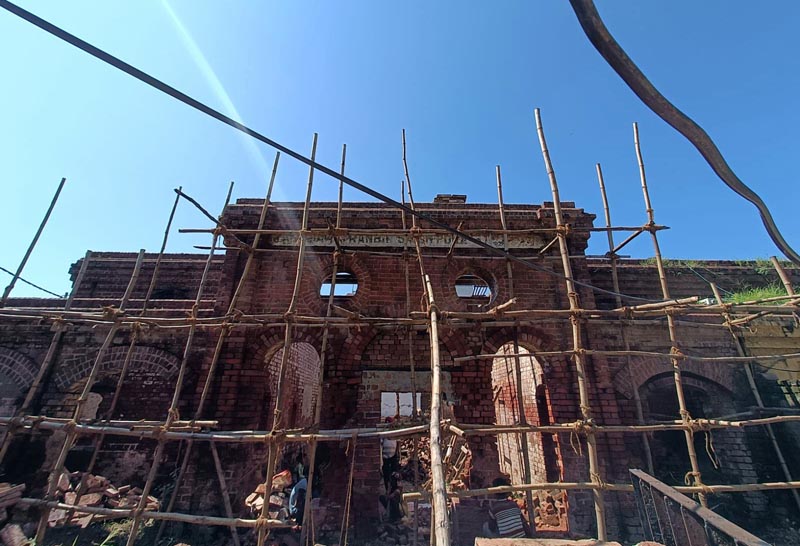
JAMMU, Jan 6: The historic Railway Station at Ranbir Singh Pura, a silent witness to Jammu’s first rail connectivity, has been taken up for conservation and heritage-based redevelopment, marking a significant step towards preserving the region’s pre-Partition transport legacy and promoting heritage tourism in Jammu district.
Under the “Scheme for Revival, Restoration, Preservation and Maintenance of Architecture and Heritage”, the project has been approved at an estimated cost of Rs 1.05 crore and is being implemented by the Department of Archives, Archaeology and Museums under the close supervision of the district administration, Jammu.
The initiative envisages restoration of the original pre-1947 Railway Station building and transformation of the site into a vibrant public heritage space. Officials in the Jammu district administration told EXCELSIOR that work is progressing at a steady pace on the conservation and restoration of the historic Railway Station.
Follow the Daily Excelsior channel on WhatsApp
As part of the project, the colonial-era railway structure associated with the historic Jammu-Sialkot rail line will be restored while retaining its original architectural character. Conservation works include façade restoration, roofing repairs, flooring and interior preservation, ensuring that the station’s historic identity is not compromised during renovation.
“Encroachments and obstructions affecting the station premises and approach roads have already been removed to reclaim the site’s original spatial integrity and improve accessibility”, the officials said. They added that to enhance its appeal as a heritage destination, the station premises will be redeveloped with visitor-friendly features, including cobblestone pathways, Victorian-style lamp posts, landscaped green areas, seating spaces and interpretive signage. These elements are aimed at recreating the ambience of a bygone era while offering a comfortable experience for visitors.
The project also proposes beautification and development of adjoining land, creating open public spaces that can serve as leisure and cultural hubs for residents and tourists alike. A key component of the renovation is historical storytelling.
“Plans are underway to highlight the station’s crucial role in Jammu’s early rail history through display panels, archival photographs, historical records and railway memorabilia”, they said, adding that “the exhibits will document the importance of the Jammu-Sialkot railway line in facilitating passenger movement, trade and social interaction before 1947”.
They further said, “the project, once completed, will boost the local economy through tourism, small businesses and employment, and promote R S Pura as a heritage node within Jammu district”. The initiative is expected to draw history enthusiasts, students and tourists, thereby diversifying the region’s tourism profile beyond conventional destinations.
“With this conservation project, the administration aims to revive a forgotten chapter of Jammu’s history, ensuring that the legacy of the region’s first railway connection is preserved for future generations”, they added.
Before India’s Partition in 1947, R S Pura was connected by a broad-gauge railway line linking Jammu to Sialkot (now in Pakistan). This was the first railway connection serving the princely State of Jammu and Kashmir, establishing vital connectivity with the rest of the subcontinent.
The rail line in this region was constructed in the late 19th century, around 1867, according to locals, with the broader Jammu-Sialkot branch becoming operational by 1890 under Dogra rule. The rail line ran about 43 kms from Sialkot-Suchetgarh-Ranbir Singh Pura-Miran Sahib-Bikram Chowk (Jammu), with Ranbir Singh Pura emerging as one of the key intermediate stations on this route.
This rail link served as Jammu’s main surface transportation route before Partition, facilitating passenger travel, trade and the movement of goods such as sugarcane to the local sugar mills in R S Pura. People from both Jammu and Sialkot routinely used this line for commerce, social visits and travel long before major road connectivity existed in the region.
After 1947, services on this line were suspended following the drawing of the India-Pakistan border, permanently severing the Jammu-Sialkot railway connection. The last trains that ran before Partition included services carrying refugees, after which the line fell into complete disuse.
 Follow our WhatsApp channel
