

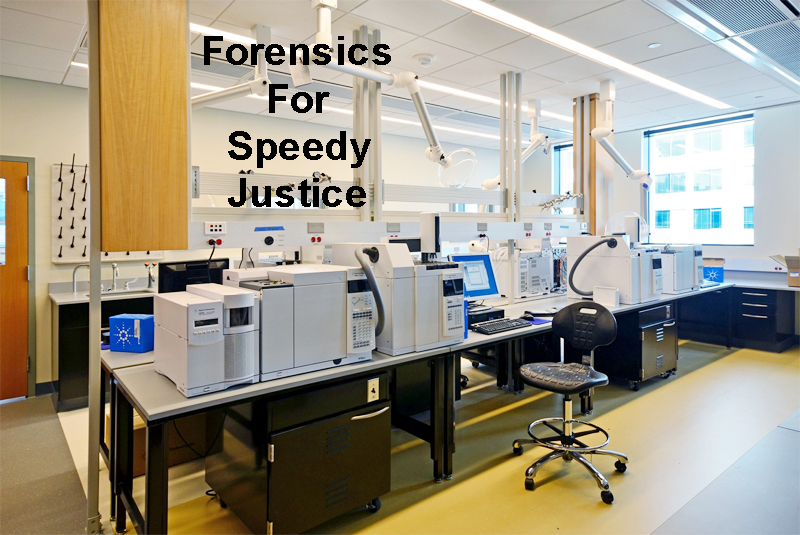
The Union Home Minister’s announcement of a Rs 30,000 crore investment over the years to build a pan-India forensic laboratory network marks one of the most consequential criminal justice reforms undertaken in independent India. The ambition is clear and transformative: by 2029, the entire judicial process-from registration of an FIR to final adjudication by the Supreme Court-should be completed within three years. At the heart of this vision lies a decisive recognition of the centrality of forensic science in modern justice delivery. Forensic evidence has long been regarded as the most objective and reliable pillar of criminal investigation. DNA profiling, ballistic reports, cyber forensics, toxicology, and digital footprints often provide irrefutable links between the accused, the crime scene, and the victim. In cases where forensic evidence is properly collected, preserved, and presented, the probability of wrongful acquittal drops dramatically, and convictions become far more certain. In that sense, strong forensic backing almost guarantees that the guilty are punished while the innocent are protected.
Yet, despite this acknowledged importance, India’s forensic infrastructure has remained woefully inadequate for decades. A country of over 1.4 billion people has so far been served by only seven CFSLs, a number grossly disproportionate to the volume and complexity of criminal cases. The result has been predictable: massive backlogs, delayed reports, compromised investigations, and prolonged trials. State Forensic Science Laboratories, which are meant to shoulder much of the load, have often fared no better. Many suffer from outdated equipment, lack of accreditation, uneven standards, and-most critically-a chronic shortage of trained forensic professionals. Expecting such a limited and uneven system to deliver real-time, high-quality forensic support has been unrealistic.
It is precisely this structural bottleneck that the Central Government now seeks to dismantle. The plan to establish eight new CFSLs in addition to the existing seven, ensuring that no State or Union Territory remains without either a CFSL or an NFSU, represents a decisive shift from piecemeal reform to systemic overhaul. Equally significant is the decision to invest heavily in upgrading state laboratories through targeted grants, modern equipment, standardised procedures, and national guidelines. Strengthening the states’ forensic capacity is not an option but a necessity, as the bulk of criminal investigations originate at the state level. Parallel to infrastructure expansion is the equally vital focus on human capital. Forensic laboratories are only as effective as the experts who run them. The NFSU has been positioned as the fulcrum of this manpower revolution. With a target of training nearly 35,000 forensic students by 2029 and achieving saturation levels within the next few years, the university aims to bridge the acute shortage of skilled professionals in this field.
The integration of technology is another defining feature of this reform agenda. The launch of the e-Forensics IT platform and the connection of 143 laboratories nationwide point to a future of seamless digital workflows. Artificial intelligence-based analysis, real-time data sharing, electronic storage, and interoperability across police, courts, prisons, prosecution, and forensic systems will fundamentally transform how the criminal justice system functions. In an era where criminal networks operate across borders-physical and digital-such real-time, nationwide intelligence sharing is indispensable. Crucially, the new criminal laws mandating forensic investigation in all cases punishable with seven years or more institutionalise the role of forensic science rather than leaving it to discretion.
This is undeniably a mega project, both in scale and impact. Transforming an entrenched system plagued by delays into a technology-driven, evidence-based justice mechanism is no small task. However, the fact that the reforms are being personally monitored at the highest political level, with a clear timeline and measurable goals, lends credibility to the effort. Numerous incremental changes since 2022 have already set the ball rolling, creating momentum for deeper transformation. Ultimately, a justice system is judged not by the number of laws it has, but by how swiftly and fairly it delivers outcomes. By placing forensic science at the core of criminal justice reform, India is aligning itself with global best practices. These efforts deserve broad appreciation, for they promise a future where justice is not delayed, evidence is unimpeachable, and the rule of law is decisively strengthened.
 Follow our WhatsApp channel
