

Maj Gen Sanjeev Dogra (Retd)
sanjeev662006@gmail.com
There is a scene many of us remember from Alice in Wonderland. Alice reaches a crossroads and asks the Cheshire Cat which road she should take. The Cat asks a deeper question: “That depends on where you want to go?” Alice replies, “I don’t know.” The Cat smiles: “Then it doesn’t matter which way you go.”
Jammu & Kashmir today stands at a similar crossroads, but this is no children’s tale. It is about real families in Ramban, real livelihoods in Kishtwar, and a region whose people, especially in Jammu Division have repeatedly been the first to absorb the shocks of history, whether from war, militancy, or cross-border firing. Since the pivotal changes of 2019, our constitutional map has been redrawn into Union Territories, an elected government has returned, yet a sense of lingering uncertainty asks for resolution. The citizen’s simple questions remain: what have we gained, what have we lost, and most importantly, where are we heading?
The Cheshire Cat’s question returns to us all: Where do we, the people of Jammu, want to go? If we do not define our own destination, every path will be declared “the right road” by whoever happens to be holding the map.
Jammu’s Inheritance: Resilience Forged in Hardship
To assess the present fairly, we must acknowledge the past. Jammu’s struggles did not begin in 2019. For decades, our people have carried burdens unknown to most of India. In districts like Poonch and Rajouri, and in the border villages of Jammu, Samba, and Kathua, life is punctuated by the grim rhythm of ceasefire violations. When shells fall, it is not ideology that is hit first. It is the school roof, the farmer’s field, the local market’s fragile economy.
In the Pir Panjal and Chenab Valley regions of Doda, Kishtwar, and Ramban isolation has been a constant companion. Here, a road closure isn’t an inconvenience; it means a missed medical emergency, a lost job interview, a student’s derailed future. In the Kandi belt, the challenge is a slow, persistent strain: water scarcity, fragile agriculture, and a lack of industry that forces our youth to look elsewhere.
This history has bred a resilient people, but also a weary one. Our greatest loss has been the quiet exodus of talent. Bright young minds from Udhampur, Reasi, and Bhaderwah who left seeking stability and have not returned. We have been tough, but we are tired of mere survival. We now seek thriving.
The Stakeholders: A Triad of Legitimate Interests
Progress will only come when we respect the three core stakeholders, aligning their interests rather than pitting them against each other.
First, the Central Government. For New Delhi, J&K is a paramount strategic frontier. Its priorities are non-negotiable: national security, territorial integrity, and seamless integration. This is a legitimate, essential concern for any nation. The Centre also champions development like roads, tunnels and investment knowing that true security is fortified by prosperity.
Second, the Elected UT Government. It carries the people’s mandate for daily governance like health, education, roads, and jobs. Yet, it operates within a unique “shared power” model with the Lieutenant Governor. This structural complexity can blur accountability and slow delivery unless both sides collaborate with exceptional maturity and public purpose.
Third, and most vital, the People. Here aspirations are measured not in constitutional clauses but in the quiet rhythms of daily life and dignity. Our concerns are human and immediate: Will my son find a meaningful job here in Jammu, or will he be forced to leave home for opportunity? Can my small business in the city prosper without the shadow of sudden disruption? Will my village in the Chenab Valley receive the same attention and infrastructure as other regions? Above all, will I be safe physically, while tending my land near the border, and socially, within the fabric of my community? These are the questions that define our idea of progress, security, and a normal life.
This last point is crucial. For us, normalcy is not just the absence of violence. It is the presence of holistic security: women’s safety, protected youth from drugs and cyber fraud, reliable healthcare, traffic that doesn’t kill, and policing that is both firm and fair.
The Ledger Since 2019: Gains and Unresolved Questions
In assessing what has been gained, several tangible developments stand out. First is the return of a democratic voice through the holding of elections, a fundamental step toward accountability, demonstrated by the consistent faith in the ballot shown by the people of Jammu, from Kathua to Rajouri. Complementing this is a significant push in infrastructure, where highways, tunnels, and iconic structures like the Atal Setu are not just projects but vital lifelines for the region, enabling faster market access for Kishtwar’s apples, better connectivity for Bhaderwah’s tourism, and quicker emergency responses in remote areas.
Underpinning this progress is a calmer security environment, which many citizens, particularly traders and those in the tourism sector value deeply, as it has ushered in a sustained period of operational normalcy where markets and schools function without constant disruption.
However, significant questions remain unresolved. There persists a shadow of incomplete political empowerment, where a Union Territory with a legislature, while democratic, operates under an architecture of shared control that can dilute the sense of full and accountable ownership once symbolized by statehood. Compounding this is an accountability dilemma, wherein delayed projects or stalled recruitment processes often lead to split explanations from a divided authority, eroding public trust.
Underlying these concerns is a pervasive fatigue of uncertainty. While people can adapt to any stable system, the prolonged ambiguity surrounding the finality of J&K’s political status breeds anxiety. This is particularly seen among investors and the youth who are making critical decisions about their futures.
Jammu’s Destination: A Charter of Tangible Aspirations
Our destination must be written in the concrete language of livelihood, dignity, and security. District by district, here is what it looks like:
Of all the demands echoing across Jammu, the loudest is not ideological but economic: the urgent need for employment. While government jobs remain highly sought after, the government cannot be the sole employer. What is required is a mission-mode push across multiple fronts. This includes expanding tourism and hospitality beyond just hotels to empower local guides, adventure sports instructors, homestay owners, and transport providers.
It means building robust agri-horti value chains with cold storage, food processing, and branding for our superior Rajma, saffron, and Chenab Valley apples. It necessitates promoting skill-based trades in manufacturing, auto-services, solar technology, and IT, while simultaneously fostering a start-up culture to encourage micro-enterprises around our unique crafts, dairy, and natural products.
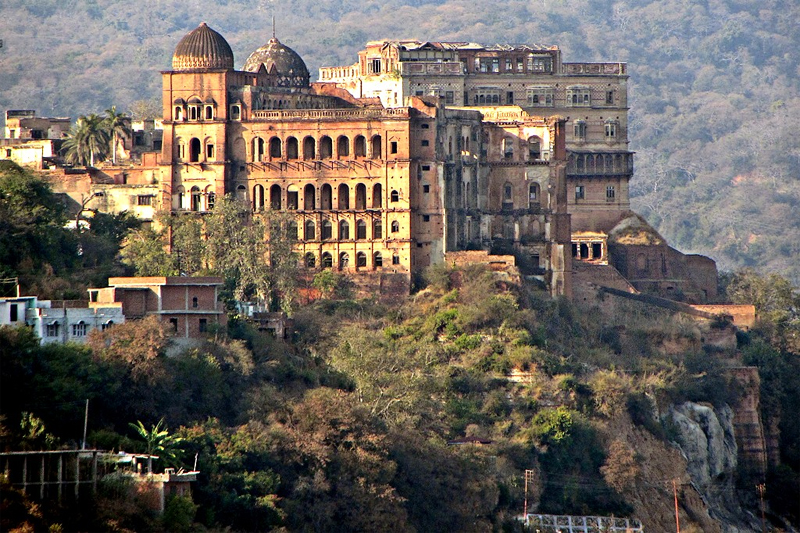
To fuel this economic vision, we must fully unleash Jammu’s vast and underutilized tourism bounty, looking far beyond the revered Vaishno Devi. The region is a treasure trove waiting to be strategically developed: pilgrimage circuits like Shiv Khori and Sudh Mahadev can be woven into seamless spiritual journeys; our magnificent Dogra heritage at sites like Mubarak Mandi and Amar Mahal can be restored and marketed; destinations like Patnitop, Bhaderwah, Sanasar, and the Pir Panjal trails can be promoted as premier hubs for nature and adventure.
With careful sensitivity, even border tourism, as seen in Suchetgarh and Basantar River, can showcase national pride while generating local livelihoods. Crucially, this tourism must be cultivated as a people’s economy, ensuring revenue flows directly to the local taxi driver, the small eatery owner, and the artisan.
This development, however, must be nuanced and region-specific. For the arid Kandi belt, the foundational destination is water security; micro-irrigation and watershed management are essential to turn scarcity into sustainability and root people to their land. The Chenab Valley encompassing Doda, Kishtwar, and Ramban requires a rebranding from “remote” to “high-potential,” where improved connectivity brings higher education, healthcare, and value-added agriculture.
For the border districts of Poonch, Rajouri, and IB areas, we need a dedicated Border Resilience Plan featuring hardened shelters, rapid infrastructure repair, trauma care, and livelihood continuity funds. A resident living on the front line should never feel penalized by geography, but rather supported by a proactive and compassionate policy framework.
The Way Forward: Aligning the Path with the Goal
The chosen road forward must be paved through deliberate and collaborative effort from all stakeholders. For the Centre, this means recognizing that prosperity in Jammu forms the bedrock of national security, and acting to expedite large-scale private investment while genuinely empowering local administration to execute projects with speed and efficiency. Simultaneously, the UT Government must rise above inherent structural complexities via proactive coordination, transforming itself into both a relentless advocate for Jammu’s specific developmental needs, whether the artificial lake in Jammu city or a vital tunnel for Bhaderwah and a transparent, effective manager of on-ground delivery.
Finally, the people themselves must engage constructively in this process, holding elected representatives accountable while channeling their own entrepreneurial energy into the new opportunities that improved peace and connectivity now afford. Only through this triad of aligned, purposeful action can the path to a stable and prosperous future be securely built.
Conclusion: Choosing Our Road
We are not a disoriented Alice. The collective conscience of Jammu knows the destination: a secure, prosperous J&K where full democratic dignity fuels rapid development, and where our youth are rooted by choice, building careers and futures here at home. This vision is neither anti-government nor anti-national; it is profoundly pro-people and pro-peace. In a sensitive border region like ours, prosperity and security are not opposing forces, they are inseparable allies.
The crossroads before us is real, but our destination is clear. We strive for a future where conversations in Jammu’s colleges and coffee shops revolve around start-ups and tourism seasons, not shutdowns and curfews. A future where governance feels consistently accountable, humane, and effective. Once this destination is firmly agreed upon, the path forward becomes clear. And then, at last, we can leave the Cheshire Cat and his enigmatic smile behind us, where they belong: in the pages of an old tale, not in the unfolding story of our homeland.
 Follow our WhatsApp channel
