

Post Op Sindoor: Defence budget hiked to Rs 7.85 lakh cr with 22 pc jump
*17 cancer drugs, microwave ovens to be cheaper, ATM machines’ price to rise
*Govt to set up 3 new All India Institutes of Ayurveda
*Tax holiday for foreign companies offering cloud services worldwide
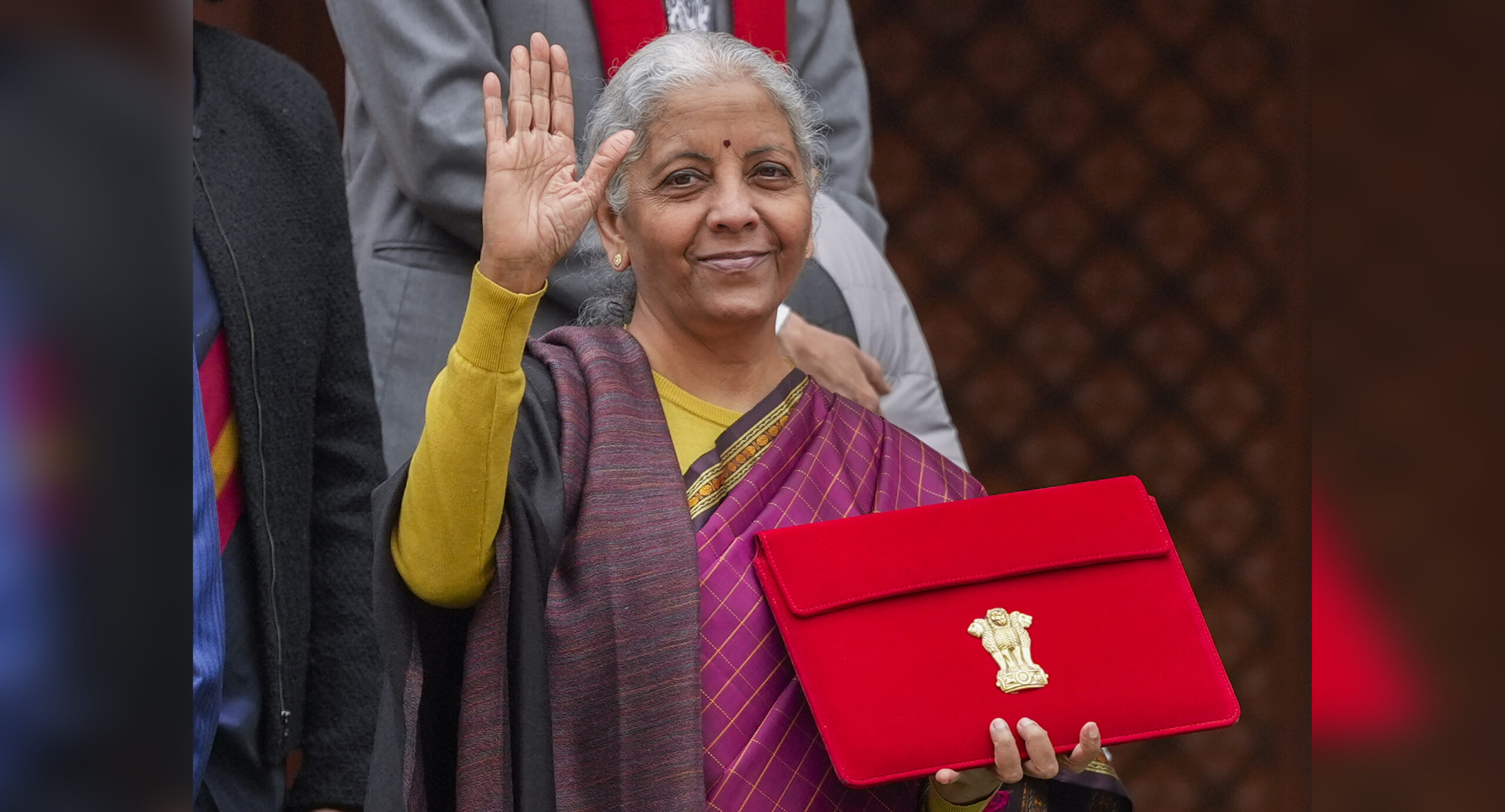
NEW DELHI, Feb 1: Finance Minister Nirmala Sitharaman on Sunday announced a slew of measures to boost manufacturing, a tax holiday for global data centres, and incentives for the agriculture and tourism sectors as she unveiled a Rs 53.5 lakh crore budget seen as a long-term blueprint for sustaining growth amid rising global risks.
Sticking to fiscal discipline and shunning populist measures despite five key States, including West Bengal and Tamil Nadu, heading to polls soon, her Budget for the fiscal year beginning April, however, rattled stock markets, with a higher transaction tax on derivatives trading weighing on sentiment.
Follow the Daily Excelsior channel on WhatsApp
The Budget 2026-27 has simplified the customs regime by rationalising exemptions, waiving customs duty on 17 cancer drugs, while easing baggage rules and reducing duty to 10 per cent on goods imported for personal use.
Presenting her record 9th straight Budget, Sitharaman stepped up the Government’s capital expenditure outlay to Rs 12.2 lakh crore from Rs 11.2 lakh crore last year, underscoring its focus on infrastructure-led growth amid global uncertainty.
Click here to watch video
The Government will prioritise scaling up manufacturing across seven sectors — pharmaceuticals, semiconductors, rare-earth magnets, chemicals, capital goods, textiles and sports goods, she said. Also, the emphasis will be on job creation and technology-driven development.
A series of initiatives were also announced for the livestock, fisheries and high-value agriculture sectors, while a Rs 10,000 crore investment has been proposed over the next five years to develop India as a biopharma manufacturing hub. An integrated programme for the textile sector was also announced.
Support for small businesses includes a dedicated Rs 10,000 crore SME Growth Fund to create future Champions, incentivising enterprises based on select criteria.
The measures announced in the Lok Sabha complement last year’s sweeping income tax and GST cuts, which, together with spending on infrastructure, labour law overhaul, and the RBI’s interest rate reductions, have so far helped the Indian economy withstand the punitive 50 per cent tariff US President Donald Trump has imposed on Indian goods.
The FY27 Budget comes against a complex backdrop. While domestic demand has held up and inflation has moderated from recent highs, global uncertainties – including geopolitical tensions, volatile commodity prices and uneven monetary easing by major central banks – continue to cloud the outlook. At home, the Government faces pressure to boost consumption, accelerate job creation and step up capital spending, while keeping the fiscal deficit on a downward path.
“Today, we face an external environment in which trade and multilateralism are imperilled and access to resources and supply chains are disrupted. New technologies are transforming production systems while sharply increasing demands on water, energy and critical minerals,” Sitharaman said while presenting the budget in the Lok Sabha.
India, she said, will continue to take confident steps towards Viksit Bharat, balancing ambition with inclusion.
“As a growing economy with expanding trade and capital needs, India must also remain deeply integrated with global markets, exporting more and attracting stable long-term investment.”
And to do that, the Government will also continue to prioritise fiscal consolidation, targeting a reduction in the debt-to-GDP ratio to 55.6 per cent in the next financial year from 56.1 per cent, and the fiscal deficit to 4.3 per cent from 4.4 per cent in the current year. It plans to borrow Rs 17.2 lakh crore from bond markets, where yields have firmed amid elevated Government borrowing.
While there were no major changes to personal income-tax slabs, the Government announced tax and incentive measures aimed at boosting investment and ease of compliance for industry.
A biopharma manufacturing hub with an outlay of Rs 10,000 crore, the second edition of the semiconductor mission, a Rs 40,000 crore outlay for electronics component manufacturing, establishing rare earth corridors in mineral-rich States, setting up three dedicated chemical parks and strengthening capital goods capability were among measures announced.
Among the major announcements were a 20-year tax holiday to overseas firms that provide global data centre services from the country, as New Delhi steps up efforts to woo investors in its fast-growing digital infrastructure sector.
The Government also proposed a 15 per cent safe harbour on costs for data centre services provided by a related entity of a foreign cloud firm. The move is expected to benefit overseas cloud companies structuring their India operations through group entities by providing greater tax certainty and improving operational efficiency.
The announcement comes as India sees some of the world’s largest data centre investments, led by cloud majors such as Google, Microsoft and Amazon Web Services, which together have committed around USD 40 billion in 2025 alone.
Alongside, Securities Transaction Tax (STT) has hiked on futures trading to 0.05 per cent from 0.02 per cent and to 0.15 per cent from 0.01 per cent on options.
Also, tax on buyback for all types of shareholders will be taxed as capital gains.
Other measures include TCS on the sale of overseas tour packages slashed to 2 per cent, while the same on overseas education, and medical expenses under LRS (Liberalised Remittance Scheme) cut to 2 per cent.
Sitharaman said the new Income Tax Act, 2025, will be implemented from April 1, with simpler rules and forms coming out soon.
The Budget focuses on 3 Kartavyas — accelerating growth, fulfilling aspirations, and Sabka Sath, Sabka Vikas.
“This threefold approach requires a supportive ecosystem. The first requirement is to sustain the momentum of structural reforms – continuous, adaptive, and forward-looking. Second, a robust and resilient financial sector is central to mobilising savings, allocating capital efficiently and managing risks. Third, cutting-edge technologies, including AI applications, can serve as force multipliers for better governance,” she added.
The Government, she said, has undertaken comprehensive economic reforms towards creating employment, boosting productivity and accelerating growth.
“Over 350 reforms have been rolled out. These include GST simplification, notification of labour codes, and rationalisation of mandatory Quality Control Orders.”
High-level Committees have been formed, and in parallel, the central Government is working with the State Governments on deregulation and reducing compliance requirements.
For the infra push, a new Dedicated Freight Corridor will be set up connecting Dankuni in the East to Surat in the West. Besides, 20 new National Waterways (NW) will be operationalised over the next five years, a Coastal Cargo Promotion Scheme will be launched, and incentives will be provided to indigenise the manufacturing of seaplanes.
For clean energy, an outlay of Rs 20,000 crore over the next five years was announced for Carbon Capture Utilization and Storage (CCUS) technologies.
The Government will develop seven high-speed rail corridors between cities as ‘growth connectors’ to promote environmentally sustainable passenger systems.
Tax measures include tax exemption on interest awarded by the Motor Accident Claims Tribunal to a natural person, rationalising of penalty and prosecution provisions, exemption from Minimum Alternate Tax (MAT) to all non-residents who pay tax on presumptive basis, and TCS rate for sellers of specific goods namely liquor, scrap and minerals will be rationalised to 2 per cent and that on tendu leaves will be reduced from 5 per cent to 2 per cent.
The basic customs duty exemption given to capital goods used for manufacturing Lithium-Ion Cells for batteries has been extended, as has been the same on the import of goods required for Nuclear Power Projects. Duty-free personal import of drugs/ medicines and food for 7 more rare diseases has been allowed.
To address practical issues of small taxpayers like students, young professionals, tech employees, and relocated NRIs, she proposed to introduce a one-time 6-month foreign asset disclosure scheme.
Meanwhile, India set aside Rs 7,84,678 crore as defence outlay for 2026-27 in a steep hike of 15 per cent over last year’s allocation of Rs 6.81 lakh crore, with its military majorly focusing on boosting combat prowess in the face of increasing security challenges from China and Pakistan.
The increase in the defence outlay, including the budget for capital acquisition, against the backdrop of “historic success of Operation Sindoor” has further strengthened our resolve to make India’s defence system even more robust, Defence Minister Rajnath Singh said.
Out of the total allocation, Rs 2,19,306 crore has been earmarked for capital expenditure to the armed forces that largely includes purchasing new weapons, aircraft, warships and other military hardware. The capital outlay is 21.84 per cent more than the budget estimates of 2025-26.
Under the capital outlay, Rs 63,733 crore has been set aside for aircraft and aero engines, while Rs 25,023 crore is allocated for the naval fleet.
The total capital outlay is over Rs 39,000 crore higher than the current fiscal’s budgetary estimate Rs 1.80 lakh crore. The revised capital outlay for 2025-26 has been estimated at Rs 1,86,454 crore.
According to the Defence Ministry, Rs 1.39 lakh crore, which is 75 per cent of the capital acquisition budget, has been set aside for procurement through domestic industries during the financial year 2026-27.
The allocation for defence stands at two per cent of the estimated GDP (Gross Domestic Product) for the next financial year and shows a significant increase of 15.19 per cent over the budgetary estimates (BE) for 2025-26, the defence ministry said.
Total defence budget is 14.67 per cent of the Union Government’s planned expenditure in the next fiscal and is the highest among the ministries.
The revenue expenditure has been put at Rs 5,53,668 crore which includes Rs 1,71,338 crore for pensions.
In her budget speech, Finance Minister Nirmala Sitharaman proposed exempting basic customs duty on components and parts required for the manufacture of civilian, training and other aircraft.
She also announced waiving basic customs duty on raw materials imported for the manufacture of parts of aircraft to be used in maintenance, repair or overhaul requirements by units in the defence sector.
The two decisions are expected to help the defence aerospace industry.
The defence industry welcomed the allocation for the armed forces.
Meanwhile, as may as 17 cancer drugs, along with medicines and food for special medical needs for seven rare diseases, components for microwave ovens are some of the items that are set to become cheaper with Sitharaman announcing cuts in customs duty in the Union Budget 2026-27.
However, certain items like imported low-cost umbrellas, ATM/cash dispensers, coffee roasting, brewing or vending machines, are some of the items, which are going to be costlier due to increase in basic customs duties.
In her speech, Sitharaman said, “To provide relief to patients, particularly those suffering from cancer, I propose to exempt basic customs duty on 17 drugs or medicines.”
“I also propose to add seven more rare diseases for the purposes of exempting import duties on personal imports of drugs, medicines and Food for Special Medical Purposes (FSMP) used in their treatment,” she said in her Budget speech, which lasted around 85 minutes.
The Finance Minister also proposed to exempt basic customs duty on specified parts used in the manufacture of microwave ovens. This will “deepen value addition” in the consumer electronics sector, she said.
She also proposed to exempt basic customs duty on import of sodium antimonate for use in manufacture of solar glass.
The Finance Minister also announced extension of existing basic customs duty exemption on imports of goods required for Nuclear Power Projects till 2035 and expand it for all nuclear plants irrespective of their capacity.
Besides, she also “proposed to provide basic customs duty exemption to the import of capital goods required for processing of critical minerals” in the country.
To encourage the aviation industry, both civil and defence, the Government exempted BCD on components and parts required for the manufacture of civilian, training and other aircrafts.
The Minister also announced to exempt BCD “on raw materials imported for manufacture of parts of aircraft to be used in maintenance, repair, or overhaul requirements by units” in the defence sector.
However, the Minister also announced extending the ambit of BCD on import of cheap umbrellas by putting a minimum duty of Rs 60. Now it will attract a BCD of “20 per cent or Rs 60 per piece, whichever is higher”.
Moreover, the budget also announced lapse of a notification issued last year in October, exempting BCD on ATM/cash dispensers and its parts and components.
Concession on television equipment, cameras and other equipment imported by a foreign film unit or television team for shooting here will also lapse from April 1, 2026.
Interestingly, import of zoo animals and birds, which was attracting nil BCD, will now be brought under a tax net of 30 per cent.
Moreover, concessional BCD rates on coffee roasting, brewing or vending machines will also lapse from February 2, 2026.
Sitharaman proposed tax holiday till 2047 for foreign companies that provide cloud services to customers worldwide by using data centres in the country.
The tax holiday will be extended to the entities concerned subject to certain conditions.
In the Union budget 2026-27 speech, Sitharaman said there is a need to enable critical infrastructure and boost investment in data centres.
“I propose to provide tax holiday till 2047 to any foreign company that provides cloud services to customers globally by using data centre services from India,” the Minister said.
To avail the tax holiday, companies need to provide services to Indian customers through an Indian reseller entity.
Among other proposals, the Government will set up National Institute of Hospitality by upgrading existing National Council for Hotel Management and catering technology.
She also said a National Institute of Mental Health and Neurosciences (NIMHANS-2) will also be established, she said.
Finance Minister Nirmala Sitharaman proposed to set up three new All India Institutes of Ayurveda to strengthen research in traditional medicines.
The Finance Minister said Ayurveda gained global acceptance and recognition after the COVID-19 pandemic.
Quality Ayurveda products helps farmers who grow the herbs and youth who process the products, she said.
To meet the growing global demand, Sitharaman proposed setting up of three new All India Institutes of Ayurveda, upgrading Ayush pharmacies and drug testing labs to higher standards for the certification ecosystem and make more skilled personnel available.
“Ancient Indian yoga, already respected in several parts of the world, was given a mass global recognition when the Prime Minister took it to the UN,” the Minister said, adding that post Covid, Ayurveda gained similar global acceptance. (PTI)
 Follow our WhatsApp channel
