

Excelsior Correspondent
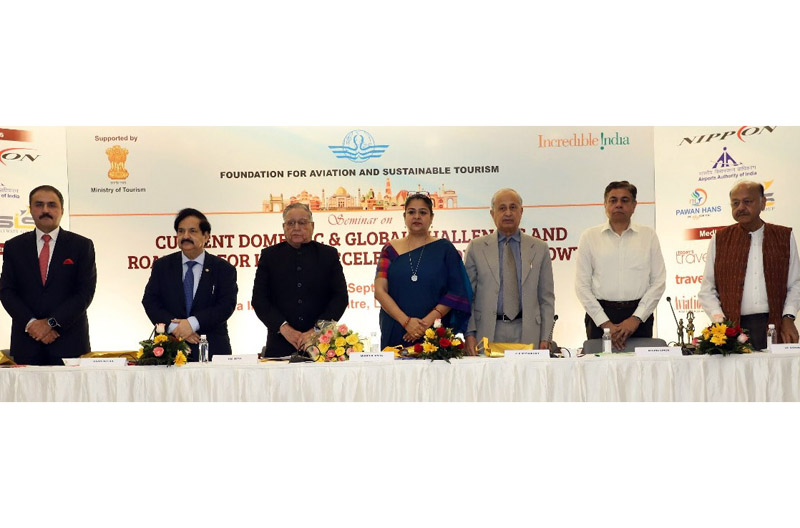
NEW DELHI, Sept 28: A national seminar on ‘Tourism Growth’ organised by the Foundation for Aviation and Sustainable Tourism (FAST), with the support of the Ministry of Tourism was held here today.
The seminar brought together senior policymakers, industry leaders and experts to deliberate on strategies for accelerating India’s tourism growth amid global and domestic challenges.
Gajendra Singh Shekhawat, Union Minister of Culture and Minister of Tourism, GoI, was the chief guest on the occasion.
In his keytone address, Shekhawat extended his support and congratulations for the seminar on ‘Current Domestic & Global Challenges and Roadmap for India’s Accelerated Tourism Growth’ being organized by FAST.
In his message, he highlighted the transformative potential of tourism in India driven by digital technologies and post-pandemic revival, emphasizing the need for focus and innovation to make the coming decade a ‘golden era of inbound tourism’.”
Guest of Honour, Mugdha Sinha, Managing Director, ITDC, emphasized the critical role of tourism in contributing to the nation’s GDP growth and building a “$30 trillion economy” by 2047.
She stressed that tourism’s true success must be measured not just in economic growth but also in its power to empower communities and reflect India’s cultural depth and heritage.
Raman Sidhu, Life Trustee FAST and Chairman, EBG, noted, “Action is the need of the hour. FAST has strategically hosted this seminar on the eve of World Tourism Day to harness the deliberations and draw an effective action plan for the respective departments.”
Another speaker Lt. General K M Seth, former Governor of Tripura and Chhattisgarh, called for a robust tourism industry with a model of collaboration to develop innovative tourism products and implement sustainable practices based on global standards.
The seminar highlighted the need for, inclusivity and integration of culture and nature in tourism development.
Responsible tourism practices that empower communities and reflect India’s cultural heritage, infrastructure reforms, skill development and ease of doing business to strengthen India’s hospitality ecosystem, public-private partnerships and targeted policies to promote niche areas such as eco-tourism, wellness and heritage tourism, innovative policy frameworks, technology-driven solutions and a strengthened Government-industry interface to fully harness India’s tourism potential.
The deliberations concluded with consensus on the urgent need for collective action to drive India’s tourism growth.
Among others who were present during the event included Vinod Zutshi, Atul Bhalla, Arvind Singh and M P Bezbaruah.
V P Agarwal presented vote of thanks.
 Follow our WhatsApp channel
