

Ashok Sharma
Food has always been an essential element of human culture. It reflects the environment, traditions and social life of a community and often tells stories about the people who prepare and share it. In the hilly district of Udhampur in the Duggar region of Jammu, traditional food represents a rich cultural heritage shaped by rural life, agriculture and close-knit social relationships. For the Dogra community of this region, food has always been closely associated with celebration, hospitality and the rhythm of seasonal life.
The traditional food habits of the people of Udhampur developed in harmony with the agrarian lifestyle that prevailed in the region for centuries. Most families owned cattle and depended on dairy products as an important part of their diet. Milk, curd, lassi, butter and ghee were commonly consumed in almost every household. Fresh cream collected from boiled milk, locally known as dhred, was considered a special treat and children often competed with one another to relish it. Cheese in the form of Kaladi or Kalari has long been a favourite delicacy of the people of Udhampur. Prepared mainly in the hilly belts such as Ramnagar, Basantgarh, Panchari and Chenani, Kaladi is made by curdling milk and shaping the solid mass into thick discs which are later cooked on a pan and eaten with bread or chutney. This indigenous cheese has gained wider recognition in recent years and has even been granted a Geographical Indication tag, reflecting its unique regional identity.
Another interesting dairy-based preparation once commonly shared among neighbours was Gaddal which was made from the first milk of a buffalo after delivery. In rural communities, the sharing of such preparations symbolized goodwill and social bonding among families. The culinary traditions of the Dogras were not limited to dairy products alone. A variety of indigenous dishes formed an integral part of everyday meals as well as festive gatherings. Among these were Ambal,Madra,Mothi,Auria and different varieties of pulses such as kulth do dal,raungi di dal,tangar di dal etcThese dishes were generally cooked in large copper vessels known as saglas placed over clay hearths called daans and heated with firewood, especially during preparation of community meals. The slow cooking process allowed the ingredients to blend naturally and enhanced the flavour of the food.
On religious and social occasions, special preparations were made in large quantities to feed relatives, neighbours and guests. Items such as Keur,Pathore,Babroo and purree were prepared and served with great enthusiasm. Food was often served in leaf bowls known as doona and pattal, which were biodegradable and environmentally friendly. This practice reflected the eco-conscious lifestyle of rural communities long before the concept of environmental sustainability became widely discussed.
One distinctive feature of Dogra cuisine was the use of dhuni, a traditional technique used to infuse a smoky flavour into dishes. In this method, a piece of burning charcoal was placed in a small container within the cooked dish, and hot mustard oil was poured over it to release aromatic smoke. The vessel was then covered for a few moments, allowing the smoke to blend with the food. This method was often used for dishes such as Mothi, pulses, fruit chaat and chutneys prepared from ingredients like kimb or kakri ,maani,shasha (raw mango chutney) and timbru di chutney .The result was a unique taste combining smokiness with mild tanginess. Dogra dishes were usually prepared with fewer spices compared to many other Indian cuisines, yet they were rich in nutrition and natural flavour.
Many simple rural foods also held a special place in the memories of childhood. For instance, raw potatoes roasted in burning cinders were considered a delightful snack for children. The aroma of these roasted potatoes, combined with a pinch of salt or homemade chutney, made them a favourite among young villagers.
Traditional Dogra cooking also relied heavily on locally available ingredients that could be easily grown or gathered from surrounding forests and fields. Several dishes were prepared using pumpkins, lentils and fermented dough. Ambal made from pumpkin, jaggery and tamarind offered a unique sweet and sour flavour.Ma da Madra prepared from black gram and garnished with dry fruits was another cherished dish. Shuaron da Madra made from dates was also relished in certain areas. Fermented preparations such as Khameere and Pathore were commonly made from fermented flour dough. Seasonal dishes like Sagaraans and Suchians were particularly associated with festivals such as Raksha Bandhan and Bhai Dooj, and were traditionally sent to sisters or relatives in bamboo baskets known as bakhaars.
Food traditions in Udhampur were closely linked with local festivals and religious rituals. During Lohri, a dish known as Tricholi was commonly prepared in many households. Bhugga, made from roasted sesame seeds and flax seeds, was associated with a religious observance known as Bhugga Vrat. On the festival of Makar Sankranti, Khichdi made from rice and lentils was prepared and served to all family members. During auspicious agricultural rituals such as Bash Dua, Dhrubri or at the time of ploughing fields, offerings like Babroo and Rutts were prepared and presented to deities.
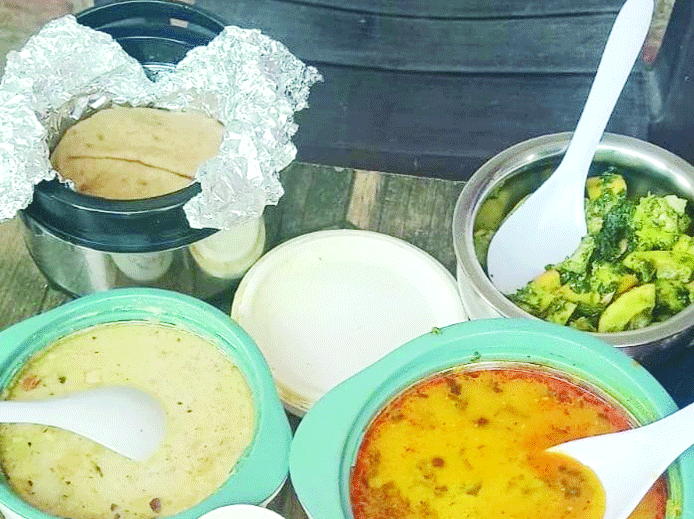
Even the everyday meal of dal had its own traditional method of preparation. It was often slow-cooked in earthen pots called kunnis placed over a wood fire. The lentils absorbed the earthy flavour of the pot and were seasoned with spices ground at home using traditional stone grinders. In winter, maize bread known as Makki da Toda was eaten along with Sarian ( sarson) da saag , a dish made from mustard leaves. Other varieties of saag were also prepared using wild and cultivated greens such as Seul da saag,Chaleri da saag,Kulfe da saag,Sareeri da saag etc all of which were valued for their high nutritional content.Among the Non vegetarian items,Khata meat is most favourite dish among those people who are Non Vegetarian.
Apart from these dishes, the Dogra culinary tradition also included several lesser-known but interesting preparations. Charoli for instance, was a delicate net-like pancake made with the help of a special ladle and usually eaten with sweetened milk. Plakdian was another fried preparation filled with stuffing. In earlier times, sweets such as khoya,Desi burgf, Mesu,Til de laddoo,Also de laddoo, diyaan ( sevian) Mande etc were relished.Malai Burf was prepared at home and served on leaves of the banyan tree. Although these sweets were once widely enjoyed, many of them are gradually disappearing from modern kitchens.
Certain customs also involved preparing special foods as part of family rituals. For example, dishes like Suttu- puttu served with Khatta saag were prepared during the observance of Ahoi Ashtami, symbolizing affection within the family. A traditional combination known as Paaji, consisting of items such as Rutt,Khamires,Mathian,Sagaraan,Suchian Rutt, etc was often sent to relatives during festive occasions. However, these traditions are now rarely practised.
The forests and hills surrounding Udhampur also contributed significantly to the local diet. Wild mushrooms such as Guchi which are highly prized for their taste and nutritional value, were collected from forest areas. Other edible forest produce included common mushrooms known locally as Shatri fern stalks called Kasrod and the tuber TTarad. Pickles were prepared from locally available fruits and vegetables such as mango, lime, Kasrod, Dheu and the buds of plants like Keora and Katrair. Fruits of trees such as Simple,Lasuda,Dheu and fig were also used in preparing pickles and dishes.
Wild fruits growing in the hills added further variety to the diet of rural people. Fruits like Garne,Aakhe,Trimble,Toot,Kakoye,Phalse,Jamun,Talle,Khajur,Tenkede,Kainth etc were commonly eaten. Other fruits such as Naakh,Bei and (peach) were also relished. Children often uprooted young date plants to obtain the edible kernel called Bhat.
Another interesting aspect of Dogra cuisine is the preparation of raita using flower buds of plants like Sul,Agave and Katrair. This preparation is still popular in many rural areas of Udhampur. Traditional snacks like Chille and Draopar along with roasted Sattu fried in ghee, were also part of everyday life. Rice Kheer garnished with nuts and sweets like Malai Burf were prepared during celebrations and family gatherings.
Rural households also prepared a distinctive type of Tandoori Roti using seeds of Timbru along with poppy seeds and sesame seeds. These ingredients added flavour and nutritional value to the bread. Many customs related to marriage ceremonies also reflected culinary traditions. When a bride travelled to her husband’s home in earlier times, sweets like Kalas made from flour and Gulra prepared from jaggery were sent along with her palanquin to the house of her inlaws.Similarly, Pargao and jaggery prepared from sugarcane were commonly eaten in villages as part of the daily diet.
In the modern era, many of these traditional dishes and practices are gradually fading But these foods represent the cultural identity of the Dogra community in Udhampur.Reviving traditional dishes such as Rutts,Suttu-Puttu,Babroo,Charoli,Keur,Puree,Mitha Patt,Rice Kheer etc can help preserve this valuable heritage.The importance of Dogra cuisine lies not merely in its taste but in the stories and traditions it carries. Each dish reflects a connection with the land, the seasons and the collective life of the community. Preparing these foods also strengthens family bonds, as recipes are often passed down from elders to younger generations.
Food has always been a powerful medium through which culture is preserved and transmitted. In the kitchens of Udhampur, the aromas of Ambal,Madra,Babroo and freshly prepared Saag once carried the essence of Dogra life. If these dishes are revived and shared with pride, they can continue to tell the story of the region’s traditions, values and collective memory for generations to come.
(The author is Senior Lecturer retired from SED, Govt of J&K)
 Follow our WhatsApp channel
