

Bashir Ahmad Dar
darbashir@gmail.com
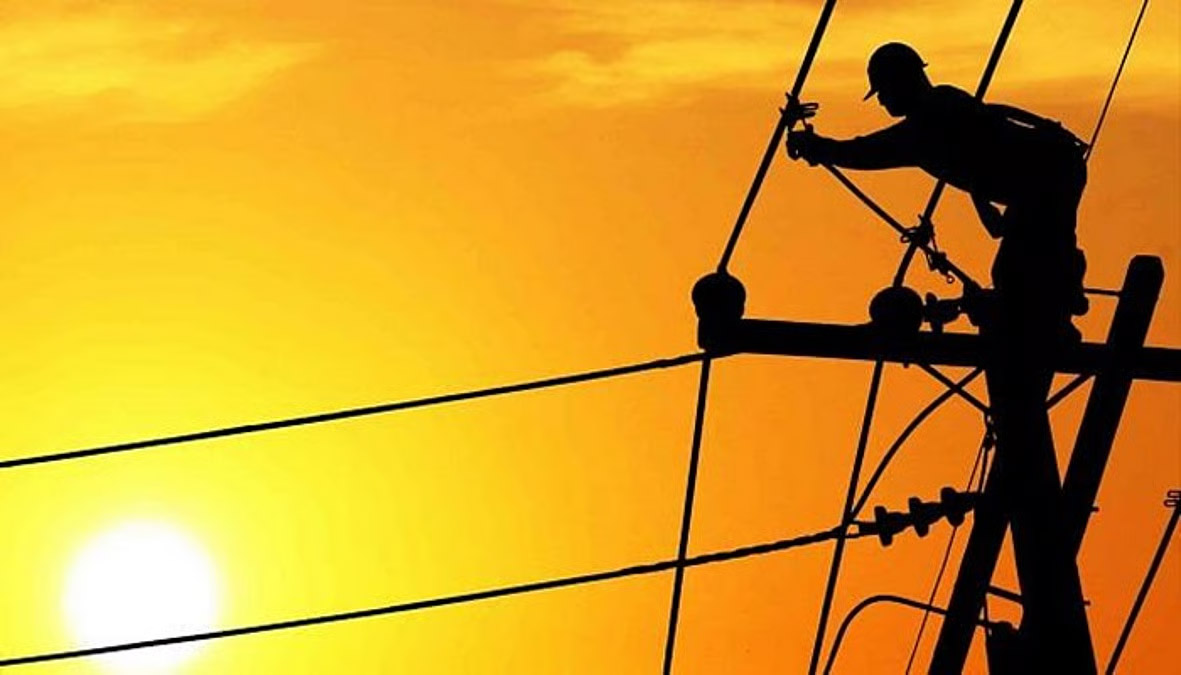
The organisers and participants of Lineman Diwas on 7th March, 2026 in Jammu deserve appreciation and congratulations. It was encouraging to see the Chief Minister and other senior Government functionaries participate in the event. Perhaps for the first time, such a large gathering of both Government leadership and field staff of the Power Development Department (PDD) assembled together, and the valuable contributions of JKPDD ground workers were duly acknowledged. On this occasion Chief Minister marked Lineman Diwas by calling for a “zero casualty” goal for power department staff, labelling them “indispensable foot soldiers”. He directed officials to ensure proper safety equipment and training, while praising workers for their dedication during crises.
It was also heartening to note that the issue of employee safety received due attention, with an announcement of Rs 1.5 crore allocated for safety equipment.
The rate of accidents within JKPDD distribution system remains significantly high. Over the past ten years, there have been 170 fatal accidents and 151 injury cases. Achieving the goal of zero accidents requires the strict enforcement of safety regulations, comprehensive safety training programs, public awareness and the adequate provision of safety devices and personal protective equipment.
Unlike many other states and UTs in India, J&K lacks any training institute for the engineers and other field staff. Although safety trainings are being conducted from time to time but the professional approach for trainings requires training infrastructure as per the Central Electricity Authority (CEA) guidelines for the recognition of training institutes. These guidelines mandate that institutions must have dedicated, equipped buildings with full-time staff to train personnel in generation, transmission, or distribution. The CEA Safety Regulations also provide detailed training syllabi for power sector employees.
The availability and proper use of safety devices and Personal Protective Equipment (PPE), as prescribed in the Safety Manual and the Standard Operating Procedures (SOPs), are essential for preventing accidents. In particular, line isolators and earth discharge rods are critical, life-saving devices for field workers.
During the period 2021-23, 11 kV feeder isolators were installed on 100% of the feeders. Similarly, a large number of earth discharge rods were procured during the same period; however, these were not sufficient to meet the standard requirement for all field staff.
The shortfall in such devices must therefore be addressed through urgent procurement. In addition, due to operational wear and tear, the periodic replacement of faulty or damaged units must be ensured as a regular and continuous practice.
The central procurement of Personal Protective Equipment (PPE), such as safety helmets, safety belts, safety shoes, safety gloves, ladders and reflective jackets, must continue to be ensured annually.
The engineers and other senior officers in administration must themselves respect the safety protocol by at least wearing safety helmet and safety shoe while visiting construction sites and charged power stations. This practice will set a healthy example for the lower staff to follow. It is being followed by the reputed engineering organizations globally.
As per safety standards power corporations must frame/ update Safety Manuals and place the same on their websites so as to ensure that the same remain accessible to the whole field staff. The present Safety Manual and Standard Operating Procedure in vogue was prepared pursuant to a meeting held under the chairmanship of the then Managing Director, KPDCL. The meeting was attended by experts from PDD as well as a team from NIT Srinagar headed by Professor Saad Parvez. The manual was subsequently issued in June 2022 after due approval by Techno Economic Committee of KPDCL.
Safety meetings of Standing Safety Committees at Managing Director, Chief Engineer, Superintending Engineer etc levels, as specified in the safety manual, must be conducted regularly. These committees are required to review periodically the availability of division-wise safety devices and personal protective equipment, training, mock drills and accidents during the meetings.
In case of accident, which may cause injury, death or disability, the victim must be compensated adequately. Prior to corporatization of JKPDD in 2019 a welfare fund existed in the JKPDD to which all employees contributed on monthly basis. The committees competent to sanction welfare amount to the accident victims and others in need of financial assistance seized to exist post corporatization. New draft rules were framed subsequently which await approval of the Government. The same must be accorded without any further delay. The new draft rules also propose to include daily wagers in the welfare fund because they were excluded in the earlier rules issued in the year 2008.
The Jammu and Kashmir Power Development Department (JKPDD) had included daily wagers in the erstwhile J&K Finance Department Insurance Scheme in the year 2021. During the same period, around 12,000 daily wagers were also registered under the Pradhan Mantri Jeevan Jyoti Bima Yojana (PMJJBY) and the Pradhan Mantri Suraksha Bima Yojana (PMSBY). However, these two schemes provide only a limited insurance cover, i.e., Rs 2 lakh for accidental death and Rs 2 lakh for natural death.
From 2022 onwards, the insurance cover for Government employees was entrusted to J&K Bank. Initially, the bank included daily wagers under the insurance scheme; however, they were subsequently excluded from the scheme in July 2023. At present, regular employees are covered under the J&K Bank insurance scheme with a free insurance cover of Rs 25 lakh. In contrast, daily wagers, who are equally exposed to occupational risks and accidents, are not covered under any such scheme.
The Government may consider either procuring a separate insurance scheme for them or enhancing the ex-gratia relief in their favour so that they are compensated on par with regular employees.
It is pertinent to mention that an ex-gratia amount of Rs 10 lakh is presently payable to accident victims, including both employees and civilians. This mechanism has proven to be a hassle-free compensatory arrangement within the Power Development Department (PDD). Since July 2021, when the Government delegated powers to the Secretary (Technical), JKPDD, to sanction ex-gratia relief, the system has been functioning effectively. Reportedly, an amount of around Rs 10 crore has been disbursed in favour of accident victims under this mechanism.
The shortage of manpower at the field level is also adversely affecting operation and maintenance activities, loss reduction efforts, enforcement, and the safety of staff. The creation of additional administrative units and additional posts already accepted by the Government vide corporatization proposal of 2019 is yet to be implemented, which needs to be expedited. While augmenting manpower capacity, whether through filling existing vacancies or creating new posts, the regularization of daily wagers should be accorded the highest priority.
Last but not the least, the quality of new equipment and works must be ensured through a third-party, independent quality control mechanism as per Finance Department Circular dated 08-01-2021 and as per the past practice. The equipment or workmanship not conforming to standards exposes both life and property to the risk of accidents, with linemen being the most vulnerable to such hazards. It also leads to an increased frequency of faults, thereby adding to the operational burden on the linemen.
(The author is Managing Director, JK Green Technologies Former Secretary Technical JKPDD/Managing Director JKPTCL)
 Follow our WhatsApp channel
