

Bashir Ahmad Dar
darbashir@gmail.com
The temperate climate of Kashmir and the upper reaches of Jammu is marked by long, harsh winters with temperatures frequently dropping below freezing. Such conditions present serious challenges for residential buildings. Unfortunately, many houses in the region are not designed to withstand these climatic extremes, resulting in poor thermal comfort and inadequate ventilation during winter months.
Cold indoor environments have a direct impact on human health. Research shows that prolonged exposure to low temperatures indoors can lead to elevated blood pressure, strokes, respiratory illnesses, and the worsening of conditions such as arthritis. Poor insulation and inefficient heating systems make matters worse, highlighting the urgent need for housing designs that ensure warmth, proper ventilation, and overall comfort during winter.
Another major concern in homes during winter is poor ventilation. In order to conserve heat, residents often seal doors and windows, reducing the inflow of fresh air. While this practice helps retain warmth, it also results in the accumulation of stale indoor air with high concentrations of carbon dioxide (CO?). Elevated CO? levels can cause fatigue, headaches, and reduced concentration. In addition, poor ventilation increases the risk of respiratory infections and aggravates conditions such as asthma, while also irritating the eyes, nose, and throat.
Unlike the tropical plains of India where natural ventilation during winter is sufficient, cold regions face unique challenges. Limited airflow, combined with reduced sunlight due to poor building orientation, results in insufficient air exchange and inadequate daylight indoors. These conditions often lead to lethargy, reduced productivity, and an overall decline in well-being during the winter season.
Energy consumption in homes across Jammu and Kashmir is another major concern. Space heating and hot water are required for much of the year, yet most buildings are poorly insulated and rely on inefficient heating practices. As a result, large amounts of energy are wasted. Passive house techniques and energy-efficient construction methods offer practical solutions by improving insulation, airtightness, and heating efficiency.
Buildings in Jammu and Kashmir currently consume around 50 percent of the region’s electrical energy, compared to the national average of about 35 percent. With better building design and energy efficiency measures, there is considerable potential to reduce this demand. Lower energy consumption would not only reduce electricity bills for households but also decrease greenhouse gas emissions, contributing to climate change mitigation.
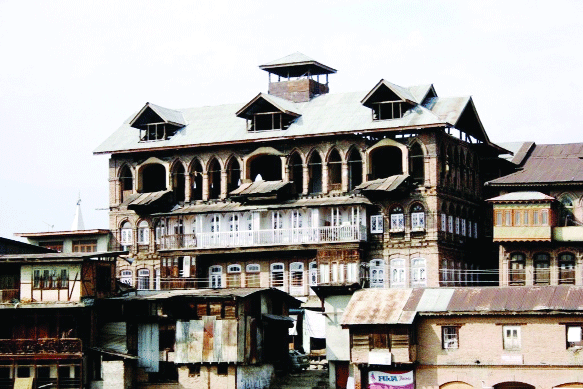
In recent years, the growing trend of constructing houses with complex multi-slope roofs has created an additional challenge. While aesthetically appealing, such designs make it difficult to install rooftop solar systems. Older houses with simpler roofs provide large, uninterrupted surfaces that allow efficient installation of solar photovoltaic (PV) panels. In contrast, multi-slope roofs contain several pitches and angles, making it difficult to position solar panels optimally for maximum sunlight.
These roof designs also complicate insulation and rainwater drainage systems, increase construction costs, and create safety risks for workers during installation or maintenance. As a result, many newly built houses are unable to take full advantage of rooftop solar power, limiting the adoption of a clean and sustainable energy source.
The region’s heavy dependence on thermal power further adds to environmental concerns. Approximately 43 percent of Jammu and Kashmir’s electricity supply comes from thermal power plants that burn coal. During 2024-25, the region consumed about 21,000 million units of electricity, of which nearly 9,000 million units were generated from thermal sources. Given India’s electricity carbon intensity of around 0.82 kilograms of CO? per kilowatt-hour, this translates to roughly seven million tonnes of carbon dioxide emissions annually.
Energy-efficient building design can significantly reduce electricity demand and associated emissions. Rooftop solar systems offer another effective solution. It is estimated that installing a 1-kilowatt solar system can offset carbon emissions equivalent to planting about 33 trees, highlighting the environmental benefits of renewable energy adoption.
Recognizing these challenges, JK Green Technologies has developed a comprehensive guidelines for constructing of energy-efficient homes suited to the cold climate of J&K. These guidelines aim to improve indoor comfort, reduce energy consumption, and encourage sustainable building practices. They have been made available to the public on the website of company to promote awareness among engineers, architects, builders, and homeowners.
One of the most important recommendations is proper building orientation. Wherever possible, houses should be oriented toward the south. Ideally, the longer axis of the house should run in an east-west direction so that the south-facing side has the largest surface area. This allows more windows to capture winter sunlight, providing natural heating and reducing energy consumption.
Rooms that are used most frequently, such as living rooms and bedrooms, should be located on the southern side of the house to maximize solar gain. Utility areas like bathrooms, staircases, closets, and storage spaces should be located on the northern side where sunlight exposure is less critical.
Since J&K lies in Seismic Zone VI, buildings must also be designed to withstand earthquakes. Beam-column structural systems are therefore recommended instead of traditional load-bearing brick construction, particularly for multi-storey buildings. Such systems provide greater strength, flexibility, and load distribution during seismic events.
The use of AAC blocks is also recommended because of their excellent insulation properties. AAC blocks have a thermal conductivity of about 0.17 W/m·K, compared to 0.98 W/m·K for dense clay bricks, making bricks nearly five times more thermally conductive. AAC blocks also contain around 60 percent fly ash, a recycled by-product of thermal power plants, making them environmentally sustainable.
During construction, reinforced concrete beams and columns should be fully concealed within the AAC block walls. This prevents the formation of “thermal bridges,” where heat escapes through structural elements, ensuring better insulation.
For budget houses constructed with bricks, exterior walls should be around 14 inches thick and provided with thermal insulation to reduce heat loss. Bond beams or tie beams at appropriate levels should also be installed to enhance structural stability and prevent cracking.
Interior spaces should be designed carefully to reduce heating requirements. The finished floor height should ideally not exceed 8.5 feet, as larger volumes of air require more energy to heat. Buildings designed for large gatherings, such as prayer halls or community halls, may have higher ceilings to improve air circulation.
Heating systems also play an important role in comfort. Underfloor heating is recommended because it distributes warmth evenly through natural convection and radiant heat. Unlike forced-air systems, it does not circulate dust and allergens, making it beneficial for people with respiratory sensitivities. The concrete layer above the heating pipes acts as thermal mass, slowly releasing stored heat even during short power outages.
Windows are another critical component of energy-efficient homes. Ideally, they should be double-glazed and argon-filled uPVC units, which significantly reduce heat loss. Mechanical ventilation through HRV or any other equivalent system should be provided for fresh air supply. To lower costs, many windows can be fixed, with only a few operable ones provided for ventilation in case mechanical systems fail.
The ratio of window area to wall area should generally not exceed 60 percent, while south-facing windows should have a window-to-floor ratio of around 15-20 percent, a practice widely followed in cold climates worldwide.
Doors should not open directly into living spaces. Instead, a vestibule or anteroom should be provided to act as a buffer zone, preventing cold air from entering the house directly and helping maintain indoor temperatures.
Passive design strategies can further enhance comfort. South-facing windows should be larger to maximize winter sunlight, while west-facing windows should remain smaller to prevent overheating in summer afternoons. Planting deciduous trees on the western side can provide shade in summer while allowing sunlight during winter after the leaves fall.
Adequate insulation in roofs, walls, and ceilings is essential for reducing heat loss.
Certain architectural features common in modern construction can actually increase heat loss. For example, reinforced concrete balconies, verandas, and window projections can act as thermal bridges, allowing heat to escape in winter and enter during summer. Such elements should therefore be minimized in cold-climate housing.
Roofs should also be designed to support solar photovoltaic systems capable of generating the household’s electricity requirements. Provision should be made during construction for solar water heaters as well, which can meet most domestic hot water needs. Backup systems such as heat pumps may be used during extremely cold periods like Chillai Kalan.
Finally, sustainable site planning should also be considered. Measures such as tree plantation, rainwater harvesting, efficient water use, sustainable building materials, and proper waste management can further improve environmental performance.
The adoption of energy-efficient building practices is not merely a technical option but an environmental and social necessity for J&K. By integrating passive design strategies, renewable energy systems, proper insulation, and modern ventilation techniques, homes can become more comfortable, healthier, and significantly less energy-intensive.
Disclaimer:
These guidelines have been prepared for awareness and training purposes only. Implement recommendations only after consulting a qualified architect or engineer to ensure safety, structural integrity, and code compliance.
(The author is Managing Director, JK Green Technologies)
 Follow our WhatsApp channel
