

Tsewang Rigzin
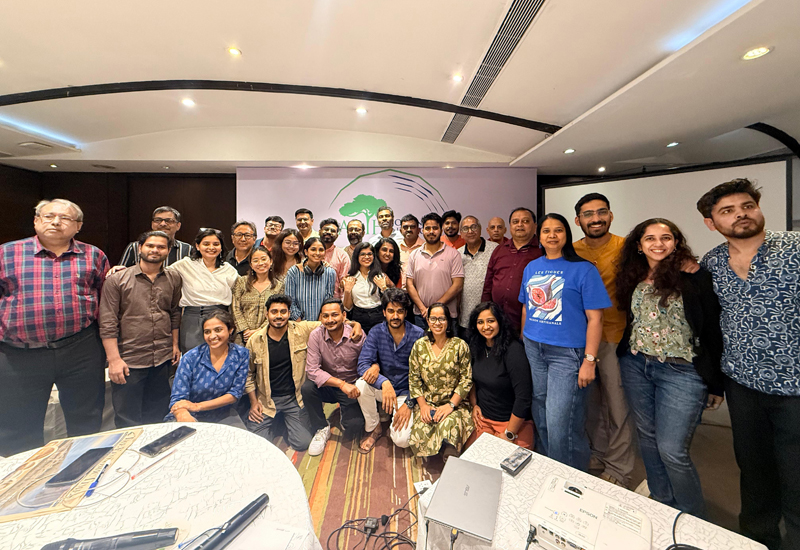
Pune, Mar 30: A three-day Communicators’ Workshop-cum-Bootcamp on ‘Renewable Energy’ brought together journalists, experts, and storytellers from across India in Pune. It was organised by the Earth Journalism Network (EJN) in collaboration with Internews, aiming to strengthen media coverage of India’s rapidly evolving renewable energy sector.
The workshop brought together communicators and journalists representing different regions of the country, including Ladakh, Jammu and Kashmir, Tripura, West Bengal, Odisha, Madhya Pradesh, Rajasthan, Maharashtra, Kerala, Bihar, Uttar Pradesh, Haryana, Telangana, and Tamil Nadu, among many other states. This reflected the diversity of perspectives in renewable energy reporting across different geographical conditions.
“Just transition” in renewable energy was also a focus, as it is not going to be easy to abruptly shift from conventional energy to renewable sources. Those who have covered this field for many years, including Atul Deulgaonkar and Joydeep Gupta, emphasised that shifting from conventional energy sources to renewables cannot happen rapidly without addressing socio-economic realities. While Shantanu Dixit gave a comprehensive overview of India’s renewable energy sector, highlighting both progress and persistent challenges.
Participants also deliberated on the ground-level difficulties being faced across the country in the implementation and installation of different renewable energy projects. Issues such as land-use conflicts, lack of awareness, policy gaps, and community resistance were highlighted as significant barriers, even as the government aims to scale up solar and also there renewable power projects nationwide.
Another important concern raised was the long-term environmental impact of renewable technologies themselves. With solar capacity expected to expand rapidly, discussions pointed to the emerging challenge of electronic or solar waste. It was also discussed that discarded solar panels and related equipment could become a major waste problem in the next 30-40 years if proper recycling and reuse mechanisms are not developed in time.
A particularly thought-provoking session was delivered by Dr Sundeep Salvi, whose presentation on the health impacts of climate change highlighted the growing burden of respiratory illnesses and other health risks linked to environmental degradation.
Discussions also touched upon the current global context, particularly the impact of the ongoing West Asia conflict. Participants noted that disruptions linked to the conflict have contributed to shortages of LPG in parts of the country. As a result, some journalists observed a noticeable shift in household energy use, with increased reliance on electricity for induction cooking, leading to a rise in power consumption from the grid in some states.
Sessions further featured insights from experts including Archana Chaudhary on financing renewable energy. Discussions on equitable solar development and decentralised energy solutions were led by Gajanan Joshi, Shraddha Zende, and Panisthi Vora.
Hands-on sessions on video storytelling and tackling misinformation and disinformation were conducted by Shuchita Jha along with Shraddha Zende and Panisthi Vora, equipping participants with practical tools for digital journalism. Participants also had the opportunity to visit the agrivoltaics demonstration project at the BAIF Rural Innovation Centre, gaining firsthand insights into sustainable, community-focused energy solutions.
Ramesh Matham, Sudhir Mishra, and Ranjan Panda also made presentations on identifying gaps in renewable energy coverage, emphasising the role of communicators in shaping informed, inclusive, and impactful narratives on renewable energy and climate change across India.
 Follow our WhatsApp channel
