

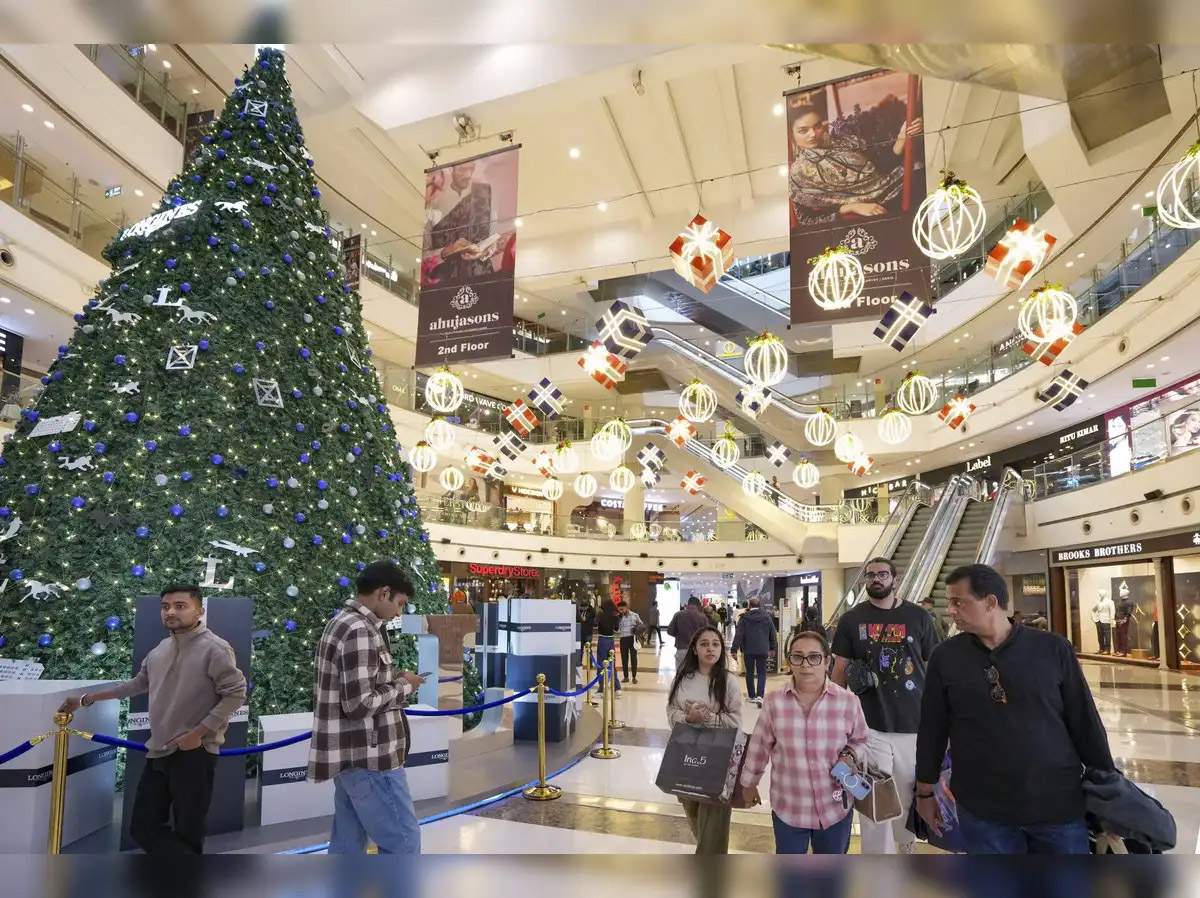
NEW DELHI, Dec 25: Shrugging off past disruptions, the Indian retail industry is gearing up for 2026 with a solid foundation and is expected to see better margins, driven by a shift in demand from major metros to Tier II and III cities, all while maintaining its position as the world’s third-largest retail market.
The Indian retail industry, valued at approximately USD 1.1 trillion, is marked by rapid digital integration, expansion into smaller towns, and significant mall development, driven by strong domestic demand, tech-led disruption, and rising consumer expectations for quality and value.
With policy interventions such as GST reforms and income tax relief, coupled with a good monsoon and higher Minimum Support Prices (MSP), the industry anticipates a silver lining in consumer demand. Moreover, the rise of the value retail boom and premiumisation, is expected to usher in a year of accelerated growth.
However, the industry faces challenges such as growing rentals, fierce competition across digital and physical channels, complexity of integrating omnichannel experiences, persistent supply chain inefficiencies, potential margin squeezes, and a critical shortage of skilled talent.
The outlook for 2026 for the retail sector is “highly optimistic” with expectations of continued double-digit growth and further transformation, said Anand Ramanathan, Partner & Consumer Industry Leader, Deloitte India.
“GDP growth is projected at 6.4 to 6.7 per cent, inflation is under control, and consumer sentiment remains strong. E-commerce penetration will deepen, with more consumers from smaller towns and rural areas shopping online.
“Quick commerce and social commerce will continue to disrupt traditional models, and omnichannel maturity will enable unified experiences and flexible fulfilment options,” he said.
Premiumisation and personalisation will be driven by the rise of the middle and affluent classes, while sustainability and inclusion will become core differentiators for brands.
However, he also added, “Challenges will persist around margin management, supply chain optimisation, and regulatory compliance, but the sector is expected to remain resilient and innovative, with technology and consumer-centricity at its core.”
Aditya Priyadarshan, Managing Director (Partner) at Accenture Strategy and Consulting, said 2025 marked a clear and continued shift towards a more formal and digitally enabled retail ecosystem in India, with organised players steadily gaining share despite global volatility.
“The year was defined by the ‘Bharat surge’ where Tier 2 and Tier 3 cities didn’t get participate in the growth — they led it.” he said.
Structural reforms such as GST slab standardisation are reducing “complexity, improving price transparency”, and creating a more level playing field for retailers. GST rate cut along with income tax relief also boosted consumer sentiment leading to record sales in the last quarter of the year.
“As we enter 2026, India’s retail growth remains structurally strong, but the next phase will be margin-led rather than volume-led.
Retailers that combine cost discipline and leverage technology such as AI to deliver greater personalisation and seamless omni-channel execution will emerge as long-term category leaders,” he said.
Expressing identically, Retailers Association of India (RAI) CEO Kumar Rajagopalan said the retail sector will enter 2026 with steady momentum built through 2025, marked by measured but broad-based growth rather than exuberance.
Consumption has strengthened progressively through the year, especially during festive periods, even as consumers remain value-conscious and selective in their spending, he said.
“Looking ahead, growth in 2026 will be shaped less by demand alone and more by competition, operational efficiency, and the ability to serve diverse markets — from premium urban consumers to value-driven Bharat. Retailers that combine affordability, relevance, and disciplined execution will be best placed to grow sustainably in the year ahead,” said Rajagopalan.
Lalit Agarwal, Managing Director of V-Mart, said 2025 was not a good year for branded and premium retail, but the value retailer performed well.
Moreover, the industry also faced challenges on the margin front in 2025, especially because of GST changes. To implement the GST changes on time, old inventory was liquidated with discounts, specially on product lines from FMCG, apparels, footwear and all of those stuff.
When asked 2026, Agarwal said the retail should flourish, helped by factors including increase in consumption in apparels, fashion and some other segments, which will drive the growth.
EY India Partner and National Leader for Tax – Consumer Products and Retail Sector Paresh Parekh expects industry’s transitione from a prolonged phase of ‘pricing-led growth’ to the early stages of a ‘volume-driven’ recovery.
“Looking ahead, 2026 appears promising, with expectations of broader volume-led growth, deeper AI-led decision making across pricing and supply chains, and sharper portfolio segmentation.” he said.
Nexus Select Malls Chief Marketing Officer Nishank Joshi said 2025 has been a year of clear shifts in how India engages with retail and mall ecosystems.
“We saw rapid digitisation in advertising, with large-format digital installation screens and advanced facades redefining visibility for brands,” Joshi said.
Moreover, customer behaviour also evolved with premiumisation growing across categories, experiential formats becoming core traffic drivers, while data-backed insights helped in understanding shoppers with far greater precision.
Shriram PM Monga Co-Founder and Principal Consultant at SRED Real Estate Advisory said India is ready for its next retail leap.
“The next wave of growth will come not just from expanding retail supply, but from building globally benchmarked, tourism-led shopping districts that celebrate our culture, elevate visitor experiences and unlock new economic value,” he said. (PTI)
 Follow our WhatsApp channel
