

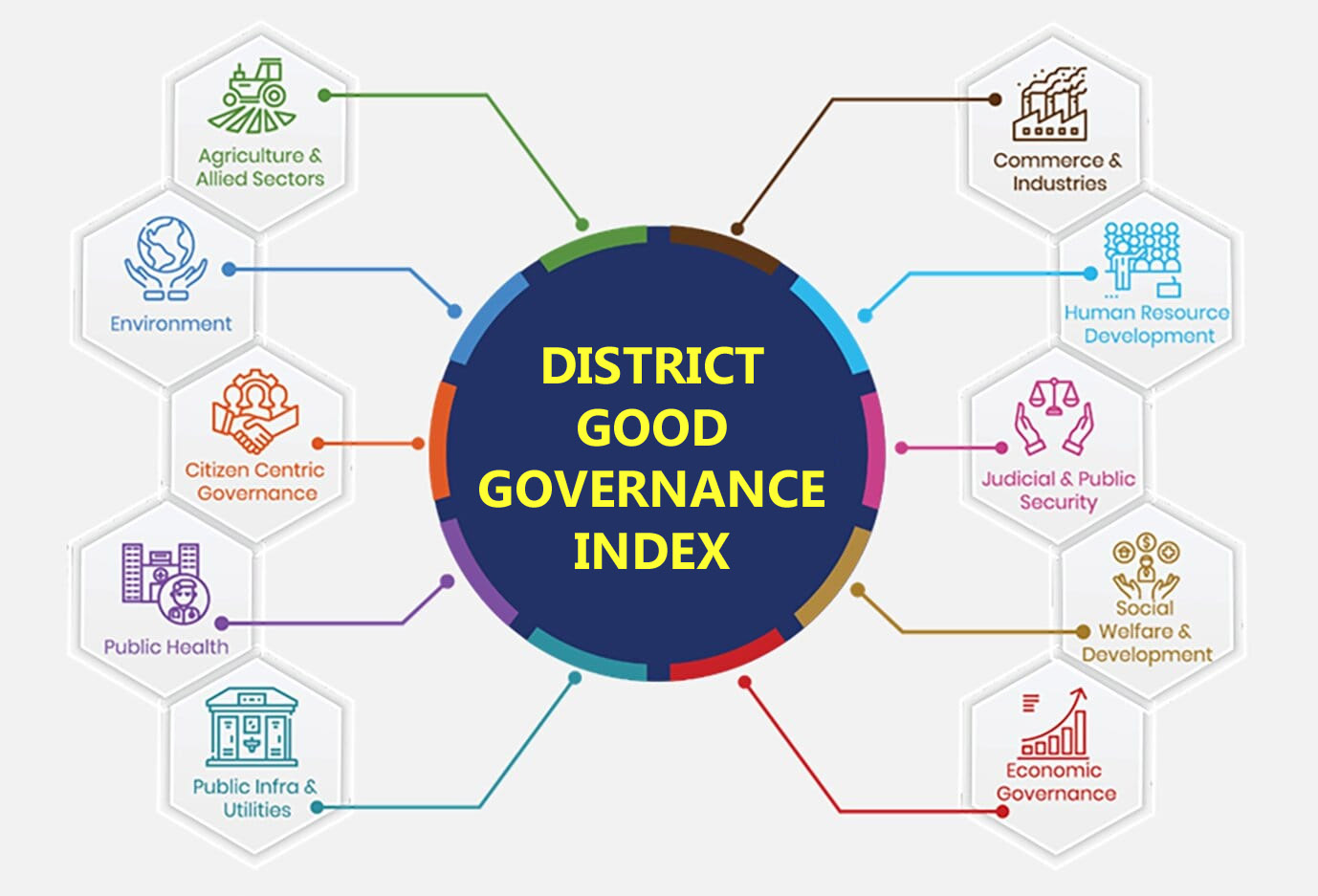
The release of the District Good Governance Index (DGGI) 5.0 marks more than an annual administrative exercise-it offers a granular audit of governance performance across Jammu and Kashmir. By evaluating 20 districts on 58 indicators spanning 10 critical sectors, the index serves as a diagnostic tool rather than a mere scoreboard. It reflects how effectively policies translate into outcomes at the grassroots level. At the aggregate level, Jammu district retaining the top rank indicates institutional consistency. However, a closer reading reveals a more nuanced picture. Even as Jammu leads overall, its relative underperformance in certain sectors signals that top rankings do not imply uniform excellence. This underscores a key strength of DGGI-it exposes intra-district disparities that often remain masked in composite scores. Equally significant is the sharp slide of Kathua to the bottom of the rankings. Despite improvements in select sectors, the overall decline points to systemic gaps that require urgent intervention. Such reversals highlight that governance gains are neither automatic nor permanent; they demand sustained administrative focus and adaptive policy responses.
One of the most encouraging aspects of DGGI 5.0 is the distribution of sectoral leadership. Districts like Pulwama, Kulgam, Ganderbal, and Reasi, emerging as top performers in specific domains, demonstrate that excellence is not geographically confined. This decentralised success pattern reinforces the idea that best practices can-and should-be replicated across districts. It also shows that even lower-ranked districts may possess strengths in particular sectors, offering templates for broader improvement. The index, therefore, fosters healthy competition. It enables district administrations to benchmark their performance against peers and identify precise areas of weakness-be it public health, financial inclusion, infrastructure, or citizen-centric governance. This competitive framework, if backed by targeted policy direction, can significantly enhance service delivery.
Importantly, the emphasis laid on gap analysis and time-bound reforms aligns with the core purpose of the index. The real value of DGGI lies in its ability to guide corrective action. District-specific hurdles-whether administrative bottlenecks, resource constraints, or implementation inefficiencies-must be identified and addressed through focused interventions. Going forward, continuous monitoring through the DGGI dashboard and periodic audits can keep district administrations alert and accountable. Indices provide the feedback loop necessary to refine it. The rankings should not be viewed as endpoints but as starting points-tools to drive introspection, encourage innovation, and ultimately ensure that governance outcomes are effective across all districts.
 Follow our WhatsApp channel
