

Dr. Akshay Deep, Dr. Anil Bhat
Rice cultivation is at a pivotal moment in global agriculture serving as a vital food source for over half the world’s population. South Asian nations dominate the sector contributing approximately 90% of global rice production and consumption with total output reaching 678.7 million tons, according to recent FAO and GRSP data. India stands out as a key player, being the second-largest producer and consumer of rice while leading global exports. During the Kharif season rice cultivation in India spans 39.54 million hectares accounting for 55% of the country’s cultivated land and employing 57.5% of the farming population. With projections indicating the need for an additional 114 million tons of milled rice by 2035 to sustain food security, the scarcity of resources for expansion is a critical concern. By 2030, it is anticipated that one-third of Indian farmers will experience water shortages intensifying the need for innovative agricultural solutions.
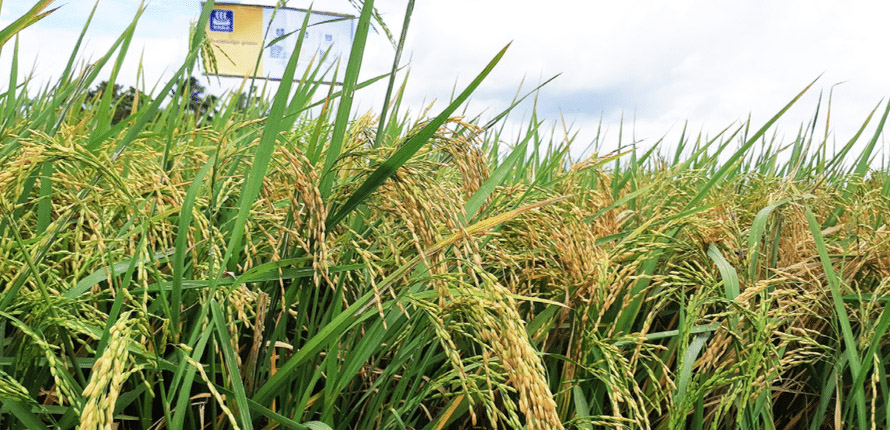
In Union Territory of Jammu and Kashmir, rice is cultivated on 268.78 thousand hectares with a yield of 1,834 kilograms per hectare. In the Jammu region, the total area under rice cultivation is 136.48 thousand hectares, with a yield of 1,204 kilograms per hectare (Directorate of Economics & Statistics, 2022). Rice milling by products are used for a variety of purposes. Rice bran is used as fodder for animals such as poultry and livestock. Rice hulls can be utilized in the production of insulation materials, cementand cardboardas well as chicken excrement. During the winter, rice chaff can be used as both cattle feed and as litter. In India, rice is cultivated in a wide variety of ecosystems, which includes irrigated shallow lowlands, mid-deep lowlands, and deep water uplands. The most prominent method of rice establishment in India is transplanting. Direct-Seeded Rice (DSR) has emerged as a promising alternative to traditional transplanting methods, offering advantages such as reduced water consumption, shorter land preparation time, and lower greenhouse gas emissions. DSR proves particularly beneficial in regions facing climatic challenges, as it enables accelerated crop maturation, improved water efficiency, and more sustainable cultivation practices. Across India, DSR adoption is growing due to environmental, economic and technological factors. Major rice-producing states such as Punjab, Haryana and parts of Uttar Pradesh are leading the way with Punjab at the forefront of widespread DSR implementation supported by government initiatives and the efforts of agricultural universities. In Jammu and Kashmir, the shift to DSR gained momentum during the COVID-19 pandemic driven primarily by labor shortages, as conventional rice farming is labour-intensive. Enhanced agricultural extension services provided technical guidance and support while larger landholdings facilitated the transition to DSR. This shift marked a significant adaptation of farming practices during a challenging period. Several factors have fuelled interest in DSR over traditional transplanting methods. A primary advantage is water conservation, as DSR uses 25-30% less water, which is particularly beneficial in regions struggling with groundwater depletion and unpredictable monsoon patterns. The cost of DSR is approximately 38.38% lesser than the cost of the transplanted rice method in Jammu region according to the research conducted in the area. The method also addresses labor shortages by reducing labor requirements by 25-35%, leading to lower cultivation costs.
From an environmental perspective, DSR offers several benefits. Unlike flooded rice fields, DSR leads to reduced methane emissions, which is a significant contributor to greenhouse gases. Furthermore, the method promotes better soil health due to less puddling, enhancing soil structure and nutrient availability. It also contributes to lower energy consumption for irrigation, aligning with sustainability goals. However, despite these advantages DSR does come with its own set of challenges. Technical difficulties, such as managing weeds and ensuring precise water control can hinder the success of DSR. Establishing the crop initially can also be tricky, requiring specialized techniques and equipment. Another obstacle is the knowledge gap among farmers.
To fully benefit from DSR, farmers need proper training on seed treatment, sowing techniques and the selection of appropriate rice varieties that thrive under DSR conditions. Nutrient management for DSR also differs from traditional methods, and farmers need to understand these differences to optimize crop yield. To address these issues, the government has been offering subsidies on DSR equipment and providing agricultural extension services to help farmers transition to this new method. Additionally, research institutions are working to develop DSR-specific rice varieties that are better suited to the unique requirements of direct seeding. Nutrient management in DSR differs from traditional methods, necessitating proper training to maximize yields. The adoption of Direct Seeded Rice (DSR) in the Jammu region faces several constraints. High weed infestation is the most significant issue. The DSR technique, which lacks early flooding, creates a favorable environment for weeds, competing with rice plants for nutrients, water and sunlight. Other constraints included insufficient knowledge about seed depth with a happy seed drill, lack of suitable equipment, poor-quality seeds, and increased soil-borne pathogens. To improve DSR adoption, efforts should focus on providing training, disseminating knowledge ensuring access to quality inputs and promoting improved agricultural practices in the region.
To address these issues, the government provides subsidies for DSR equipment and extends agricultural advisory services. Research institutions are also developing rice varieties tailored to the specific needs of DSR cultivation. Looking ahead, DSR adoption is expected to increase, especially as climate change impacts traditional rice farming practices. Mechanization, including the development of specialized DSR machinery, will play a pivotal role in its broader adoption. Continued research and region-specific adaptations will be essential to optimize the method and ensure its long-term success, making DSR a sustainable and economically viable alternative for rice cultivation.
Direct Seeded Rice (DSR) offers a promising and sustainable alternative to traditional rice cultivation, addressing key challenges such as water scarcity and labor shortages. By eliminating the need for water-intensive puddling, DSR not only conserves water but also reduces greenhouse gas emissions associated with conventional flooded rice farming. However, its successful implementation hinges on overcoming various challenges, such as weed management, proper sowing time and farmers’ technical knowledge. For DSR to become more widely adopted, it is essential to provide farmers with comprehensive training, access to quality seeds and suitable machinery along with timely interventions for pest and weed control. Policymakers, agricultural experts and stakeholders must collaborate to promote DSR through education, research and appropriate policy support. With the right practices, DSR has the potential to significantly enhance rice productivity, reduce environmental impact and contribute to the sustainability of rice farming in the long term.
(The authors are from the Division of Agricultural Economics, SKUAST-Jammu)
 Follow our WhatsApp channel
