

Amit Khajuria
“Nature takes its own course ” – Anonymous
The devastation in the Jammu region-flash floods, landslides, cloudbursts, bridge failures, flooded roads-results from a complex mix of natural and man-made causes. Can we call this Act of God or Act of Man! Lets try to explore.
Act of God
Jammu experienced intense monsoon rains, cloudbursts, and prolonged wet spells, leading to saturated soil and swollen rivers. The region’s terrain is naturally fragile and susceptible to such disasters due to its position in the western Himalayas and steep, loose slopes. Meteorological data shows recurrent red alerts for heavy rainfall, flash floods, and landslides, sometimes exceeding 150 mm in a single deluge.The heavy rainfall in Jammu is primarily caused by intense monsoon activity, where moisture-laden winds from the Arabian Sea and Bay of Bengal rise over the Himalayas to cause orographic rain. This year, unusually strong monsoon currents and cyclonic disturbances have amplified the effect. Additionally, Western Disturbances from the Mediterranean contributed extra moisture and intensified rain events. Climate change may also have played a role by increasing the frequency and intensity of extreme rainfall and storms, which has led to record-breaking downpours in Jammu. For example, Jammu recorded a staggering 380mm of rain in 24 hours, almost its monthly average (during monsoon), leading to floods, landslides, and severe disruptions.
Act of Man
Widespread mining in non-mining zones, including carving out Shivalik mountains for material to build expressway, has destabilized slopes and increased landslide risks. Lack of regulatory oversight and environmental impact assessment (EIA) for infrastructure projects has aggravated the vulnerability of natural habitats. The landslides in the Kathua district, particularly in the Janglote and Ghati areas, can be closely linked to the effects of mining activities carried out for the construction of the expressway. This region, part of the fragile Shivalik mountain range, has experienced significant disruption to its natural terrain due to extensive mining and excavation. The extraction of material from the mountains for road-building has weakened soil cohesion and may have destabilized the slopes, making them extremely vulnerable to landslides, especially during intense rainfall events like cloud bursts. Corruption and silence among officials and citizens allowed illegal or unsafe activities to continue unchecked, magnifying the region’s disaster susceptibility. Construction in floodplains and flood-prone zones without proper planning has resulted in bridges and roads repeatedly washed away during these floods.
Even the collapse of bridges:right from Lakhanpur to Kathua (Sahar Khad) to Vijaypur (AIIMS Bridge) in Jammu region , which are sensitive zones, can be attributed to the adverse effects of mining activities conducted in restricted or non-permitted areas. Mining destabilizes the natural terrain by removing soil and rock mass that support the landscape’s structural integrity. This destabilization leads to soil erosion, weakening of foundational earth materials, and increased vulnerability to slope failures and landslides-all of which may have severely undermined bridges’ stability. When bridges are constructed over or near areas affected by unchecked mining, the structural foundations is compromised due to shifting ground, increased sediment load in rivers, or vibrations caused by mining machinery. The lack of rigorous environmental impact assessments and poor enforcement of mining regulations exacerbate these risks.
Mata Vaishno Devi Incident
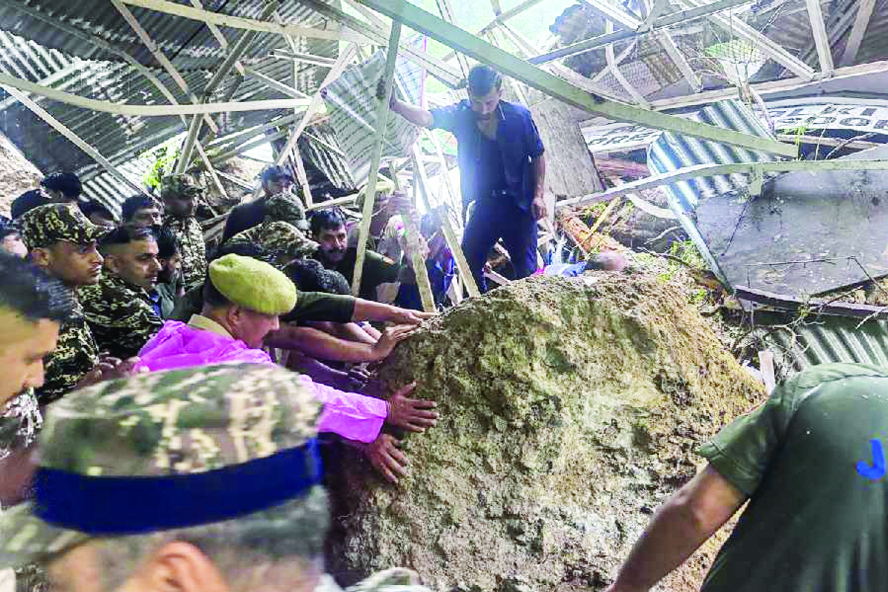
The torrential rain attack caused a heavy landslide on the Mata Vaishno Devi yatra track and finally the yatra got suspended’which even a red alert warning could not do. The landslide entombed 34 pilgrims and injured several others. The question which arises is Whether the Shrine Board which is responsible for million of yatris each year, has a SOP for conducting the yatra, during such exigent weather conditions considering the terrain, vulnerable location and the warnings issued.
Before the Shri Mata Vaishno Devi Shrine Board was established in 1986, the pilgrimage route was narrow, unpaved, and lacked basic facilities like water, power, and sanitary services, making the journey tough for pilgrims. The Shrine Board has laid tiled, skid-free pathways and staircases that are pedestrian-friendly, improving safety and comfort during the trek. The developments have transformed the pilgrimage into a more accessible, and pleasant experience, catering to millions annually. While motorable vehicles improve access and ease for pilgrims, the unregulated expansion and use of such tracks near Mata Vaishno Devi shrine may have posed risks to the natural habitat, contributing to soil erosion, vegetation loss, and higher disaster vulnerability.
Avoidable Disaster: The Mix of Both
While extreme weather was a trigger, the extent of devastation was severely aggravated by human actions. Mining and land alteration made natural slopes more unstable. Poor planning and disregard for environmental norms left infrastructure (roads, bridges) exposed to known risks. The absence of environmental impact checks and mitigation plans for major projects contributed to unpreparedness and increased damage. Environmental experts, and disaster managers must agree: better controls, regulation, and respect for ecological sensitivity could have greatly reduced the impact, making much of the disaster avoidable.
Conclusion
The Jammu region’s disasters in 2025 is a tragic mix of natural hazards, amplified by human mismanagement-particularly illegal mining, poor land use, infrastructure projects lacking environmental consideration, and regulatory lapses. Many effects could have been minimized or avoided with better regulation and informed planning prioritizing ecological balance.
(The author is Veteran Indian Navy Commander)
 Follow our WhatsApp channel
