

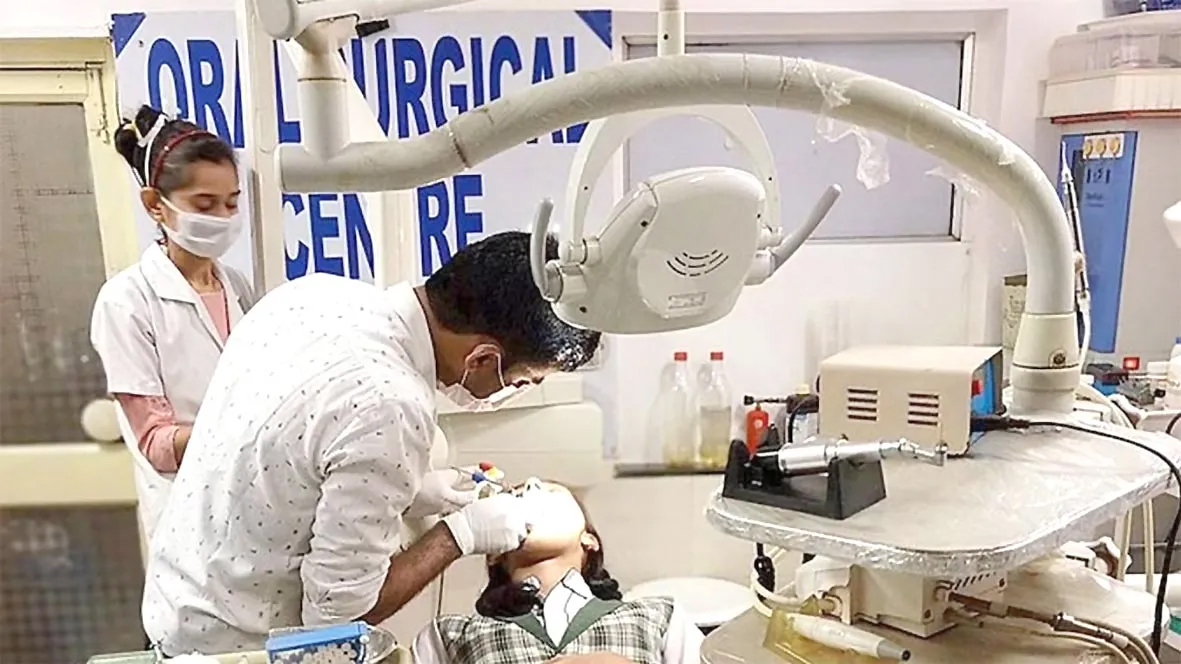
The decision to double MDS seats at Government Dental College, Jammu, marks more than an academic expansion-it reflects a calibrated policy push to reposition dental healthcare within the broader public health framework of J&K. For decades, dental education in the region remained largely undergraduate-centric. The introduction of MDS programmes at IGGDC in 2020 signalled a structural shift-from producing general dental practitioners to cultivating specialists capable of handling complex oral health conditions. That transition, now reinforced by the Centre’s approval to nearly double postgraduate seats within five years, underscores an important policy recognition: specialisation in healthcare is no longer optional; it is foundational.
This expansion must be viewed within the wider efforts of the Ministry of Health and Family Welfare to decentralise advanced medical education. By increasing MDS seats across key disciplines-from oral surgery to orthodontics-the Government is addressing capacity constraints and correcting a long-standing regional imbalance that forced many graduates to migrate outside the UT for higher studies. A larger pool of specialists means improved tertiary care, reduced patient referrals outside the region, and a gradual elevation of clinical standards. Increased intake requires enhanced infrastructure, modern equipment, and expanded faculty strength-translating into better teaching ecosystems and improved patient services.
Equally significant is the impact on career pathways. For BDS graduates, limited postgraduate seats have historically constrained professional growth. With expanded MDS capacity, the prospects of specialisation, employability and expertise improve substantially. This is particularly relevant in a competitive healthcare landscape where advanced qualifications increasingly determine both clinical credibility and career mobility. Yet, the broader public health context cannot be ignored. Oral hygiene continues to be a neglected domain in Indian society, often overshadowed by other health priorities. By investing in advanced dental education, policymakers are indirectly addressing this gap. A more robust network of specialists can drive awareness, early diagnosis, and better management of oral diseases.
However, sustainability will depend on consistent regulatory oversight, adherence to academic standards, and equitable distribution of specialists across urban and rural areas. Expansion without quality risks diluting the very gains it seeks to achieve. In essence, the scaling up of MDS seats at IGGDC Jammu is a strategic intervention-one that aligns education, infrastructure, and healthcare delivery. If complemented with sustained policy support and grassroots awareness, it holds the potential to transform not just dental education but the overall oral health landscape of UT.
 Follow our WhatsApp channel
