

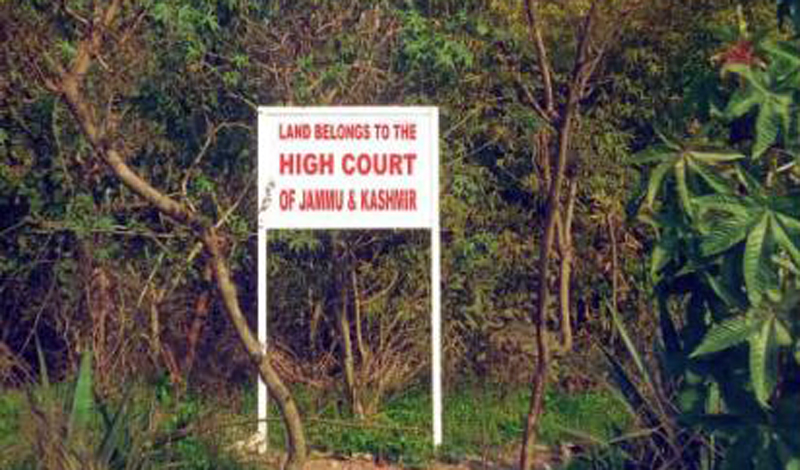
Over two years have passed since the foundation stone for the new High Court complex at Raika, Jammu, was ceremoniously laid. Yet, the ground reality remains grim as no financial allocation has been made by the Union Territory Government for the project in the current fiscal year, and not a single brick has been laid since the high-profile ceremony. The delay is not merely symbolic; it is severely impacting the day-to-day functioning of the judiciary. The present High Court complex at Janipur is bursting at the seams. Courtrooms are cramped, and working conditions for judges, lawyers, and litigants are far from adequate. The judiciary-meant to be a pillar of democracy-is forced to operate in a space that hampers both efficiency and dignity. The planned Raika complex, estimated to cost over Rs 921 crore, was envisioned to transform judicial infrastructure with state-of-the-art facilities. But with each passing month of inaction, not only does the urgency mount, but the project cost also escalates.
The current state of inaction is doubly concerning because the J&K Government seems to lack a concrete financing plan for this mega project. While crores have been earmarked for subordinate courts and judicial officers’ housing, the High Court at Jammu finds itself left out. Compounding the issue, the Centrally Sponsored Scheme for judicial infrastructure does not include High Courts, making this a State/UT responsibility. Yet, the UT Government has made no apparent move to seek alternative support from the Central Government or initiate a special funding request. Though Ladakh has pledged Rs 20 crore as its share, based on usage and population, this is a drop in the ocean given the massive financial requirements. Even the enhanced share alone will not bridge the yawning financial gap.
The Government must act decisively. Options such as phased construction, public-private partnerships, or even expanding the current Janipur complex should be urgently explored. Judicial delays due to inadequate infrastructure erode public trust and hamper access to justice. Time is of the essence. The Government must treat this project as a necessity for the rule of law to thrive in the UT.
 Follow our WhatsApp channel
