

Col Shiv Choudhary (Retd)
shivchoudhary2@gmail.com
Decluttering an Indian home is not about turning it into a showroom or following a foreign lifestyle trend. It is about making everyday living easier, safer, and calmer for the people who live there. Traditionally, Indian homes were modest in size but highly functional. Limited storage naturally encouraged families to keep only what they truly used. Today, homes are larger, cupboards are deeper, lofts are higher, and yet space always feels inadequate. The real problem is not lack of space, but excess belongings. Every additional item demands space, cleaning, maintenance, attention, and mental energy, even when it lies unused. Over time, this silent accumulation turns into physical clutter and mental fatigue. As the saying goes, “The more you have, the more you are occupied; the less you have, the more you are free.”
Most Indian households accumulate things out of habit, emotional attachment, and a deep rooted fear of scarcity. Medicines are one of the most common and dangerous forms of clutter. Almost every home has drawers filled with expired tablets, half-used syrups, duplicate strips, and medicines prescribed years ago for illnesses long forgotten. We keep them thinking they may be useful someday, but expired medicines are harmful and unused ones create confusion during emergencies. A practical habit is to review medicines every few months, discard expired ones safely, keep only current prescriptions, and maintain a small basic kit for fever, cold, pain relief, and first aid. This simple step improves both safety and clarity.
Medical reports, prescriptions, diagnostic images, insurance papers, hospital bills, bank statements, warranties, and manuals are another major source of clutter. Many homes have folders stuffed with outdated papers mixed together, leading to panic when an important document is needed. The solution lies in segregation and reduction. Keep current medical records and essential documents neatly filed. Old or irrelevant papers can be scanned if required and then discarded. In today’s digital age, most bills and manuals no longer need physical storage.
Books, notes, and papers carry strong emotional value in Indian homes. We grow up respecting books, so discarding them feels wrong. As a result, school textbooks from a decade ago, exam guides, old novels, handwritten notes, outdated religious books, and damaged pictures pile up across shelves and cupboards. The truth is that knowledge does not disappear when a book leaves your house. Donate usable books to schools, libraries, NGOs, or younger students. Discard outdated notes and retain only books you truly refer to, love, or plan to reread. A small, meaningful bookshelf is far more useful than shelves filled with unread volumes collecting dust.
Cutlery, crockery, and kitchen utensils multiply silently over the years, especially after weddings, festivals, and housewarming gifts. Many kitchens contain extra steel glasses, mismatched plates, chipped bowls, cracked cups, and plastic containers without lids. We keep them “for guests,” yet when guests arrive, we still use the good set. A practical approach is to keep utensils based on actual use. A family of four does not need twenty plates. Keep a few extras for guests and donate or recycle the rest. Broken or chipped crockery should be discarded immediately, as it is unhygienic and unsafe. Kitchens function best when every item has a clear place and purpose.
Groceries and daily essentials are another clutter hotspot driven by fear of shortages. Excess rice, wheat, pulses, oil, spices, and snacks occupy cabinets, storage beds, and balconies. Toiletries multiply similarly, soaps, shampoos, detergents, cleaners often bought during discounts or out of insecurity. Ironically, most of these items are easily available nearby or online. Over-stocking leads to spoilage, pests, blocked storage, and unnecessary anxiety about supplies that rarely run out.
Old photographs, albums, CDs and even some mementoes carry heavy emotional weight. Indian families often store multiple albums from weddings, festivals, and family functions that are rarely opened. Wedding cards and avoidable huge sweet packs are often seen lying for months after the events. Overtime, photos fade and albums occupy valuable cupboard space. A sensible solution is to sort them once, select the most meaningful photographs, and digitize the rest. Storing them on a hard drive or cloud preserves memories without sacrificing physical space. One set of few photos per major life event is usually sufficient.
Emergency-related items also accumulate due to insecurity. Extra gas cylinders, frozen food, water cans, batteries, candles, torches, extension cords, inverters, and power banks are stored because of past disruptions. While basic preparedness is sensible, multiple backups for the same purpose quickly become clutter. Many such items lie unused for years and fail when finally needed. Preparedness should be practical, not paranoid, and usually one functional backup per need is enough.
Shelves and cupboards themselves often become clutter. Adding more storage rarely solves the problem; it usually invites more accumulation. Overloaded shelves bend, look messy, and make cleaning difficult. Reducing the number of items allows breathing space, improves visibility, and simplifies daily use. The same principle applies to wardrobes, kitchen cabinets, and bathroom racks.
Furniture is another overlooked contributor to clutter. Many homes have extra chairs, old tables, broken stools, or inherited furniture kept out of guilt or sentiment. Oversized or excess furniture restricts movement and makes rooms feel smaller, especially for elders and children. Honest assessment of what is actually used helps decide what truly deserves space.
Children’s toys, clothes, school supplies, and craft materials accumulate rapidly. Involving children in decluttering helps them understand sharing and responsibility. Explaining that unused toys can make other children happy often makes the process easier. A simple rotation system, where only some toys are accessible at a time, reduces clutter and increases engagement.
Festival-related items quietly take over Indian homes. Extra mattresses, bedsheets, towels, curtains, shoes, artificial flowers, rangoli boxes, decorative lights, gift wrap, and unused return gifts are stored “for Diwali” or “for guests.” Over time, these items age and gather dust. One well-maintained festival box is usually more than sufficient.
The habit of keeping items “just in case” is deeply rooted due to memories of past scarcity. Old wires, broken appliances waiting to be repaired, empty jars, gift boxes, plastic bags, and tools pile up silently. While reuse is valuable, excess is not. If something has not been used for over a year or two and can be easily replaced, it does not deserve permanent space.
Decluttering also means changing buying habits. Before purchasing anything new, ask whether it is truly needed, where it will be stored, and what will be removed to make space. A simple “one in, one out” rule prevents clutter from returning. Choosing quality over quantity and avoiding impulsive buying driven by comparison further reduces accumulation.
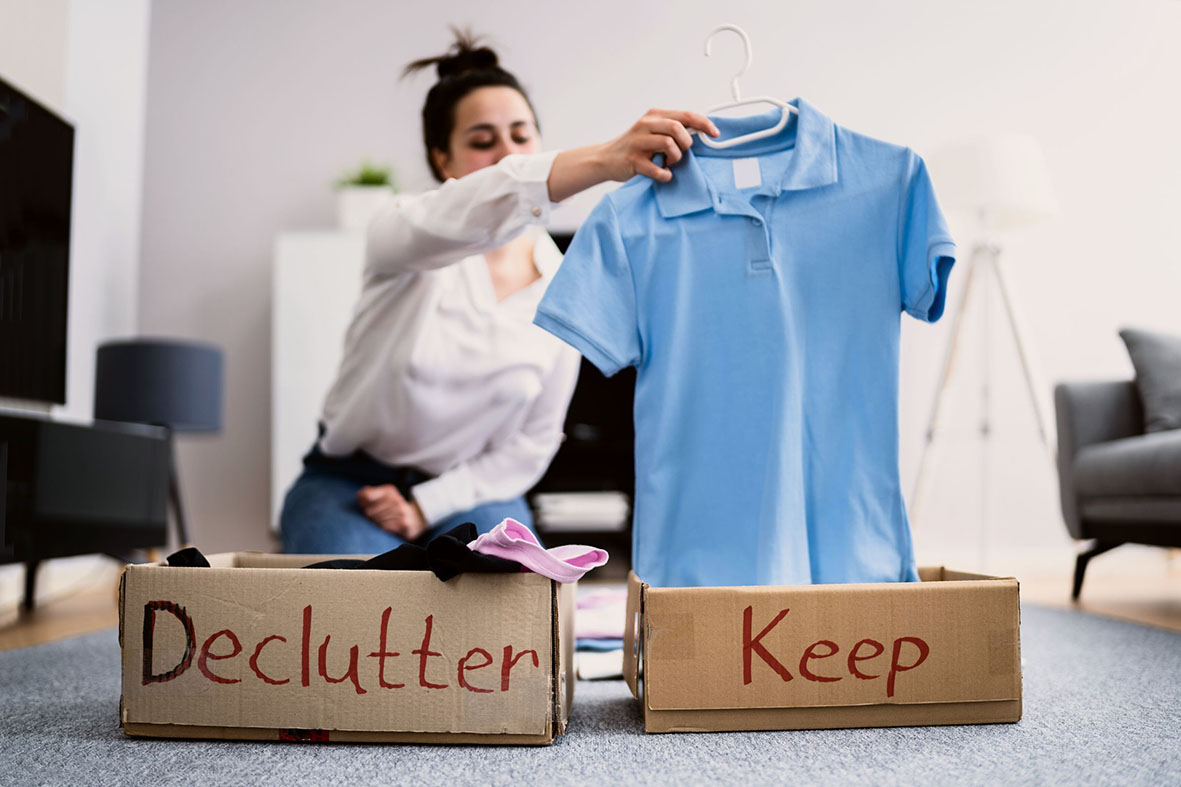
Decluttering is not a one-day task but a gradual lifestyle shift. Removing even one unnecessary item each week creates visible change over time. A decluttered Indian home is not empty or emotionless. It still holds traditions, memories, and warmth, but without excess burden. When cupboards close easily, shelves look balanced, essentials are visible at a glance, plastics and garbage get reduced and floors are freer, daily life flows more smoothly. Decluttering ultimately gives back what modern life quietly takes away ie time, space, clarity, and peace of mind.
(The writer is a motivational speaker and a change maker.)
 Follow our WhatsApp channel
