

Excelsior Correspondent
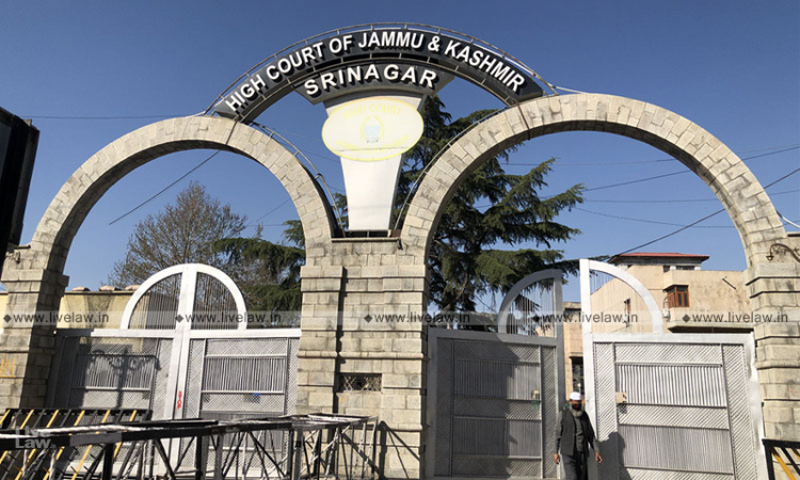
SRINAGAR, Dec 4: High Court has directed the Deputy Commissioner Srinagar to take up the application filed with regard to illegal entries on a big chunk of alleged temple land and decide the same within a period of four weeks.
The Division Bench of Justice Sanjeev Kumar and Justice M A Chowhary closed the plea filed by the residents of Danihama, Srinagar challenging the order of Divisional Commissioner Srinagar whereby he has directed the Deputy Commissioner, Srinagar to get the illegal entries expunged in revenue records in respect of land measuring 99 Kanals and 18 situated at Danihama forthwith and restore the position as it existed prior to making the fresh entries in the revenue record in favour of the respondent-migrants namely Dewan Badri Nath Truest Amira Kadal, Srinagar A/P Mubarak Mandi, Jammu through Chairman, Virendar Jit Singh and Rajinder Kumar of Mubarak Mandi, Jammu (Manager Trustee/Attorney Holder) Dewan Badri Nath Truest Amira Kadal.
The court while closing the plea of aggrieved residents directed the Deputy Commissioner, Srinagar to take up the application/suit filed by respondent-migrants before it for consideration and disposal in accordance with law.
“Let the Deputy Commissioner, Srinagar initiate the proceedings on the matter pending adjudication before it within a period of four weeks and take the same to its logical end after affording adequate opportunity of hearing to all the stakeholders within a period of six months thereafter”, the bench directed.
The petitioners claim to have been the successors-in-interest of the recorded protected tenants in respect of land measuring 99 Kanals and 18 marlas and contended that on the promulgation of Agrarian Reforms Act, 1976, the predecessors-in-interest of the petitioners who were tillers cultivating the subject land in Kharif-1971 were entitled to be conferred the ownership rights in terms of provision 8 of the Act of 1976.
Before the mutation under Section 4 and 8 of the Agrarian Reforms Act could be attested in favour of the petitioners, the respondent-migrants filed a complaint with Commissioner Secretary Revenue under the J&K Migrant Immovable Property Act seeking their eviction from the land and also approached the Divisional Commissioner, Kashmir, by way of an application under Section 32 of the Land Revenue Act for removal of an illegal and without jurisdiction entries made in Girdawari column in respect of subject land.
The Government counsel argued that the order of Divisional Commissioner is not an order passed against the petitioners and, therefore, no prejudice has been caused to them by not affording them an opportunity of being heard.
It is seriously disputed by the counsel representing the Government that the petitioner-residents predecessors-in-interest were ever in cultivating possession of the subject land either in Kharif-1971 or thereafter.
“Having heard counsel for the parties and perused the material on record, we are of the considered opinion that prima facie the petitioners do not seem to have any locus to call in question the impugned order dated 28th November 2022 passed by the Divisional Commissioner, Kashmir”, the court said.
The court further added that it could not find any material to connect the petitioners with the protected tenants entered in Khasra. Girdawari of Kharif-1971. Whether the petitioners are related to the recorded protected tenants of Kharif-1971 in any manner is not forthcoming from the record.
The stand of the Revenue Department before the court was that many of the protected tenants existing in Khasra Girdawari of Kharif-1971 have parted with the possession and put in different persons in possession without consent and permission of the landlord-migrants.
“Whether the petitioners are the direct descendants of the protected tenants of Kharif-1971 or are the persons who have been subsequently put in cultivating possession by the protected tenants or are rank-trespassers are questions which cannot be determined by us under Article 226 of the Constitution of India, more particularly, when the documentary evidence on record is deficient and incomplete”, the court said.
 Follow our WhatsApp channel
