

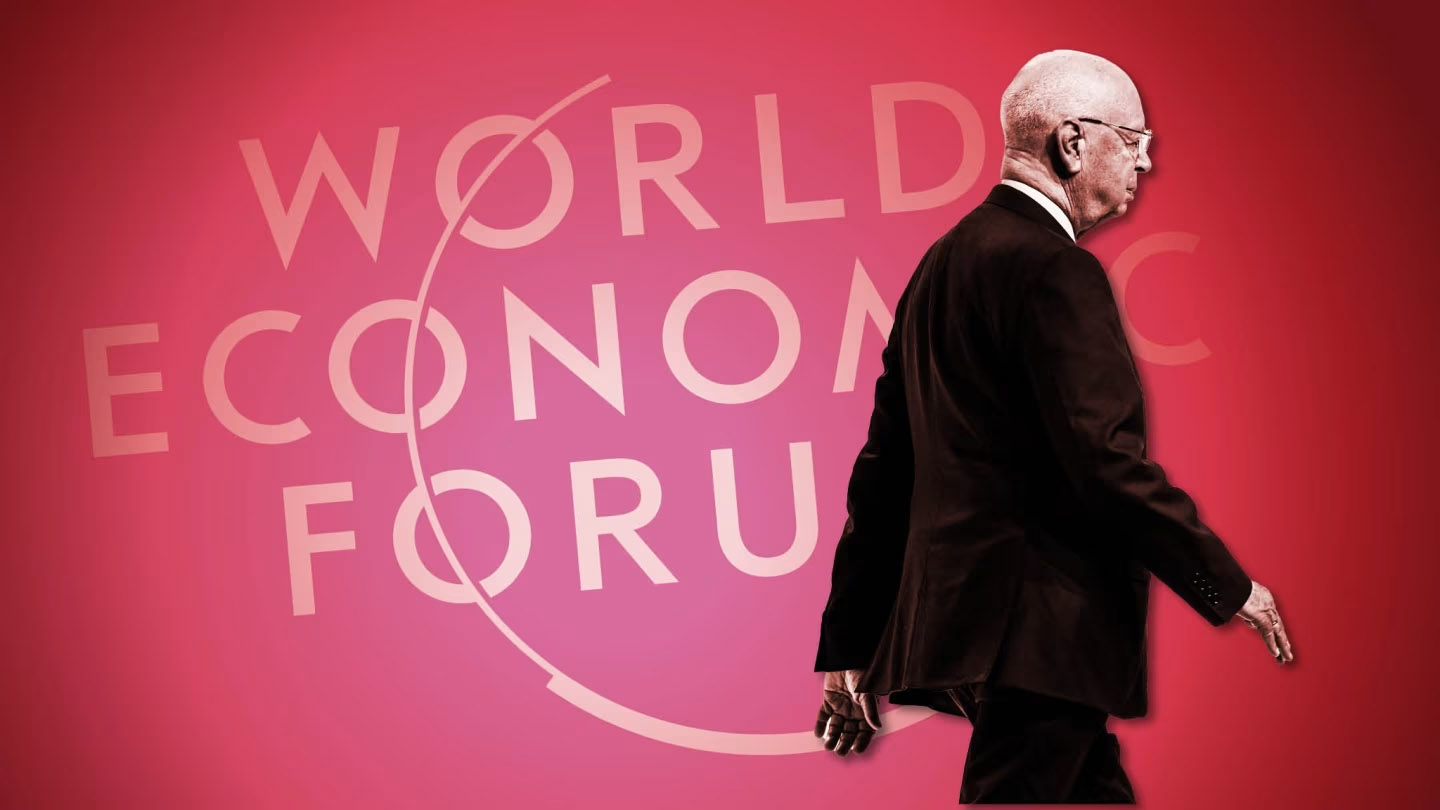
NEW DELHI, Dec 24: As Davos prepares to host leaders from across the world next month, the World Economic Forum’s Interim Co-Chair Andre Hoffmann has said the world clearly needs a place where issues can be discussed in a true spirit of dialogue, and this role of the Swiss town is more important than ever in a fragmented world.
The Swiss ski resort town will host the World Economic Forum Annual Meeting from January 19-24, 2026, which will be attended by more than 3,000 global leaders, including nearly 60 heads of state and government.
The theme of the 2026 annual meeting will be ‘A spirit of dialogue’.
Hoffmann said some of the key focus areas for the meeting will include growth, geopolitics, innovation, people and jobs, and the planet.
“These themes reflect the interconnected challenges facing the world today and the need for stronger public-private cooperation,” he said.
“We are seeing a record number of participants and heads of government this year, which underlines the continued need for a trusted, safe space for dialogue. In an increasingly fragmented world,” he said.
Speaking to PTI in the run-up to the meeting, Hoffmann, also chairman of Swiss pharma giant Roche, said the world is clearly in need of a place where issues can be discussed in a true spirit of dialogue.
“For more than five decades now, Davos has emerged as a well-proven, trusted and impartial platform where leaders can come together across sectors, regions, ideologies and generations,” he said.
Hoffmann said the WEF wants the 2026 annual meeting to bring together business leaders, politicians, civil society, academia and youth to create that space.
“Davos is not about imposing solutions, but about enabling safe, honest and effective conversations that help rebuild trust and foster cooperation. In a fragmented world, this role is more important than ever,” he said.
Asked whether US President Donald Trump, who addressed the Davos meeting in 2025 virtually, would be attending it in person this time, he said they have seen media reports indicating that the White House has signalled President Trump’s intention to attend this year’s annual meeting, accompanied by a delegation of secretaries.
“World Economic Forum would very much welcome this,” he said.
“The United States of America are crucial to addressing the global challenges we face, and strong engagement from US leadership is always important. As is our practice, we will announce the full list of participating world leaders closer to the Annual Meeting,” he said.
On WEF having taken a strong stand against Russia and President Putin ever since the start of the Ukraine war, and whether this stand will continue, he said there was no reason at this point for them to change their position.
“Since Russia’s invasion of Ukraine, which violated international law and the UN Charter and is still causing so much suffering for the people in Ukraine, the Forum has complied fully with international sanctions, resulting in no participation by Russian representatives in our events,” he said.
On whether WEF will look to play a role in ending the war, he said Davos is not a place where conflicts are resolved, but it is a place where potential pathways toward solutions can be discussed.
“The Annual Meeting provides a trusted space for dialogue on global crises, including Ukraine and other conflicts, and for supporting diplomacy through constructive, solutions-oriented conversations. This is the role we intend to continue playing,” he said.
On AI and its impact, Hoffmann said technology is meant to drive innovation and progress, but we also know that powerful tools can be misused.
“Artificial intelligence is clearly a double-edged sword. It opens up unprecedented opportunities – from more efficient healthcare systems to sustainable business models – while also accelerating misinformation and contributing to an erosion of public trust,” he said.
At Davos, discussions will therefore focus not only on technological opportunity, but also on the urgent need for effective AI governance, he added.
“This means transparency, ethical standards, interoperability, and collaboration across sectors and regions. AI must serve the common good, not just short-term profit,” he noted.
“The World Economic Forum can play a convening role here. Through initiatives such as the AI Governance Alliance, governments, companies and experts will come together in Davos to discuss opportunities, risks and concrete solutions for the AI age, helping reduce fragmentation and strengthen information integrity,” he said.
On climate, another key area of focus at Davos, Hoffmann said, “Climate, resilience and innovation are among our key priorities, and we must ensure that progress respects planetary boundaries. Sustainable prosperity must be achieved without harming the planet”.
“The science on climate change is clear, and the economic, social and planetary risks are well understood — yet decisive action remains insufficient. A fragmented geopolitical landscape, short-term interests and economic uncertainty undoubtedly complicate progress,” he pointed out.
“I think this is precisely why Davos matters so much. Not as a venue for grand announcements, but as a space for honest dialogue and learning from one another.
“Voluntary commitments alone are no longer enough. We must develop an economic system that looks beyond short-term profits and strengthens all dimensions of sustainability — financial, social, human and natural. We will focus on pragmatic transition pathways that balance ambition with affordability, resilience and long-term economic opportunity,” he said.
On it being the first WEF Annual Meeting without Professor Klaus Schwab at the helm, he said, “Indeed, it will be the first Annual Meeting of the World Economic Forum without our founder, Professor Klaus Schwab, who has done extraordinary work over more than half a century. His vision and legacy continue to shape the Forum’s mission and values”.
He said the WEF is encouraged by the record participation at the 2026 Annual Meeting, which shows strong confidence in the Forum’s role and direction.
“The Board of Trustees has established a selection committee to oversee the process of appointing a full-time chair. This process will begin in the next year, and while there is no fixed timeline yet, a recommendation will be made in due course,” he said on by when a full-time chairperson should be expected. (PTI)
 Follow our WhatsApp channel
