

New Delhi, Dec 26: From the Maha Kumbh in January-February to the launch of year-long celebrations of 150 years of “Vande Mataram” in November — it was a packed calendar for the Ministry of Culture in 2025.
The year ended on a high note with Deepavali, the festival of lights, earning the UNESCO tag.
India’s cultural heritage was showcased at the Maha Kumbh through ‘Kalagram’ in the tent city at Prayagraj in Uttar Pradesh.
Set up in a sprawling 10.24-acre area, ‘Kalagram’ was designed as a sensory odyssey that brought together tangible and intangible aspects of India’s cultural heritage.
Besides, the Maha Kumbh logo was projected on various centrally protected monuments to mark the occasion.
In the year gone by, the Ministry of Culture kicked off year-long celebrations to mark 150 years of the national song, “Vande Mataram”, in November, celebrated the 300th birth anniversary of Ahilyabai Holkar with a grand function in Bhopal, and the 150th birth anniversary of Sardar Vallabhbhai Patel across the country.
The year also saw commemoration of the 125th birth anniversary of Jan Sangh ideologue Syama Prasad Mookerjee in July in Delhi.
The second half of 2025 saw the country earn two recognitions from UNESCO.
The first was for ‘Maratha Military Landscapes of India’, which was added to the World Heritage List during the 47th Session of the World Heritage Committee held in July in Paris.
The 12 components of the ‘Maratha Military Landscapes in India’ are Salher Fort, Shivneri Fort, Lohgad, Khanderi Fort, Raigad, Rajgad, Pratapgad, Suvarnadurg, Panhala Fort, Vijay Durg, and Sindhudurg in Maharashtra; and Gingee Fort in Tamil Nadu.
The second was Deepavali being inscribed on the UNESCO Representative List of the Intangible Cultural Heritage of Humanity on December 10.
This was the 16th element from India to be inscribed on the Representative List of the Intangible Cultural Heritage of Humanity.
The 15 other elements include Kumbh Mela, Durga Puja of Kolkata, Garba dance of Gujarat, yoga, the tradition of Vedic chanting and Ramlila.
Union Culture Minister Gajendra Singh Shekhawat said that with this inscription, “UNESCO honours the eternal human longing for renewal, peace and the triumph of good”.
He said from potters to artisans, millions of hands keep this heritage alive. This UNESCO tag is also a responsibility, and “we must ensure Deepavali remains a living heritage”, he said.
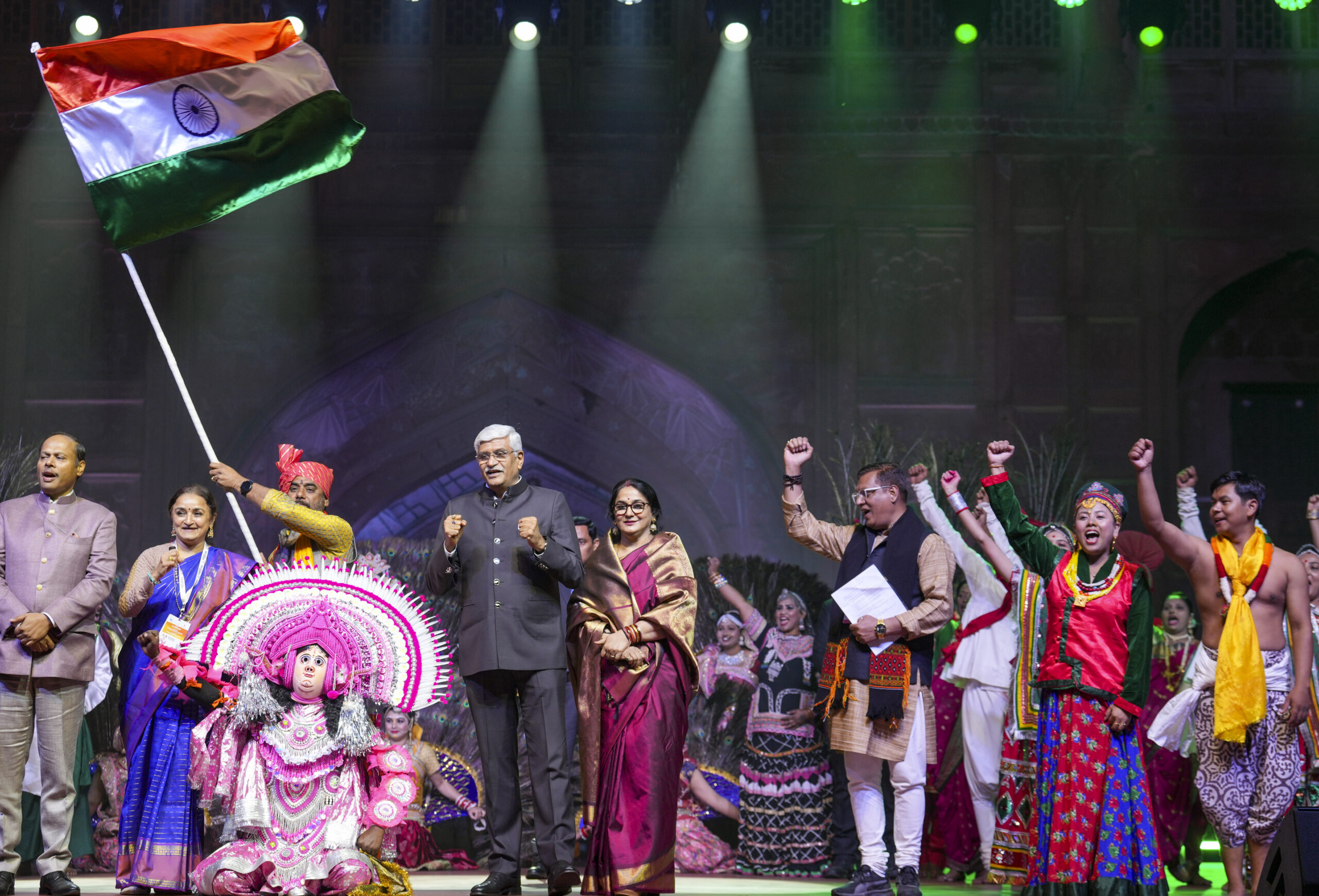
In December, the 20th session of the Intergovernmental Committee for the Safeguarding of the Intangible Cultural Heritage was held at Delhi’s Red Fort, a UNESCO World Heritage site.
This was the first time India hosted this key session.
The meeting took place nearly a month after the November 10 Red Fort blast that killed 15 people and injured more than two dozen.
In the coming year, the government plans to hold an exposition of holy relics of Lord Buddha in Sri Lanka.
“The plan is to host the exposition of holy relics of Lord Buddha in Colombo in February. These are Devnimori relics,” an official source said.
These sacred relics were excavated from Devnimori in Gujarat, and are currently under the custodianship of Maharaja Sayajirao University, Baroda, in Vadodara, it is learnt.
Holy relics of the Buddha enshrined at different sites in the country have been part of multiple expositions abroad over the past couple of years.
In November, a portion of the relics enshrined at the National Museum in New Delhi was taken to Bhutan for a 17-day public exposition in Thimphu.
In 2024, the holy relics of Lord Buddha, along with those of his two disciples Arahata Sariputra and Arahata Maudgalayana, were taken to Thailand and showcased at various locations as part of a 26-day exposition in February and March.
This was the first time that the holy relics of Lord Buddha and his disciples were showcased together.
The relics date back to the 4th-5th century BC and were found in an excavation at Piprahwa, considered a part of the site of ancient Kapilavastu, by a team of Archaeological Survey of India (ASI) officials in the 1970s.
The year gone by also saw India successfully opposing an auction in Hong Kong of a part of the sacred relics of Lord Buddha, discovered in 1898 at Piprahwa (in today’s Uttar Pradesh).
The priceless relics, which included gold, garnet, and crystal ornaments, were brought back to India after being handed over to the Indian government through a private acquisition by an Indian industrial house, post-coordinated legal and diplomatic efforts.
For the ministry, 2025 was also a key year as ‘Gyan Bharatam’, a landmark national initiative to preserve, digitise and disseminate India’s manuscript heritage, was launched in September.
On September 12, Prime Minister Narendra Modi launched the Gyan Bharatam portal. The conference concluded with the Delhi Declaration, reaffirming India’s commitment to safeguarding and revitalising its manuscript heritage in the spirit of Viksit Bharat 2047.
Another highlight of the year was the closing ceremony of the commemoration of the 150th advent of Gaudiya Mission founder Srila Prabhupad. Held at Science City in Kolkata in February, the event showcased the life of Srila Prabhupad, including objects and artefacts connected to his life. (Agencies)
 Follow our WhatsApp channel
