

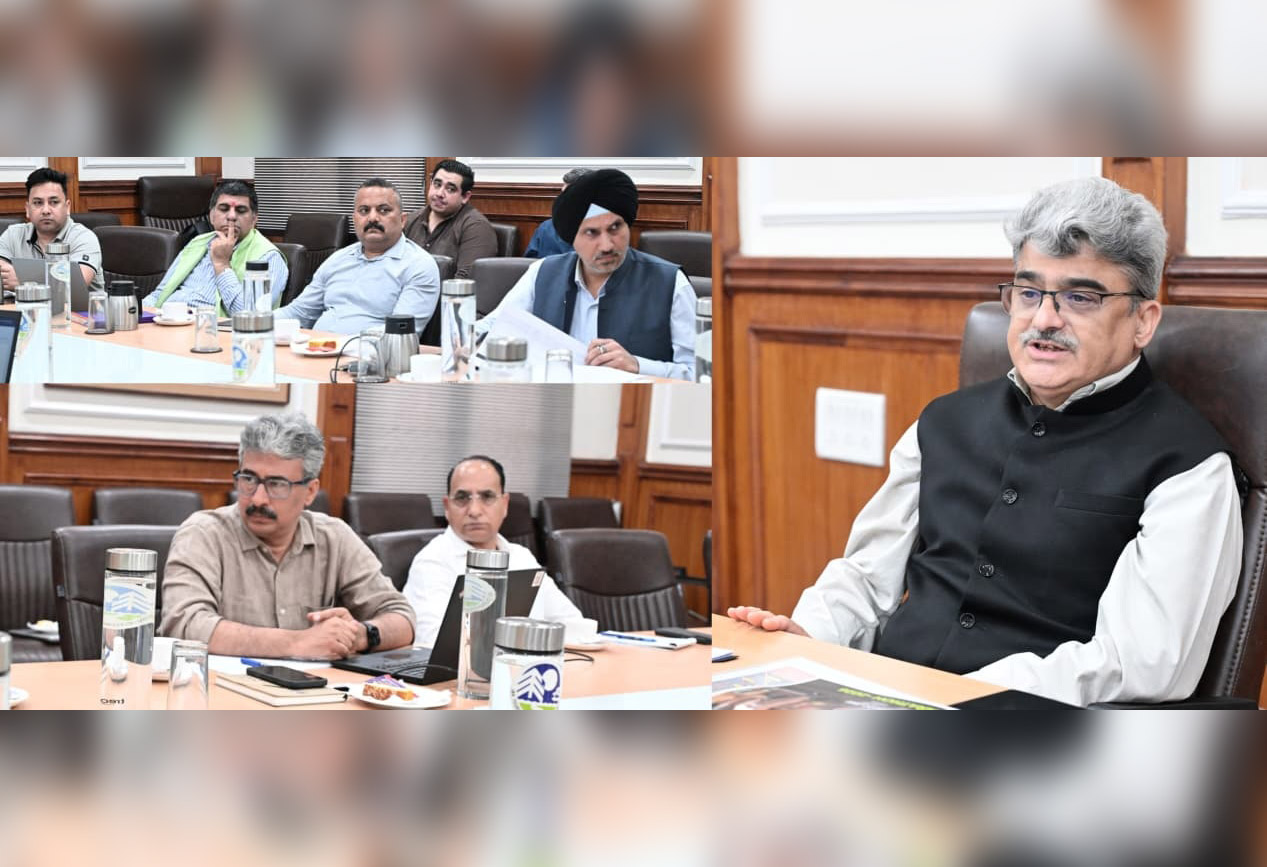
JAMMU, Mar 31: The Chief Secretary, Atal Dulloo, today chaired a comprehensive review meeting of the Industries & Commerce Department to assess the progress and impact of the MSME Health Clinic established under the Raising and Accelerating MSME Performance (RAMP) scheme, aimed at revitalizing stressed and sick industrial units across Jammu and Kashmir.
Emphasizing the need for a robust and result-oriented approach, the Chief Secretary directed the department to optimally leverage available institutional and human resources. He stressed that, in addition to technical support from Indian Institute of Management (IIM) Jammu, the department should actively utilize the expertise of Functional Managers, resources from the Entrepreneurship Development Institute (EDI), and faculty and students from universities across the Union Territory.
He underscored the importance of constituting multidisciplinary teams comprising professionals and trained interns to carry out a structured assessment of MSMEs. These teams, he noted, should initially undertake virtual evaluations followed by field visits for on-the-spot assessment and advisory support to units requiring intervention. He also called for the integration of Artificial Intelligence (AI)-based tools to streamline the diagnostic process and determine the severity and nature of interventions required.
The Chief Secretary further advised the department to set realistic daily and monthly targets to ensure timely outreach to MSMEs, either through digital platforms or physical visits. He stressed that each unit should be systematically evaluated and categorized as stable, stressed, or sick, followed by the provision of appropriate advisory and financial assistance in coordination with Jammu & Kashmir Bank to facilitate their stabilization and revival.
Highlighting the need for innovative financial solutions, he suggested exploring collaboration with J&K Bank for addressing financial stress among MSMEs, including examining possibilities of loan restructuring in line with the bank’s internal policies and regulatory framework.
The Chief Secretary also emphasized aligning insights generated from the MSME Health Clinic with the evolving Industrial Policy of Jammu and Kashmir. He observed that data and findings from enterprise-level assessments could be effectively utilized to fine-tune policy incentives, ensuring a more evidence-based and targeted approach to industrial support.
He further directed the department to plan extensive physical outreach programmes in collaboration with IIM Jammu and leverage the Small Business Development Units (SBDUs) under Mission YUVA for organizing workshops and providing expert guidance to MSMEs. He urged the management of IIM Jammu to play a proactive role in transforming the MSME Health Clinic into a model initiative in the region.
On this occasion, the Director, IIM Jammu, B S Sahay, suggested developing comprehensive informational material, including pamphlets outlining standard operating procedures, dos and don’ts, and key diagnostic parameters for MSME assessment. He assured full institutional support in terms of training human resources and constituting dedicated teams to accelerate the implementation of the initiative.
During the meeting, Commissioner Secretary, Industries & Commerce, Vikramjit Singh, informed that a total of 3,968 MSMEs have registered on the Health Clinic portal so far. He stated that Phase I and Phase II of the initiative have been successfully completed, with 1,238 enterprises digitally assessed. Of these, 994 units (80.29%) were found to be stable, 237 units (19.14%) were identified as stressed, and 7 units were categorized as sick.
He further informed that verification of MSME credentials is being carried out in coordination with J&K Bank to enhance outreach and increase registrations. Additionally, chatbot-based support systems are being developed to provide real-time assistance and guidance to MSMEs.
Director Industries & Commerce, Jammu, Arun Manhas, apprised that the initiative has covered 12 districts so far, with 162 online interactions already completed. The remaining cases are expected to be finalized shortly. He added that 14 units have been identified for targeted rehabilitation, with field visits conducted to validate assessments and extend on-ground support.
Highlighting the ongoing Phase III, he informed that 1,544 MSMEs have been digitally assessed, out of which 1,309 units (84.47%) were categorized as stable, 229 units (14.83%) as stressed, and 6 units as sick.
It was also noted that in-depth diagnostic studies and structured interviews of the 229 stressed MSMEs will commence shortly, marking a transition from broad-based assessments to focused, case-specific interventions aimed at revival and capacity enhancement.
It is worth mentioning here that the MSME Health Clinic initiative under the RAMP scheme represents a strategic intervention by the Government of India to enable early identification of stress, provide expert diagnostics, and facilitate structured revival pathways for struggling enterprises, thereby fostering a resilient and competitive MSME ecosystem.
 Follow our WhatsApp channel
