

Shiv Kumar Padha
There is one Doha by saint Kabir “Durbal ko Na sataiye, Jaki Motti Haye, Mree Khaal Ki Sans Se Loha Bhasam Ho Jaye”. Which warns the human beings not to be cruel and violent to the poor, feeble and helpless if they want to escape from the curses and wrath of the victim? Cruelty in any shape and situation is condemnable in the civilized human society. Hinduism strongly condemns cruelty in all its forms. It emphasizes the principle of Ahimsa, meaning on- violence and non harming, as a core ethical tenet. This includes avoiding any harm, whether physical, mental, or emotional to any living being.. Acts of cruelty are seen as detrimental to one’s Karma and spiritual progress, potentiality leading to negative consequences in future lives. Hinduism considers non-violence be the highest virtue, attainable through self control and spiritual practice. Cruel actions are believed to have Karmic repercussions affecting one’s future births. Deliberately causing harm to others is considered as serious sin. The concept of Ahimsa extends to all living beings. Harming others is, in essence harming oneself.
All human beings, though appear similar, as per their physical appearance , differ as regards their eating habits, tastes and temperaments, likes and dislikes. So far as eating habits are concerned, the human beings can be divided among those meat eaters called non vegetarians and the others called vegetarians feeding purely upon the cereals, vegetables and on the products available without resorting to violence. In order to cater to the needs of the variety of the meat eating community the slaughter houses arrange for the supply of the animals and the birds of their choice and taste. Before the animals and the birds are finally taken to the slaughtering houses to kill and fleece them, they are transported from the markets in the trucks or small vehicles depending upon the size of the animal and kept in the sheds or in the cages till they are slaughtered.
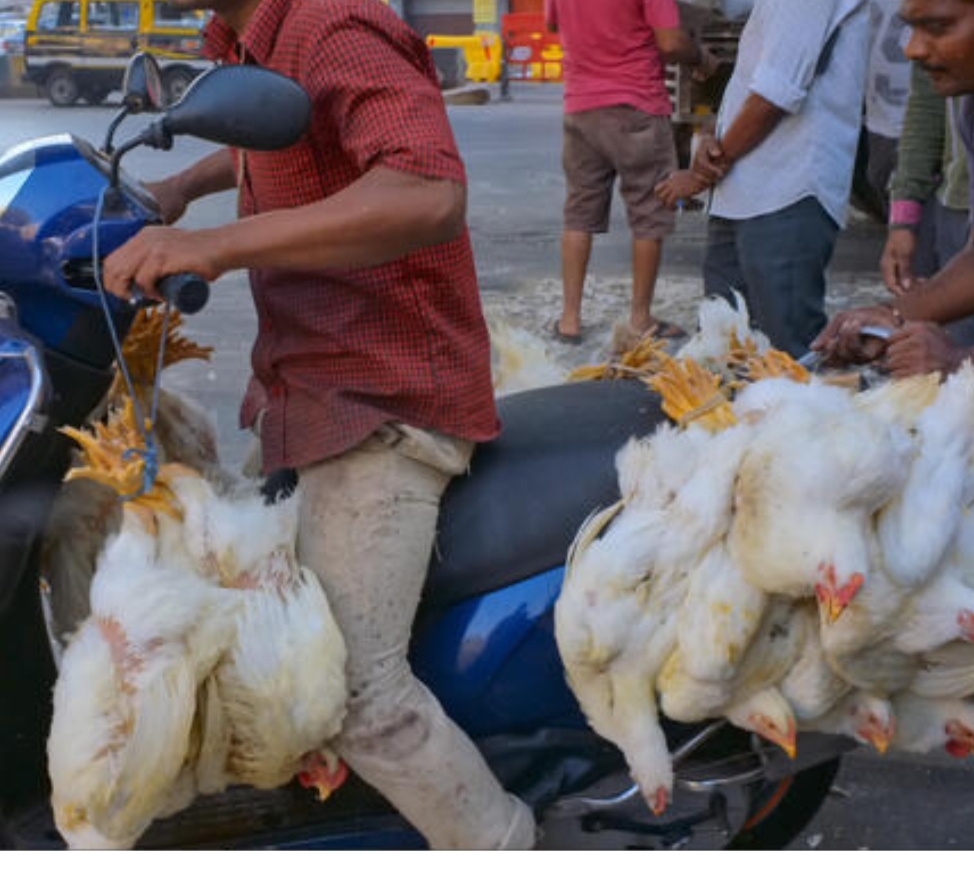
The way these animals are transported is merciless, dreadful and unnerving one cannot help feeling ashamed of. The animals are stuffed in the loaders just like the grocery or other material. In order to accommodate the animals more than the capacity of the loaders their legs and necks are folded and are piled one above the other without realizing the pain these mute living organism feel. These animals are afflicted, tormented and tortured during the process of transportation. Similarly the birds especially the chicken are carried in the caged vehicles where these birds can neither sit nor stand or take sides. So much so they are neither fed nor offered water throughout the journey which tantamount to the cruelty and atrocities on the animals. The way these animals are unloaded is unnerving and blood curdling. During unloading these animals are dragged by legs or by the cord binding the nostrils of dozens of the animals together. The mutton yielding animals like the goat and sheep are thrown from above the trucks down on the ground like we throw the non living things like stones or other solid one’s which results into breaking of bones, fractures and some into death. The birds I.e. chicken are show cased outside the slaughtering shops where they remain in scorching heat and the chilling cold without food and water. These birds are carried in the shape of the bundles where the legs of dozens are bound together and the heads hanging down. The fluttering and shrieks of the chicken being taken for slaughtering moves the soul of even those claiming the strongest and bravest of the braves.
It is legally advised that before slaughtering the animals should be provided with appropriate holding areas, access to water, and be held off feed for a period to allow for proper bleeding and evisceration. Animals should be housed in clean, well- maintained lair age with adequate space and appropriate flooring to minimize stress and injury. There should be a provision of ramps and escalators for loading and unloading of the big animals.
The Ranbir Penal code RPC in Jammu and Kashmir includes provision that addresses atrocities against animals. Especially it prohibits the voluntary slaughter or killing of bovine animals like cow bulls and calves with banalities including imprisonment and fines. Section 11 of the prevention of cruelty to the animal’s act 1960 defines and outlines various acts of animal cruelty and their corresponding punishments. It covers a wide range of actions that cause unnecessary pain, suffering or injury to animals including physical abuse, neglect, and abandonment. Under section 11 beating, kicking, overriding, overdriving, overloading or otherwise treating an animals as to subject it to unnecessary pain or suffering. The section also speaks about keeping an animal in a cage or other receptacle that Conveying or carrying an animal in a manner that subjects it to unnecessary pain or suffering.
In a civilized society the rights of every living organism granted to them by nature and by the law of the land must be honored and strictly adhered to. All the living organisms deserve respectful living and respectful death if we divorce this law we will be counted among the predators creeping on the earth.
Shiv Kumar Padha Basohli.
A social activist
`
 Follow our WhatsApp channel
