

Execution is Crucial
Maj Gen Sanjeev Dogra (Retd)
The recent decision to gradually hand over counter-insurgency responsibilities in Jammu and Kashmir from the Rashtriya Rifles to the Central Reserve Police Force marks a defining shift in India’s security architecture. At the conceptual level, this is a logical and timely move. The Army exists primarily to defend the nation’s territorial integrity and to prepare for conventional war. The CRPF, on the other hand, is mandated and structured to handle internal security and law and order. Assigning counter-insurgency in the hinterland to CRPF and allowing the Army to refocus on external threats makes strategic sense. However, as is often the case with major structural reforms, the eventual outcome will depend far less on intent and far more on execution.
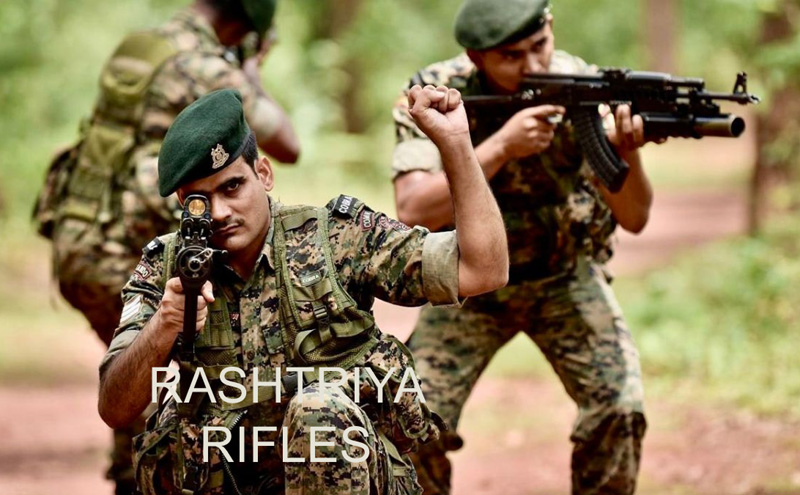
The Rashtriya Rifles, since its raising in the 1990s, has played a pivotal role in stabilizing Jammu and Kashmir at the height of militancy. It is not a stand-alone organization but a creation of the Army, with troops, equipment, and officers drawn directly from regular Army formations. Over decades of continuous deployment, the force developed an intimate familiarity with the Valley’s terrain, villages, and people, and built a dense intelligence network indispensable for counter-insurgency success. It is this institutional knowledge and operational expertise that CRPF will now be expected to replicate.
The shift is underpinned by two key realities. First, there has been a sustained decline in terrorist numbers and capabilities inside the Valley. Security forces have succeeded in neutralizing many terror networks and local recruitment has fallen sharply. Second, the Army faces growing challenges on India’s borders. The incidents in Galwan and Doklam underscored the volatility of the northern frontiers with China, while the Line of Control with Pakistan continues to witness infiltration attempts and cross-border terrorism. The redeployment of Army’s Rashtriya Rifles battalions from the hinterland to the LoC and LAC therefore addresses a pressing strategic need.
While this logic is sound, the path of transition is fraught with challenges. Counter-insurgency is not an assignment that can be taken up overnight by any force, however professional. The Rashtriya Rifles benefitted from the Army’s specialized training schools, battle inoculation, and regimental ethos. The CRPF, though immensely experienced in internal security duties across the country, will have to adapt to the unique demands of Kashmir’s insurgency environment. Cold weather training, high-altitude warfare, small-team tactics, and an understanding of the Valley’s social fabric will require robust pre-induction preparation. Establishing dedicated CRPF training schools in the Valley, modeled on the Army’s counter-insurgency establishments, is an essential step before assuming full responsibility.
Equally critical is the question of intelligence. What distinguished the Rashtriya Rifles was not just its firepower but its painstakingly nurtured human intelligence grid. Over years of tenure, units built deep networks of sources, knew every lane and hamlet, and maintained institutional memory of their areas of responsibility. This kind of local knowledge cannot simply be transferred in files or folders. It is personal, built on trust, and renewed constantly. Unless there is a carefully managed overlap where CRPF units operate alongside Rashtriya Rifles battalions and inherit not only the posts but also the human relationships, there is a risk of intelligence vacuums that militants may exploit.
The third issue is one of organizational culture and tenure. Army units, functioning under the regimental system, bring cohesion and continuity to their deployments. CRPF battalions, however, are accustomed to short-term rotations across states, often switching between election duties, riot control, and insurgency operations. Such frequent redeployments may be counter-productive in Kashmir, where counter-insurgency requires stability and long-term area domination. Unless the CRPF adopts longer fixed tenures for its Valley battalions, it may struggle to build the same level of familiarity and control that the Rashtriya Rifles enjoyed.
Command and control is another sensitive aspect. At present, the entire counter-insurgency grid in Kashmir functions under the operational control of the Army’s corps headquarters. This ensures seamless integration between counter-terrorism in the hinterland and counter-infiltration along the Line of Control. If the CRPF were to operate independently under the Ministry of Home Affairs, there could be duplication of effort, intelligence silos, and even operational friction. The most effective model would be one where CRPF retains its administrative control under the Home Ministry but remains operationally coordinated with the Army, ensuring unity of command across the grid.
These challenges do not mean the decision is unwise; they only highlight the care required in execution. The transition must be gradual and calibrated. Rashtriya Rifles battalions should not be withdrawn abruptly. Instead, CRPF units should co-deploy, learn, and slowly assume greater responsibility, post by post and sector by sector. This will allow for an orderly transfer of intelligence, operational methods, and local knowledge.
Another important recommendation is to leverage the expertise of Army officers in the transition phase. CRPF would greatly benefit from the advisory role of retired Army officers who have commanded Rashtriya Rifles formations and have lived experience of counter-insurgency in the Valley. Likewise, serving officers at the brigade or division level could be deputed for a few years to provide mentorship and operational guidance. This blend of Army experience with CRPF deployment will ensure that the learning curve is shortened, pitfalls are avoided, and the momentum against terrorism is not lost.
Furthermore, CRPF will need to invest in building an internal culture of resilience, camaraderie, and offensive spirit that counter-insurgency demands. Unlike crowd control or law-and-order duties, CI operations involve prolonged exposure to risk, high casualty sensitivity, and daily engagement with a population caught between militants and security forces. Leadership within CRPF must inculcate not just tactical skills but also the psychological resilience and ethical balance required for success in Kashmir’s complex environment.
The government’s intention in bringing about this change is laudable. It recognizes the evolving nature of threats, the need to free the Army for its primary mission, and the importance of aligning tasks with institutional mandates. But good intent alone cannot guarantee good results. The move will succeed only if accompanied by meticulous planning, robust training, careful intelligence transfer, clarity of command, and cultural adaptation within CRPF.
In conclusion, the redeployment of Rashtriya Rifles to the borders and the entry of CRPF into the counter-insurgency grid represents a historic restructuring of India’s security posture in Jammu and Kashmir. If implemented thoughtfully, it will strengthen both border defense and internal stability. But if rushed or poorly coordinated, it risks creating vulnerabilities that could undo decades of hard-earned gains. The challenge, therefore, is to ensure that execution matches intent. In matters of national security, the margin for error is small, but the rewards of success are immense.
(The author has commanded a Rashtriya Battalion in J&K and a Division along the line of control)
 Follow our WhatsApp channel
