

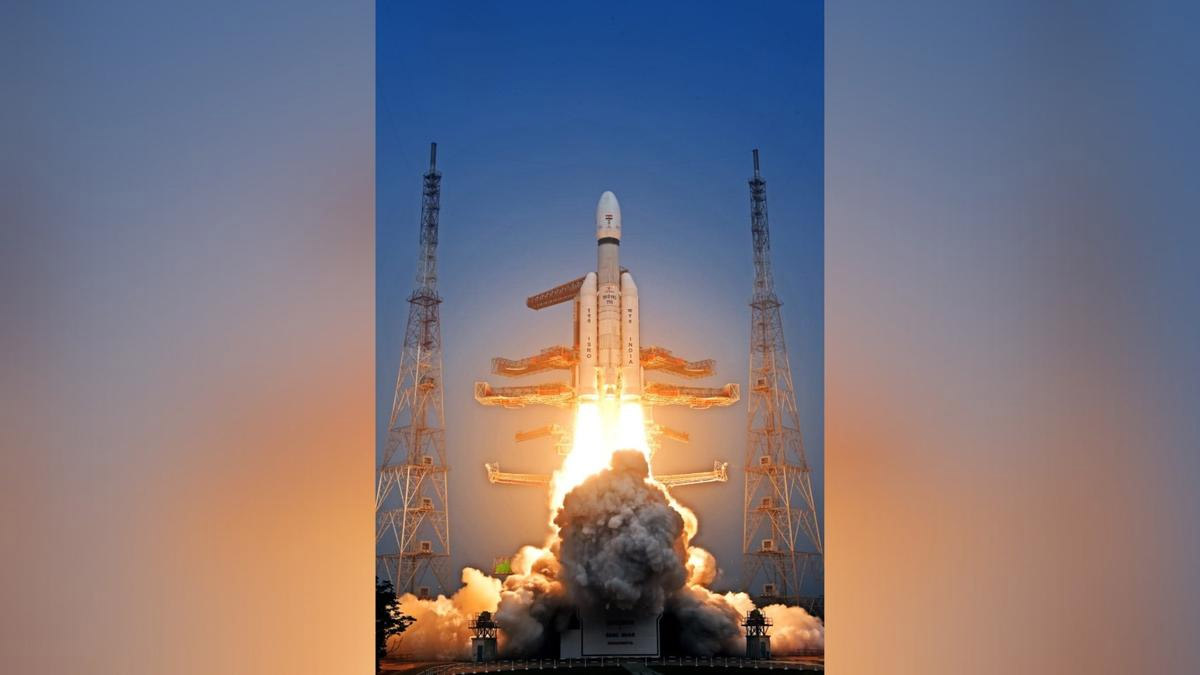
NEW YORK/WASHINGTON, Dec 25: India’s successful launch of an American communication satellite is a very important and big day for the partnership between Washington and New Delhi and caps a series of achievements in 2025 in bilateral space cooperation.
These remarks were made by Indian Ambassador to the US Vinay Mohan Kwatra, underlining growing ‘Atmanirbharta’ in the sector.
“It is indeed a very important day today for India-US partnership in the field of space,” Kwatra told PTI in an exclusive interview here.
“Big day. Big day for our space engineers, our space scientists. Big day for the achievement of Prime Minister’s (Narendra Modi) Atmanirbharta objectives. Big day for India-US cooperation. I think we couldn’t have ended the year 2025, at least in this domain, in a better way and all set for more achievements, more milestones in the next year,” Kwatra said.
In a historic achievement, the Indian Space Research Organisation’s (ISRO) heaviest rocket LVM3-M6, on Wednesday, successfully placed the next-generation commercial communication satellite BlueBird-6 (Block-2), developed by AST SpaceMobile, USA, into its precise intended orbit.
LVM3 carried the heaviest commercial satellite ever launched from Indian soil, underscoring LVM3’s growing capability as a reliable heavy-lift launch vehicle, the Indian Embassy in Washington DC said in a statement.
With this mission, India has now successfully launched 434 satellites for 34 countries, reinforcing its position as a trusted global launch service provider.
“What I think this particular remarkable achievement of today does is it very beautifully caps the series of our achievements in the year 2025 in our space cooperation between our two countries,” Kwatra said.
Kwatra referred to the Axiom-4 Mission, which had carried Indian Air Force Group Captain Shubhanshu Shukla to the International Space Station, marking India’s first human spaceflight mission to the ISS.
He also noted the ISRO–NASA NISAR mission for advanced Earth observation, now successfully realised, launched, and operationalised.
“…This is really a nice milestone to cap this,” Kwatra said, underscoring the importance of what the achievement means not just for India-US space collaboration but also “what it means for us back home in India.”
He underlined that the milestone is a “very, very clear demonstration” of ISRO’s heavy lift capability, “which is very important as (our) journey of strength in the field of space continues.”
It also speaks to the achievement of the Indian space scientists and engineers, he said, adding that another crucial aspect of this achievement is what India can do in the coming months and years in the field of space collaboration and exploration.
Kwatra emphasised that Prime Minister Narendra Modi has been singularly driven and is driving the industry and government departments to move towards ‘Atmanirbharta’.
“And this is a very clear example of growing Atmanirbharta in the field of space. Atmanirbharta should be seen from a very strategic perspective. We should not simply look at it from a very minimal commercial transaction purpose,” he said.
Atmanirbharta in this field means that it builds “our own capabilities to innovate further in this field”, use that innovation to further adopt and diffuse it within the space sector, use the innovation in the lead sector, in the space sector, it’s adoption and diffusion in this sector, and build partnerships with foreign partners to grow our cooperation, which is where in the case of United States, our partnership with the US comes up,” he said.
BlueBird-6 is part of AST SpaceMobile’s next-generation BlueBird Block-2 satellite constellation, designed to deliver space-based cellular broadband connectivity directly to standard mobile smartphones.
The launch service was provided by New Space India Limited (NSIL) through ISRO. NSIL, the commercial arm of India’s space agency ISRO, is a Central Public Sector Enterprise (CPSE) under the Department of Space, and handles satellite production, launch services, and technology transfer to industry.
Midland, Texas-based satellite designer and manufacturer AST SpaceMobile builds the SpaceMobile satellite constellation, a space-based cellular broadband network designed to connect directly to standard, unmodified smartphones.
“The successful launch of the BlueBird Block-2 satellite on LVM3, together with landmark missions such as NISAR and human spaceflight to the International Space Station, elevates India–USA space cooperation to new heights.”
“ISRO continues to emerge as a torchbearer for international collaboration in space, contributing meaningfully to global connectivity, exploration, and scientific advancement,” the Embassy added.
Kwatra further said that India has always been not only an important technology generator when it comes to space, but more importantly, has built a chain of supply integration.
“So we have our own supply chains which vertically integrate into our space capabilities, which allow us to innovate, because we have our own research and development labs,” use ISRO’s launch and lab capabilities to adopt this technology, “diffuse it across different sectors and then build commercial cooperation based on that innovation, adoption, diffusion – three layers – with our own supply chain. It is a very, very strategic achievement in true perspective.”
Among India’s recent notable achievements in its space programme are Chandrayaan-3, which achieved a historic soft landing near the Moon’s south polar region and SPADEX, the successful precision docking of two satellites, a critical precursor for Chandrayaan-4 and the Bharatiya Antariksh Station (BAS).
“As we end this year and transition to the new…ending of this year should be a time for us to reflect on what our achievements have been in the space sector. And as I said, use this as a foundation stone to build the next layer of our own capabilities, but also our foreign partnerships based on those capabilities,” Kwatra said. (PTI)
 Follow our WhatsApp channel
