

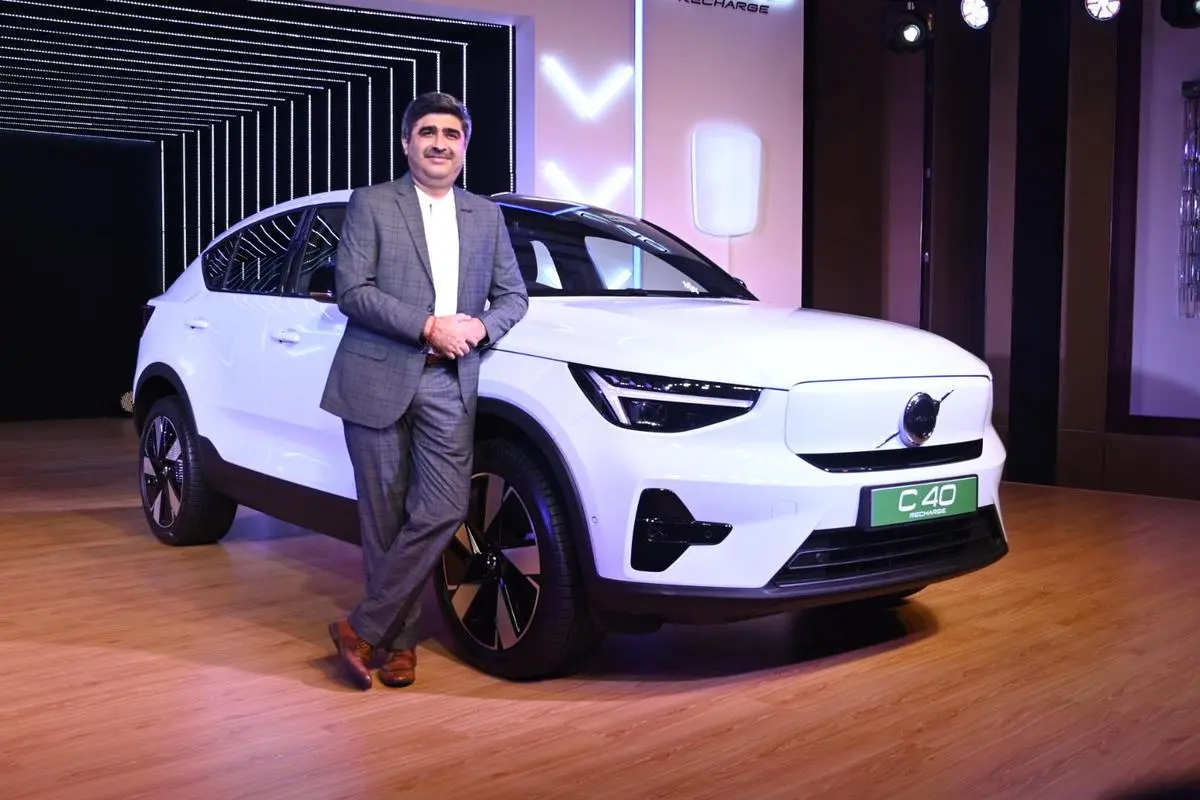
NEW DELHI, Jan 11: Swedish luxury carmaker Volvo is committed to an all-electric future, clocking one EV out of every four cars sold in India, although GST 2.0 has made its mild-hybrid SUVs even more compelling for customers, according to a senior company official.
The implementation of GST 2.0 has been a significant catalyst, and it has streamlined the luxury segment by rationalising the tax structure, Volvo Car India Managing Director Jyoti Malhotra told PTI in an emailed interview.
When asked how the GST 2.0 has impacted EV penetration, he said, “Our portfolio mix has been quite consistent, and we continue to sell approximately 1 EV out of 4 car sales.”
Malhotra further said, “This is a strategic reflection of two primary factors: the successful market entry of our EX30 and a temporary recalibration of CMA (Compact Modular Architecture) availability as we transition to newer global supply cycles.”
On the future roadmap, he said, “It is important to note that our commitment to an all-electric future remains unchanged, and we view these figures as a steady baseline as we prepare for a more aggressive EV rollout in 2026.”
With the company refreshing its ICE (internal combustion engine) portfolio in 2025, flagship models XC90 and XC60 saw “a considerable double-digit growth in monthly sales in the post-GST period compared to the preceding months”, he added.
“While the government’s continued 5 per cent GST on electric vehicles (EVs) keeps the long-term focus on electrification, the reduction in overall tax for luxury ICE vehicles made our mild-hybrid SUVs an even more compelling proposition for the festive season and beyond,” Malhotra said.
Asked about the implications of adverse foreign exchange fluctuation, Malhotra said, “2026 is going to be a year of dynamism for the luxury auto segment. Given the forex situation and other business-related factors that will weigh in, we might increase prices for some of our cars.”
Under the GST 2.0 regime that kicked in September last year, petrol, LPG, and CNG vehicles of less than 1,200 cc and not more than 4,000 mm length, and diesel vehicles of up to 1,500 cc and 4,000 mm length were lowered to an 18 per cent rate from the earlier 28 per cent plus cess.
On the other hand, all automobiles above 1,200 cc and longer than 4,000 mm came under the 40 per cent GST slab from the earlier rate of 28 per cent GST plus cess that ranged from 15-22 per cent. (PTI)
 Follow our WhatsApp channel
