

Raman Suri
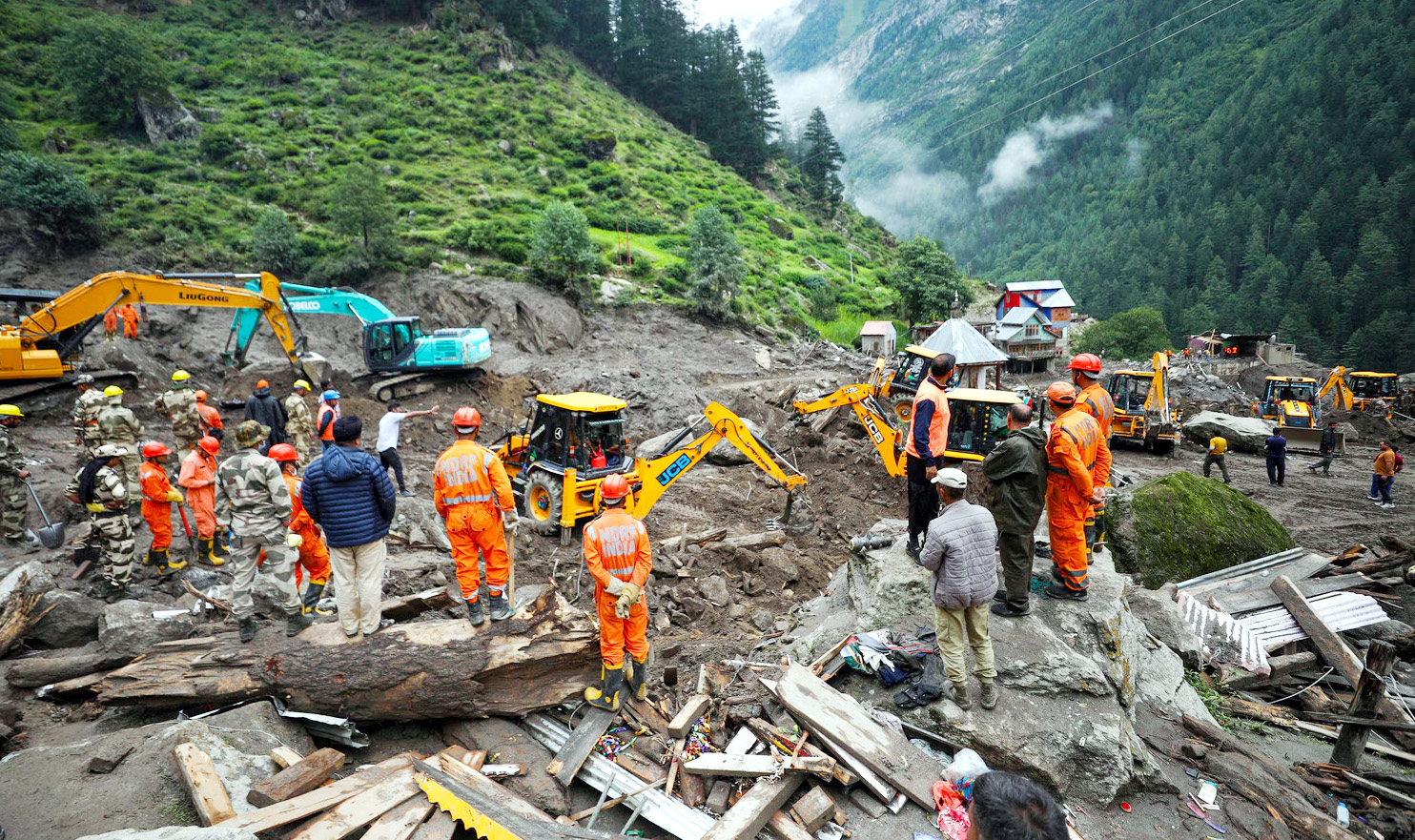
On August 14, 2025, a catastrophic cloudburst struck Chashoti village in Jammu and Kashmir’s Kishtwar district, claiming at least 64 lives, injuring over 100 people and about 39 persons are still reportedly missing. The disaster, that occurred along the Machail Mata Yatra route, unleashed flash floods and swept away a community kitchen, security posts, shops, and homes, leaving more than 76 people missing. The scale of devastation, compounded by the region’s rugged terrain, has left families shattered and communities grappling with loss.
My heart bleeds for the victims and their families, yet the resilience of local youth, police, and security agencies shines through. Young volunteers risked their lives, ferrying the injured to hospitals on motorcycles, while the Indian Army, National Disaster Response Force (NDRF), State Disaster Response Force (SDRF), and Jammu and Kashmir Police worked tirelessly to rescue survivors and provide relief. Despite these heroic efforts, the tragedy underscores a critical need for enhanced preparedness at both governmental and societal levels to confront the growing threat of cloudbursts in the region.
Jammu and Kashmir has been reeling from a series of cloudburst-induced disasters in recent years, with the Kishtwar tragedy marking the latest in a disturbing pattern. Just weeks prior, on July 28, 2025, a cloudburst in Doda’s Kaljugasar village triggered flash floods that washed away a footbridge and isolated several villages, damaging infrastructure and agricultural fields. In June 2025, another cloudburst in Doda’s Lopa stream claimed one life, while earlier incidents in 2022 caused widespread damage to roads and highways.
Kathua, too, faced a cloudburst in August 2025, with flash floods inundating homes and shops in Khokhayal village, further highlighting the vulnerability of even the plains to such events. Ladakh, similarly, has not been spared. The region’s 2010 cloudburst in Leh remains one of the deadliest, killing over 100 people and devastating infrastructure. More recent incidents in 2021 and 2023 in Kargil and other areas damaged homes, roads, and crops, underscoring the region’s susceptibility to extreme weather.
These events, from Doda to Ladakh, serve as stark warnings of a new threat from the skies, fueled by an ever-changing climate that is intensifying the frequency and severity of cloudbursts. Cloudbursts, defined as sudden downpours exceeding 100 mm per hour, are akin to earthquakes and tsunamis in their unpredictability and destructive power. However, their impact is often more insidious in mountainous regions like Jammu and Kashmir and Ladakh, where steep slopes and narrow valleys amplify the force of flash floods and landslides.
Unlike earthquakes, which are confined to seismic zones, or tsunamis, limited to coastal areas, cloudbursts can strike both mountains and plains, as evidenced by recent events in Kishtwar and Kathua. The torrential rains trigger cascading walls of water, mud, and debris, obliterating infrastructure and claiming lives within minutes. The 2014 Saddal village cloudburst in Udhampur, which killed 22 people, and the 2022 Amarnath cave shrine disaster, with 16 fatalities, are grim reminders of this peril.
The response to the Kishtwar cloudburst was good enough with agencies concerned closely monitoring the situation and acting thereof. The deployment of 300 troops, medical teams, and helicopters by the administration, alongside the Indian Army’s White Knight Corps and NDRF’s efforts, saved 167 lives. Yet, the scale of the disaster exposed gaps in preparedness. The Meteorological Department had issued a heavy rain alert, but local administration and policymakers failed to act proactively, a recurring issue seen in past yatras like Amarnath and Machail Mata.
The suspension of the Machail Mata Yatra and cancellation of Independence Day cultural events reflect reactive measures rather than preventive ones. State Disaster Management teams require urgent upgrades, including more helicopters of their own for rapid evacuation and relief in remote areas. The rugged terrain and washed-out roads in Chashoti delayed rescue operations, as helicopters struggled with adverse weather.
A dedicated fleet of disaster-response aircraft, advanced early warning systems, and real-time coordination with the India Meteorological Department (IMD) could mitigate future losses. Geologists and environmental experts must conduct comprehensive surveys of Jammu and Kashmir’s terrain and soil conditions, working in sync with the IMD to predict vulnerable zones and inform the public. The government must also form a committee to investigate the environmental causes of these incidents, addressing deforestation and allied causes that destabilize fragile ecosystems.
Climate change is undeniably amplifying the frequency and intensity of cloudbursts. The UN’s World Meteorological Organization has warned of a more volatile water cycle in a warming world, with Jammu and Kashmir’s Himalayan topography bearing the brunt. Massive encroachments and unplanned colonies in urban areas have weakened natural drainage systems, exacerbating flood risks. The 2010 Leh disaster and the 2013 Kedarnath tragedy in Uttarakhand, which killed thousands, highlight how environmental mismanagement compounds these events.
The government must enforce stricter land-use policies, mandating reforestation to offset trees cut for development and ensuring sustainable infrastructure planning. While government action is critical, individuals must also take responsibility. Pilgrims and tourists planning trips to Jammu and Kashmir, whether for the Machail Mata Yatra or holidays in Ladakh, must stay informed about weather forecasts and infrastructure conditions. The IMD’s alerts for heavy rain from August 17–19, 2025, led to school closures, but public awareness remains low.
People should monitor weather updates, avoid vulnerable areas during monsoon season, and demand efficient management of yatras to prevent overcrowding in high-risk zones like Chashoti. Architects and civil engineers have long prioritized earthquake-resistant buildings in Jammu and Kashmir, given its seismic vulnerability. However, the rising threat of cloudbursts demands a new approach to urban planning.
Future colonies and homes must incorporate flood-resistant designs, elevated foundations, and robust drainage systems to withstand flash floods. Unplanned development, as seen in Chashoti’s congested base camp, amplifies risks during disasters. The government should incentivize sustainable architecture and enforce regulations to prevent construction in flood-prone areas, learning from the environmental mismanagement that worsened the 2014 Kashmir floods.
The spirit of Jammu and Kashmir’s people shines in crises. The Bhartiya Janata Party (BJP) representatives worked shoulder-to-shoulder with security forces and assisted in evacuating several people. Efficient management, not limiting pilgrims, is the solution. The cloudbursts in Kishtwar, Doda, Kathua, and Ladakh are not isolated incidents but part of a growing pattern. They demand a unified response: robust government preparedness, environmental stewardship, public vigilance, and resilient infrastructure. As geologists and the IMD work to map future risks, we must heed the mountains’ warnings and build a future where such tragedies are no longer inevitable.
In the face of recurring cloudbursts and the devastation they bring, it becomes imperative for us to stay informed about our environment and act responsibly. Understanding the geological features of our mountains is crucial so that homes and government colonies are built in a planned manner, without blocking natural water channels that have existed for centuries. Human settlements must respect nature’s course, not defy it. Preparedness, awareness, and foresight are our best defences – if we plan wisely today, we can ensure safer communities and protect countless lives in the years to come.
(The writer is Joint Treasure J&K UT BJP)
 Follow our WhatsApp channel
