

Where to draw the line
Shahnaz Husain
glmahajan@gmail.com
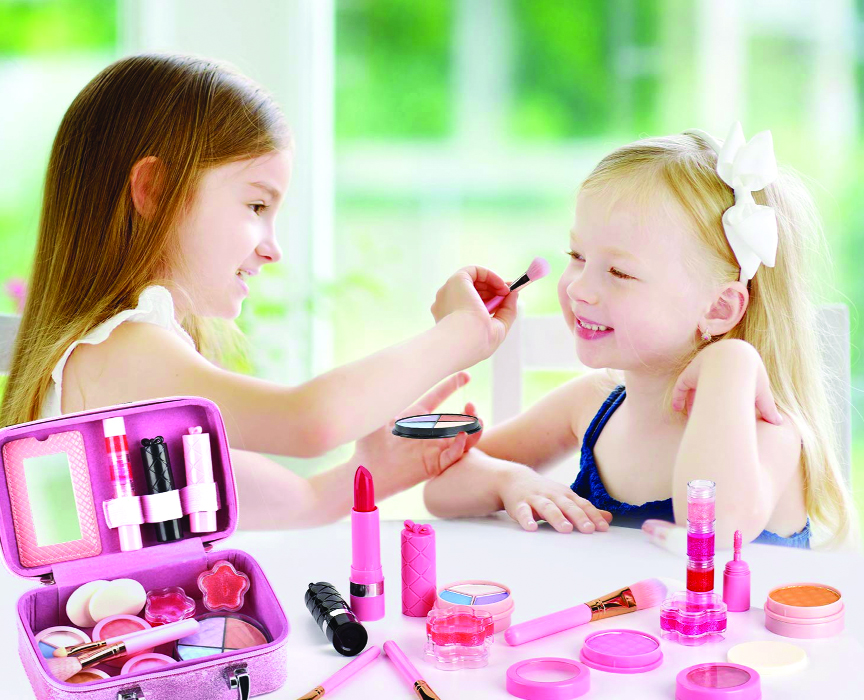
Is your little one often digging through your makeup bag or reaching for your lipstick? You’re not alone.
Chances are, your child is being exposed online, on social media, YouTube videos to endless cosmetic products that promote beauty or other kinds of visual transformation. The majority of bullying in school and public places is related to physical appearance. Teasing about being overweight or not pretty enough has lasting and detrimental effects on kids.
Skincare routines have become a big focus nowadays for teens as young as 10 years old.
Whether it’s smearing blush across their cheeks or experimenting with eyeshadow like it’s finger paint, kids are naturally drawn to the colourful world of makeup.
Both boys and girls often face body image issues, leading to a belief that natural appearance isn’t good enough.
But here’s the problem – Makeup might be fun and playful, but there could be some side effects of makeup on kids. These aren’t just physical but also emotional and psychological. Traditional beauty products are loaded with chemicals, synthetic dyes, and mica, which may not be safe for kids’ sensitive, delicate skin.
More problematic is children doing “mimicry makeup’, or often trying their mother’s makeup. Such use could not only cause acne, dry skin, and itching-related issues, but also viral infections like herpes or bacterial infections.
Children are prone to atopic dermatitis. If they pick their parents’ makeup and use it on their skin, they have a high chance of developing dermatitis.
Children’s sensitive skin makes them prone to allergic reactions, irritations, and long-term damage from chemicals like parabens and phthalates
Many products have what we call “active” ingredients – like salicylic acid, retinols, peptides, which are easily absorbed by teen thin skin since absorption rate in children is at least 10 per cent higher than compared of adults due to their faster metabolism. It is more permeable and can therefore absorb chemical substances more easily. These ingredients can cause microtrauma and irritant dermatitis, damaging the skin barrier and making it more susceptible to irritation and infection.
Simply put, applying these makeup products to the skin of your kids will make them vulnerable to toxic materials. With constant use, makeup products can cause dryness, itchiness, redness and irritation to the skin. It can permanently harm the skin’s barrier and structure of the skin, causing it to be more sensitive to even water. Exposure to makeup products has led to signs of premature ageing , dry and dull hair and skin due to the presence of chemicals in the cosmetics and exposure to environmental toxins. The long-term psychological effects, such as anxiety and depression, stemming from an obsession with appearance, are profound and troubling. The presence of retinols in beauty products
can sometimes cause retinoid dermatitis, a type of scaly rash. Additionally, retinols can make you susceptible to sunburn and sun damage.. The abuse of beauty products in girls can alter both their emotional well-being and neuronal development, while also causing anxiety or eating disorders.
Exposure to chemicals such as parabens, phenols, and phthalates in cosmetics was directly linked to the early onset of puberty among girls. Girls with higher levels of parabens in their bodies attained puberty earlier. Earlier puberty in girls affects their behaviour as teenagers and makes them more prone to mental health issues. More importantly, the early onset of puberty increases breast and ovarian cancer risk in these girls in the long term.
The use of creams and serums – useful for preventing ageing – can lead the skin to develop dermatological pathologies (such as dermatitis, skin irritations, or even sun intolerance) among teens.
Early use of makeup can disrupt hormones, leading to growth, developmental, and reproductive issues.
Applying kajal on infant eyes has been a ritual in various parts of the country. However, kajal contains lead, which causes permanent multiple organ system damage in children due to lead toxicity. Similarly, Cadmium and Lead in lipsticks can be ingested and cause disorders in the digestive tract. Young girls may feel pressured to conform to societal standards, fostering a culture of comparison and self-doubt. The pursuit of perfection can contribute to depression, anxiety, and body dysmorphia, particularly during the vulnerable teen years Regular use of make-up, sometimes in thick layers, can lead to problems of ‘comedogenicity’-that is, clogged pores that cause blackheads and what is known as ‘cosmetic acne.’
(The author is a famous beauty expert)
 Follow our WhatsApp channel
