

Gaurav Gupta
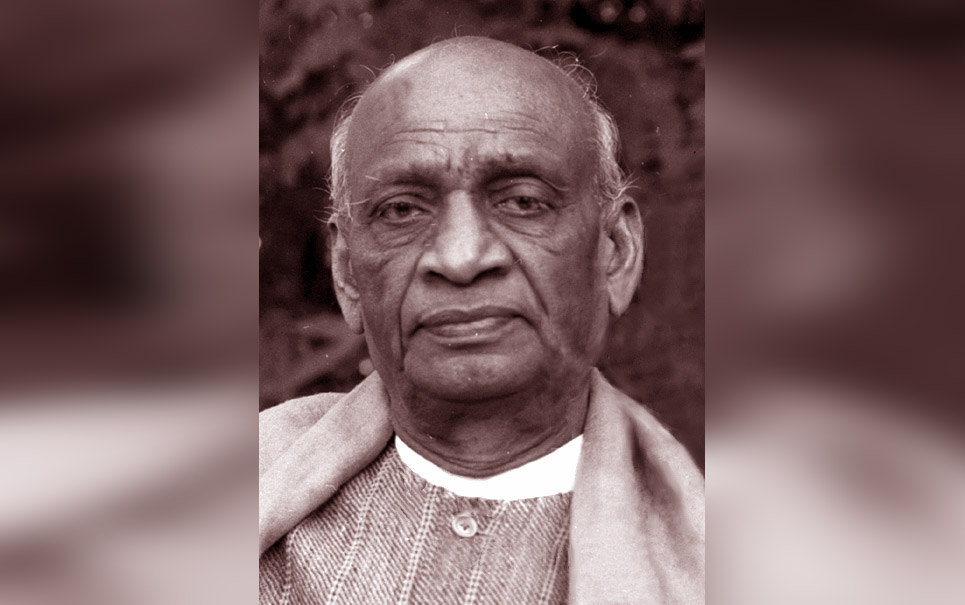
The 31st of October holds a special place in the heart of every Indian. It marks the birth anniversary of SardarVallabhbhai Patel, the Iron Man of India – a visionary leader whose determination, courage, and foresight laid the foundation of a united, stable, and sovereign nation. Known as the Architect of National Integration, Patel’s legacy is far more than history; it continues to inspire India’s moral and political compass even today.
The Architect of a United Nation
When India achieved independence in 1947, it was not the cohesive nation we know today. The British left behind a subcontinent fragmented into over 560 princely states, each with its own ambitions and governance structures. Uniting this complex mosaic into a single nation was an immense challenge, one that required extraordinary leadership, patience, and vision.
It was SardarVallabhbhai Patel, India’s first Home Minister and Deputy Prime Minister, who rose to this historic challenge. With exceptional administrative skill, firm resolve, and strategic foresight, he persuaded the princely states to join the Indian Union. Where dialogue and diplomacy could succeed, he employed patience; where resistance persisted, he acted decisively. The successful integration of Hyderabad, Junagadh, and other regions stands as a testimony to his unwavering commitment to India’s sovereignty and unity. This monumental achievement earned him the immortal title – The Iron Man of India.
Patel’s Vision: Unity Beyond Borders
For Sardar Patel, unity was not merely about redrawing political boundaries; it was about nurturing a shared sense of nationhood. He believed that real strength comes not from numbers alone but from harmony, discipline, and a collective sense of purpose. As he once said, “Manpower without unity is not a strength unless it is harmonized and united properly; then it becomes a spiritual power.”
He envisioned India as a civilization that draws strength from its diversity rather than division from it. His belief that “unity and cooperation are essential requisites” continues to resonate strongly today, as India navigates political, social, and global challenges while remaining anchored to its founding principles.
RashtriyaEktaDiwas – A Day to Reaffirm National Unity
In 2014, the Government of India declared 31st October as RashtriyaEktaDiwas (National Unity Day) to honourSardar Patel’s monumental contribution. Across India, citizens, schools, colleges, and government offices engage in pledge ceremonies, Unity Runs, and cultural programs that celebrate his vision.
The Statue of Unity, unveiled by Prime Minister NarendraModi in 2018 at Ekta Nagar, Gujarat, rises 182 metres high and stands as the tallest statue in the world. It is more than a marvel of engineering – it is a symbol of India’s unity, strength, and self-belief, drawing millions of visitors who come not only to witness its grandeur but to imbibe the spirit of India that Sardar Patel personified.
Relevance in Today’s India
RashtriyaEktaDiwas is even more relevant today. In a world facing rising division and polarization, India continues to shine as a beacon of unity amidst diversity. Under the visionary leadership of Prime Minister NarendraModi and the able guidance of Home Minister Amit Shah Ji, India is moving forward with inclusiveness, empowerment, and equitable growth. Major initiatives such as Digital India, Make in India, Startup India, and the vision of Viksit Bharat 2047 rest on the foundation of collective participation, unity of purpose, and shared responsibility. Patel’s principles remind us that a nation’s real strength lies not only in its resources or institutions, but in the oneness, integrity, and harmony of its people.
Jammu & Kashmir – Realizing a Historic Vision
Nowhere is Sardar Patel’s dream of national unity more profoundly reflected than in Jammu & Kashmir – a region long symbolizing both India’s diversity and its challenges. The historic steps taken in August 2019, with the abrogation of Articles 370 and 35A, fulfilled Patel’s vision by ensuring that Jammu & Kashmir became an inseparable and integral part of India.
Today, the Union Territory is witnessing unprecedented growth in infrastructure, tourism, governance, and youth empowerment. Under the dynamic leadership of Lieutenant Governor ManojSinha and the steadfast support of the Central Government, led by Home Minister Amit Shah Ji, the region is seeing new expressways, tunnels, rail connectivity, cultural revival, and economic development. This progress embodies the spirit of “SabkaSaath, SabkaVikas, SabkaVishwas” and stands as a living tribute to Sardar Patel’s vision – proving that unity is not enforced by power, but achieved through fairness, inclusion, and equal opportunity.
The Eternal Message of Sardar Patel
SardarVallabhbhai Patel reminds us that unity is both a duty and a destiny. His principles of integrity, discipline, and national service remain timeless lessons for every generation. As India marches towards Viksit Bharat 2047, it is imperative that we build upon the ideals of unity, cooperation, and national integration that Patel championed.
RashtriyaEktaDiwas is not just a day of remembrance; it is a call to every Indian to rise above differences, work together, and uphold the social, cultural, and territorial cohesion of the nation. Let us draw inspiration from Sardar Patel’s unwavering faith in India’s destiny and pledge to protect the unity he built – honoring not only the Iron Man of India but also the eternal spirit of Bharat Mata: undivided, strong, and invincible.
(The author is BJP Spokesperson , Jammu & Kashmir UT)
 Follow our WhatsApp channel
