

Meenu Gupta
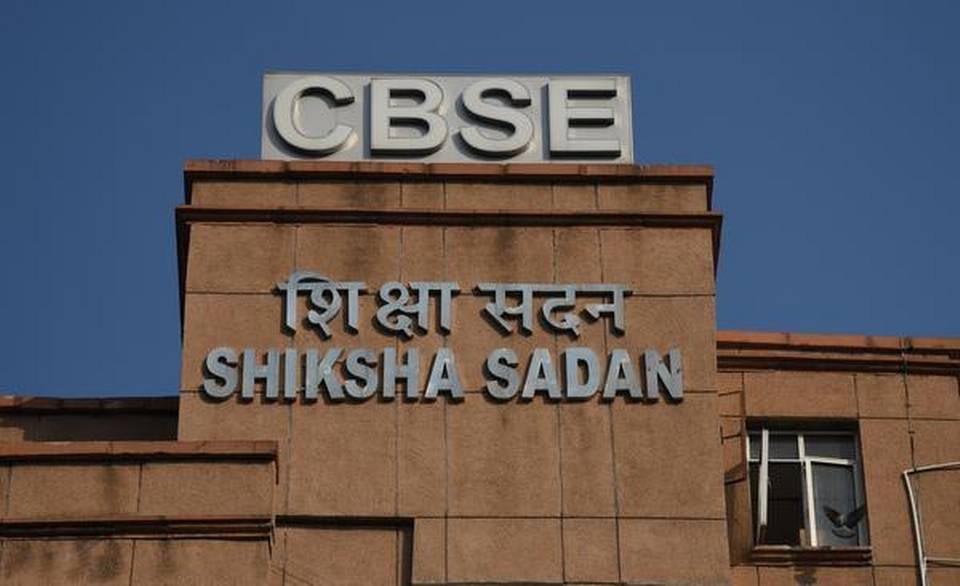
In a groundbreaking shift that could redefine India’s approach to school education, the Central Board of Secondary Education (CBSE) has officially announced that students of Class X will have the opportunity to appear in two Board Examinations in a single academic year starting from 2026. This reform, deeply rooted in the National Education Policy (NEP) 2020, is designed to lower exam-related anxiety, reduce the high stakes of a single assessment, and align the education system with international best practices.
The decision is based on Paragraphs 4.37 and 4.38 of the NEP, which recommend greater flexibility in assessments, student choice, and the ability to attempt board exams more than once within the same year. The NEP further encourages the development of board exams that test core concepts and skills rather than promote rote memorization, thereby gradually shifting away from the culture of high-pressure coaching and one-time testing.
A Structure Built on Flexibility and Fairness
According to the official notification issued by CBSE, all students will be required to appear for the first (main) board examination, which will be conducted in mid-February. Those wishing to improve their performance can take the second examination, scheduled in May, in up to three subjects. These subjects must be chosen from the core areas – Mathematics, Science, Social Science, and Languages. However, students who skip three or more subjects in the first exam will be disqualified from appearing in the second exam and will be marked as “Essential Repeat.” They will have to reappear in the following year’s main examination.
Internal assessments will be conducted only once, prior to the first board examination. The syllabus for both exams will remain unchanged and will cover the full annual curriculum. The same scheme of study and examination pattern will be maintained across both sessions.
Provisions for Special Categories
CBSE has ensured inclusivity by addressing the needs of special categories. Students representing India in sports competitions, whose exam dates clash with their events, will be allowed to appear in the second exam for those specific subjects. Students from winter-bound schools will have the choice to appear either in the first or second examination, depending on the academic calendar of their institutions. Children With Special Needs (CWSN) will continue to receive all existing facilities in both exam cycles, thereby upholding the board’s commitment to equitable education.
Timeline and Result Declaration
The results of the first board examination will be declared in April, while the second examination results will be announced in June. Performance data from the first exam will be uploaded to DigiLocker, allowing students to use their results for provisional admission to Class XI, even if they choose to attempt the second exam. Final mark sheets and merit certificates will be issued after the second examination cycle is complete. This ensures that students have ample time to evaluate their results and make informed decisions about whether to attempt improvement exams.
Implications for Schools and Teachers
For schools, this policy introduces a significant operational shift. Institutions will now need to plan for two large-scale examination cycles within one academic year. This means reorganizing academic calendars, internal assessments, invigilation schedules, and teacher workloads. Teachers will also need to guide students through new decision-making processes – such as choosing whether to reappear in a subject – and help them plan their studies across two exam timelines. While the change promotes better outcomes for students, it undeniably places additional demands on school infrastructure and human resources, which will need support and capacity building.
Impact on Students and Families
The new system is largely viewed as a positive step by students and families. It provides students a second chance to improve their scores without the penalty of waiting a full year – a much-needed relief in the high-pressure Indian academic context. Students who perform below expectations in the main exam will now have a realistic opportunity to correct course and aim for better scores, helping them regain confidence and motivation. For many parents, this dual-exam policy reduces the all-or-nothing anxiety around board results, providing a more compassionate and flexible evaluation process.
However, there are concerns about potential misuse of the second exam as a fallback option, leading to complacency in the first attempt. This will require careful counselling and awareness programs to ensure students treat both opportunities with equal seriousness.
The Pros and Cons in Context
While the introduction of two board exams certainly promotes flexibility and reduces academic pressure, it also brings along challenges. On the positive side, students now have more control over their academic journey, the opportunity to improve their performance, and reduced risk associated with a single high-stakes examination. The reform is student-centric and aligned with global practices, such as semester-based assessments and modular exams, seen in education systems like the IB or SAT.
On the downside, the new structure increases the administrative load on schools and may create additional stress for students who choose to attempt both exams. It also requires educators and parents to monitor student choices carefully and ensure they are not overwhelmed by preparation cycles. In rural or under-resourced areas, the logistical and digital requirements of managing two exam cycles might pose implementation difficulties.
Post-Result Services and Future Outlook
CBSE has made it clear that re-evaluation, verification, and photocopy services will be available only after the declaration of the second exam results, thus treating both exams as part of one complete assessment cycle. The List of Candidates (LOC) for the second exam will be submitted separately, and no new candidates will be added to the list. Students will not be allowed to change subjects between the two examinations except under clearly defined policy exceptions.
This reform is seen as the first significant step in CBSE’s long-term vision to make board assessments more holistic, inclusive, and meaningful. It not only supports the goals of NEP 2020 but also paves the way for future reforms, including modular testing, level-based papers, and skill-based assessment models.
A National Shift in Assessment Culture
The two-exam policy is not just a structural reform – it reflects a larger shift in the philosophy of Indian education. It underscores the belief that learning is a continuous journey, not a one-time judgment.
By reducing the fear of failure and encouraging self-improvement, CBSE is taking a definitive step toward creating a more equitable, student-centric assessment model.
As this new structure prepares for rollout, schools, teachers, and parents alike will play a vital role in ensuring its success. The policy may well set a precedent for future reforms – potentially extending to Class XII and other national-level assessments in the years to come.
(The author is Vice Principal DPS Jammu)
 Follow our WhatsApp channel
