

Anjum Manhas
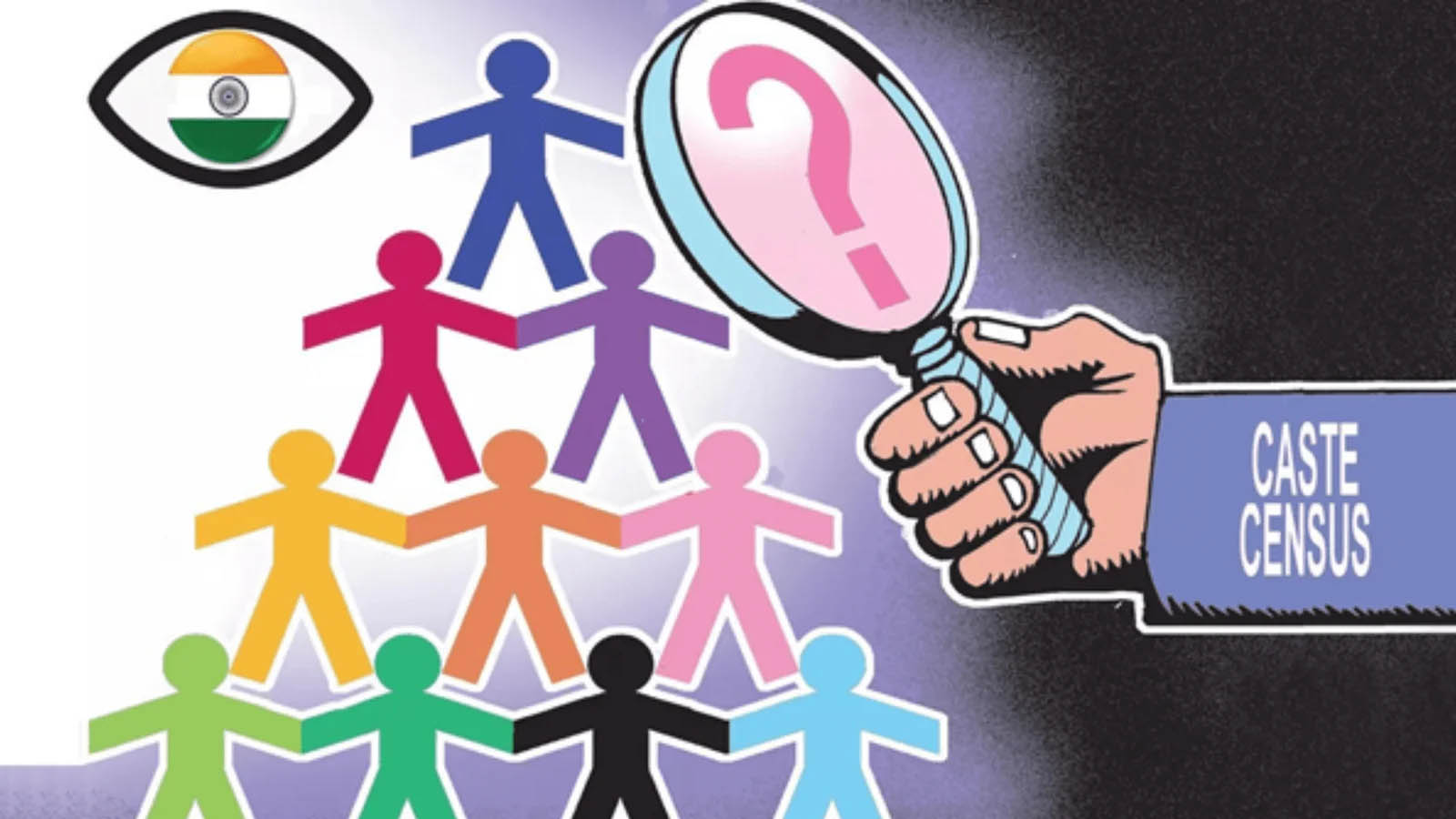
India, characterized by vast diversity, carries the complex legacy of the caste system-a centuries-old social structure that continues to influence its political, economic, and social dynamics. With the central government’s recent decision to include caste data in the national census for the first time since 1931, the topic has become a focal point of national discourse.
Origins of the Caste Census
The practice of enumerating caste began during British colonial rule in India. The British, seeking to govern a diverse and complex society, initiated systematic demographic surveys in the 19th century. The 1871 Census of India, the first comprehensive colonial census, included caste data to categorize communities for administrative purposes, such as recruitment into the colonial army, taxation, and governance of princely states. By the 1931 Census, the British had refined this process, documenting over 4,000 castes and sub-castes across India, with a population of approximately 256 million at the time. This data was used to implement policies like separate electorates and quotas under the Government of India Act of 1935, often reinforcing social hierarchies for political control.
Pre-colonial Indian rulers, such as those of the Mughal or Maratha empires, maintained records of land ownership and occupations that implicitly reflected caste identities but did not conduct modern-style censuses. The colonial caste census formalized these distinctions, laying the foundation for contemporary debates on caste enumeration.
Historical Evolution
Post-independence, India’s approach to caste enumeration shifted. The Indian Constitution of 1950 prioritized equality and affirmative action for marginalized groups, designating reservations for Scheduled Castes (SCs) and Scheduled Tribes (STs), which, according to the 2011 Census, comprised 16.6% (201 million) and 8.6% (104 million) of India’s 1.21 billion population, respectively. However, the government, under Prime Minister Jawaharlal Nehru, excluded detailed caste data from the decennial census starting in 1951, citing concerns that it might perpetuate caste divisions. The census continued to collect data on SCs, STs, and religious groups but omitted comprehensive caste details, particularly for Other Backward Classes (OBCs), estimated to constitute 27% to 52% of the population based on varying sources like the Mandal Commission (1980) and regional surveys.
The demand for a caste census grew in the late 20th century, driven by political movements advocating for OBC rights following the Mandal Commission’s recommendation of 27% reservation for OBCs in government jobs and education. The 2011 Socio-Economic and Caste Census (SECC) was a landmark attempt to collect caste data alongside socio-economic indicators, covering 1.24 billion people. It revealed that 70% of rural households were socio-economically deprived, with lower castes disproportionately affected. However, the caste data was not fully released due to inconsistencies, political sensitivities, and challenges in standardizing thousands of caste names. For instance, the SECC identified over 46 lakh caste entries, many duplicative or region-specific, complicating analysis.
The 2021 Census, delayed due to the COVID-19 pandemic, is now scheduled for 2025, with renewed calls for caste enumeration. Political parties, particularly those representing OBCs and Dalits, argue that updated caste data is critical, as the last comprehensive caste census was in 1931, when India’s population was less than one-fifth of its current size.
Implementation Challenges
Conducting a caste census in India, with its 1.4 billion population (as of 2023 estimates), is fraught with challenges:
Diversity of Castes: India has over 4,000 castes and 25,000 sub-castes, with regional variations in names and social status. For example, the 2011 SECC struggled to standardize entries like “Yadav,” which may be listed differently across states (e.g., “Yadava” or “Ahir”).
Political Sensitivities: Caste data can fuel demands for revised reservation quotas, potentially sparking inter-community tensions. The Mandal Commission’s implementation in 1990 led to widespread protests, highlighting the political volatility of caste-based policies.
Data Accuracy and Privacy: Self-reported caste data risks inaccuracies due to social stigma or deliberate misreporting to access benefits. The 2011 SECC faced criticism for errors, with some estimates suggesting up to 20% of entries were inconsistent.
Logistical Complexity: The decennial census costs approximately Rs 8,754 crore (2011 figures), and adding caste enumeration increases expenses for training enumerators and processing data. The 2025 Census is projected to cost over Rs 12,000 crore.
Social Implications: Critics argue that a caste census could entrench divisions, while proponents assert that ignoring caste obscures systemic inequalities. For instance, a 2018 World Bank study found that SCs and STs had literacy rates of 66.1% and 59%, respectively, compared to the national average of 73%.
Usefulness of a Caste Census
The caste census holds immense potential for addressing India’s social and economic disparities. Its key benefits, supported by data, include:
Informed Policy-Making: Caste data can reveal disparities in education, employment, and income. The 2011 SECC showed that 31% of rural households lacked access to basic amenities like electricity and sanitation, with lower castes disproportionately affected. This data can guide targeted welfare schemes.
Strengthening Affirmative Action: Accurate caste population data is crucial for equitable reservation policies. The Mandal Commission estimated OBCs at 52% of the population, but the lack of recent data fuels disputes over the 27% OBC quota. A caste census could clarify these figures, ensuring fair representation.
Addressing Inequality: Caste-based discrimination persists, with NSSO 2014 data indicating that SCs and OBCs earned 20-30% less than upper-caste households in similar occupations. A caste census can highlight such gaps for policy interventions.
Monitoring Progress: Regular caste data can track the impact of affirmative action. For example, the 2011 Census showed a 10% increase in SC literacy rates from 2001, but gaps with upper castes persisted, underscoring the need for sustained efforts.
Social Justice Advocacy: Data empowers evidence-based advocacy. A 2020 Oxfam India report noted that 50% of India’s wealth was held by the top 10%, often from upper castes, while lower castes lagged. A caste census can quantify such disparities for targeted reforms.
Conclusion
The caste census, rooted in colonial governance, has evolved into a critical tool for addressing India’s persistent social inequalities. Despite challenges like caste diversity, political sensitivities, and logistical complexities, its potential to inform policies, strengthen affirmative action, and monitor progress is undeniable. Data from sources like the 2011 SECC and 2011 Census underscores the socio-economic disparities tied to caste, reinforcing the need for updated, comprehensive data. As India approaches the 2025 Census, the inclusion of caste data could mark a pivotal step toward equitable governance, provided it navigates the delicate balance between social justice and social cohesion. With a population of 1.4 billion and growing demands for inclusivity, the caste census remains a vital, if complex, instrument for India’s future.
 Follow our WhatsApp channel
