

Suhail Bhat
SRINAGAR, Jan 10: The strategic deployment of CCTV cameras in Wullar, Asia’s largest freshwater lake located in North Kashmir’s Bandipora district, has successfully thwarted poaching activities targeting migratory birds.
Click here to watch video
According to officials from the Wullar Conservation and Management Authority (WUCMA), two high-definition CCTV cameras have been strategically placed on large bird-watching towers at two poaching-prone zones of the lake. This setup allows for round-the-clock surveillance on the lake, enabling the prompt identification and apprehension of anyone engaged in illegal activities, particularly bird poaching.
“These devices have deterred poachers, as not a single incident has been recorded since their installation,” Irfan Rasool, Coordinator of WUCMA, said.
The devices have proven invaluable to WUCMA’s anti-poaching squads, addressing the challenge of extensively covering the vast lake with limited manpower. “Dedicated teams are observing the visuals sent by the cameras to the control room, and the anti-poaching squad is immediately alerted if any suspicious activity is observed,” he said.
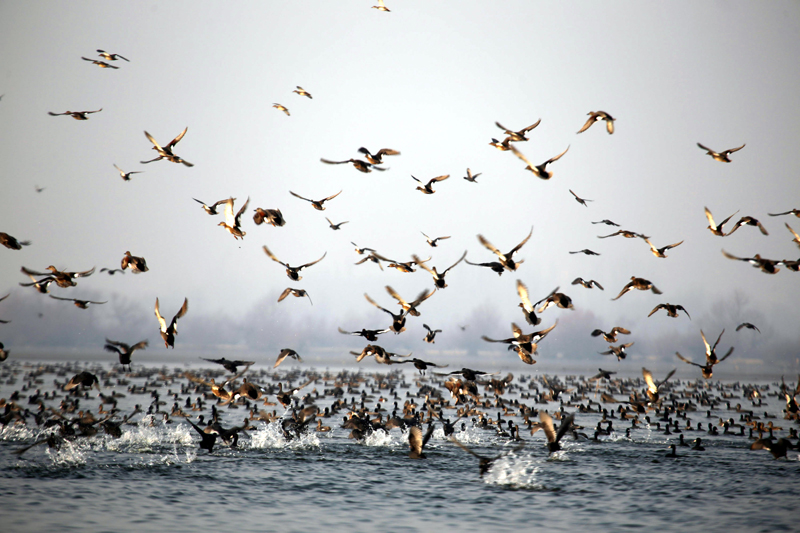
In response to the need for these cameras, Rasool highlighted the significant increase in migratory birds visiting the lake following recent restoration efforts. The lake’s transformation has attracted various bird species, reinforcing its status as a regional wildlife hub. He said Wullar lake was one of the victims of environmental degradation due to human encroachment, pollution, and illegal fishing, but they have successfully restored the lake’s health.
Showkat Maqbool, a Forest Guard with WUCMA, emphasised that these cameras, combined with regular patrolling by anti-poaching squads using motor boats, play a crucial role in safeguarding the birds. He said the species like long-tailed ducks and other birds had not been seen in decades, attributing their return to the eco-restoration of Wullar lake.
Last year, officials said authorities organised two anti-poaching camps in Watlab and RC Ajas, resulting in a highly successful crackdown in March 2023. “The operations included deploying 20 Aabi Gasht units, checking 12 vehicles and vessels, searching 6 houses and buildings, covering 251 kilometres on foot patrols, and establishing 4 checkpoints,” an official said.
He said seizures during these operations included punt guns, gunpowder, pellets, a poaching boat, plastic nets, an igniter or knife, decoys, and nets. “Modern technology, such as the use of an OKEN scanner, underscores the authorities’ commitment to combating the illegal wildlife trade, sending a clear message that such activities will not be tolerated,” he said.
 Follow our WhatsApp channel
