

‘Irregular appointments, abandoned research projects mark poor work culture’
Sanjeev K Sharma
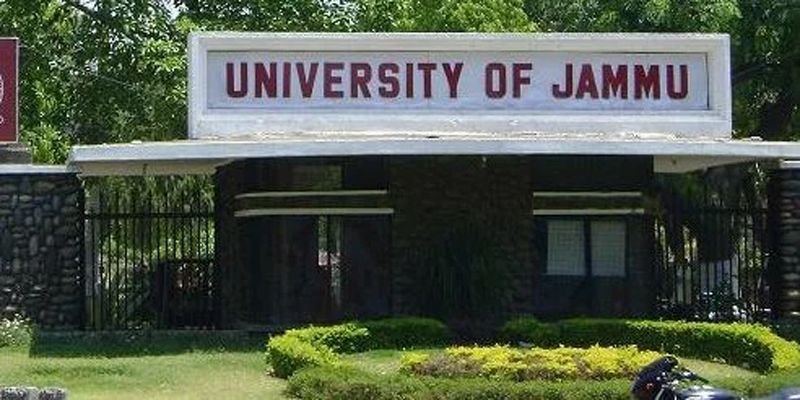
JAMMU, Apr 3: The University of Jammu (JU) had not prepared annual account and balance sheet since its inception indicating lack of commitment and by specifying particular makes and models, the varsity had carried out purchases from single source resulting in non-transparency in the procurement process and reduced opportunity to get better prices and products through competitive bidding.
An authentic report stated that the University could not optimally utilise financial assistance received from UGC and due to non-preparation of a Consolidated Local Fund, balances under local funds of various PG departments and constituent offices remained outside the main account of the University resulting in understatement of revenue in the budget estimates.
JU also failed to make efforts to establish industry-academia linkage for making students job ready while facilitation for innovation and entrepreneurship development programmes was dismal as the University Business Incubation and Innovation Centre (UBIIC) and Special Purpose Vehicle (SPV) set up for providing incubation support to potential startups remained non-functional.
All this was claimed by the Report of the Comptroller and Auditor General (CAG) of India for the period ended March 2022.
The report further mentioned that Choice based Credit system was partially implemented in the varsity restricting choices available to the students.
“The evaluation system suffered from operational and monitoring inadequacies. Delays in evaluation of results and thesis of PhD students were indicative of serious systemic problems affecting career mobility and academic progression of students,” it stated adding: “Monitoring research projects was inadequate as there were instances of abandoned projects and delays in completion of projects.”
Making startling exposure about under-qualified teaching staff, it was informed in the report that in 51 physically verified colleges (Government: 17 and Non-Government: 34), out of 331 teachers appointed in 24 non-government colleges, 113 teachers did not possess the prescribed qualifications.
Making another exposure, the CAG report further stated that the Human Resources Management at JU was not efficient as there were irregular appointments and premature/ undue promotions.
It also claimed that recruitment rules had not been framed for 77 out of 142 categories of non-teaching posts while regularisation of adhoc/contractual teaching/ academic staff was adopted as a mode of appointment.
“Lateral entry to direct entry level posts of Deputy Librarians led to undue favour to in-service employees. Appointments of in-service Assistant Registrars against open merit posts of Deputy Registrars were made in violation of UGC norms,” the report stated claiming irregular appointments at JU for the posts of Readers/ Associate Professors without required teaching experience which compromised the minimum standards prescribed by UGC for maintaining quality of teaching.
The report made yet another exposure stating that in absence of regular recruitments for all posts, there was no uniform policy for career advancement of non-teaching staff.
“While a three-tier scheme was in operation for some non-teaching positions, there was undue extension of academic grade pays and Career Advancement Scheme of teachers to a selective group of non-teaching posts treated as non-vocation academic posts,” it continued further stating that UGC Career Advancement Scheme was extended to non-teaching posts treating them as equivalent to Assistant Registrars and Deputy Registrars which are regulated by UGC.
It claimed that irregular financial upgradations with retrospective effect were allowed to non-teaching employees putting a burden on State exchequer.
The report stated that inability of the University to start infrastructure works of off-site campuses before expiry of the 11th Plan (2007-12) resulted in disallowance of central grants which further led to stoppage of 30 works of which 15 projects were lying abandoned since March 2015.
“Due to significant variations in structural design and construction of additional floors not contemplated earlier, work on Girls Hostel was held up for nearly nine years,” the CAG report claimed.
It also mentioned that getting additional works executed out of savings of tendered and allotted cost, through the same contractors, was a norm rather than an exception, which not only compromised transparency in allotment of works but also resulted in undue benefit to contractors.
“There were also instances when equipment procured by various departments remained lying idle due to lack of technical manpower,” it stated.
 Follow our WhatsApp channel
