

Panel to submit report in 18 months
*Non-urea fertiliser subsidy hiked
NEW DELHI, Oct 28:
The Cabinet on Tuesday approved the Terms of Reference of the 8th Pay Commission, which will benefit 50 lakh Central Government employees and 69 lakh pensioners and will have implications on the emoluments of the staff of State Governments.
Follow the Daily Excelsior channel on WhatsApp
The recommendations of the Commission, to be headed by former Supreme Court Judge Ranjana Prakash Desi, are likely to be effective from January 1, 2026.
The Commission will submit its report in 18 months and interim reports as and when they are finalised.
The announcement comes ahead of Bihar State elections, which will be held between November 6 and 11.
According to an official statement, the Commission will look into “the prevailing emolument structure, benefits and working conditions available to employees of Central Public Sector Undertakings and private sector” while finalising its recommendations.
While making its recommendations, the Commission will also consider the economic conditions in the country and the need for fiscal prudence, and the need to ensure that adequate resources are available for developmental expenditure and welfare measures.
It would also take into account the unfunded cost of non-contributory pension schemes; and the likely impact of the recommendations on the finances of the state governments which usually adopt the recommendations with some modifications, the statement said.
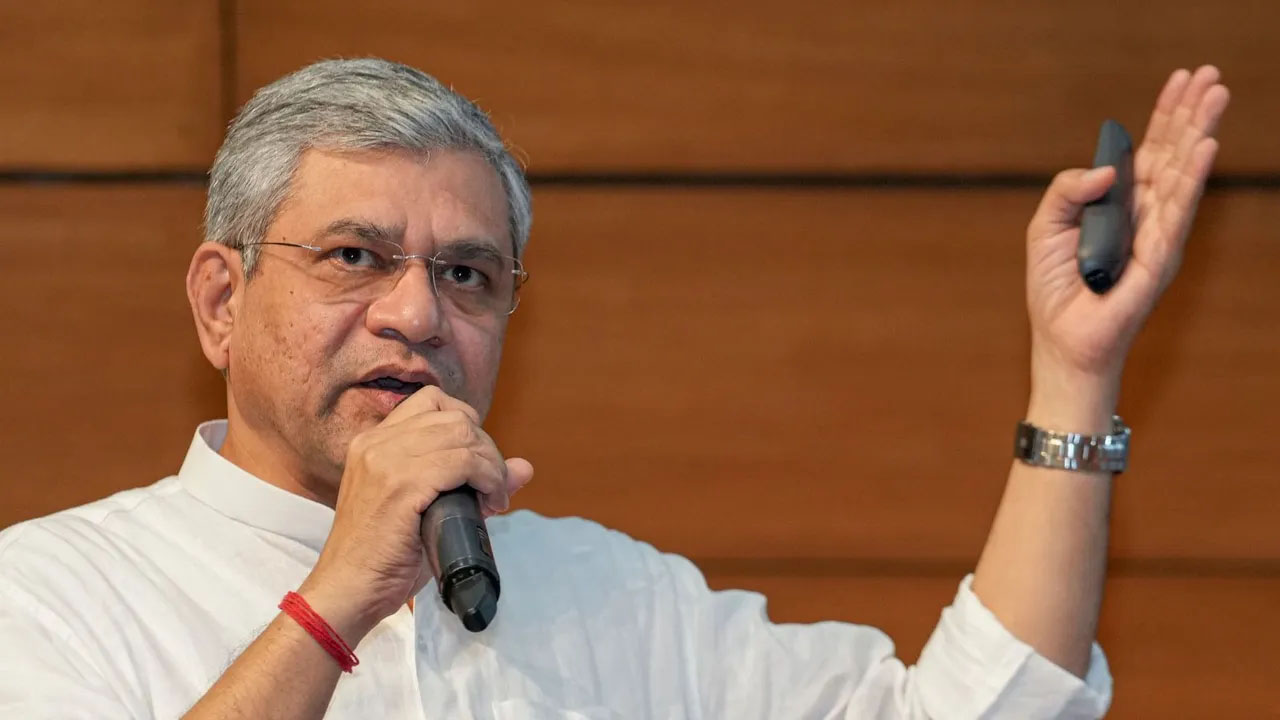
“The Union Cabinet, chaired by Prime Minister Narendra Modi, today approved the Terms of Reference of 8th Central Pay Commission,” Information & Broadcasting Minister Ashwini Vaishnaw told reporters.
The Commission will examine and recommend changes in salaries and other benefits of Central Government employees.
The Commission’s recommendations will cover nearly 50 lakh Central Government employees, including defence services personnel, and 69 lakh pensioners.
The ToR of the commission was approved by the Cabinet about nine months after it gave an in-principle nod to setting up the 8th Pay Commission.
The ToR has been finalised after consultation with various ministries, State Governments and staff side of joint consultative machinery.
The Pay Commission, under Desai, will have one part-time member — IIM (Bangalore) Professor Pulak Ghosh, while Petroleum Secretary Pankaj Jain will be the Member Secretary.
Desai is the chairperson of the Press Council of India. She has headed major Government panels in the past, including the Delimitation Commission for the Union Territory of Jammu and Kashmir, and the expert committee on drafting of Uttarakhand’s Uniform Civil Code (UCC). This will be her fourth major assignment after retiring as a Supreme Court Judge.
On the date of implementation of the pay panel award, Vaishnaw said, “The specific date will be decided once the interim report comes in… But mostly it should be January 1, 2026.”
Usually, recommendations of the Pay Commissions are implemented after a gap of every 10 years. Going by this trend, the effect of the 8th Central Pay Commission recommendations would normally be expected from January 1, 2026, the Government said in a statement.
The 7th Pay Commission was constituted in February 2014. Its recommendations were implemented from January 1, 2016.
To compensate Central Government employees for erosion in the real value of their salaries on account of inflation, dearness allowance (DA) is paid to them, and the rate of DA is revised periodically every six months on the basis of the rate of inflation.
Meanwhile, the Centre has raised the subsidy on phosphorous (P) and sulphur (S) fertilisers for the ongoing 2025-26 rabi season, with a higher subsidy allocation of Rs 37,952 crore to provide relief to the farming community.
However, the subsidy rate for nitrogen (N) and potash (K) were kept unchanged. The rates will be effective from October 1, 2025 till March 31, 2026.
The Cabinet, headed by Prime Minister Narendra Modi, increased the subsidy for phosphate to Rs 47.96 per kg for the ongoing rabi season from Rs 43.60 per kg in the 2025 kharif season. Similarly, the subsidy for sulphur was raised to Rs 2.87 per kg from Rs 1.77 per kg for the period under review.
The subsidy rate for nitrogen and potash were, however, kept unchanged at Rs 43.02 per kg and Rs 2.38 per kg, respectively.
“The subsidy approved for 2025 rabi season is higher by about Rs 14,000 crore from the previous rabi season (2024). During the last rabi season, the subsidy was about Rs 24,000 crore,” Information and Broadcasting Minister Ashwini Vaishnaw told reporters.
The subsidy rate has been fixed, considering the import price and other factors like nutrient requirement, subsidy burden and maximum retail price (MRP), he said.
The Government has provided a special package to ensure availability of di-ammonium phosphate (DAP) and triple super phosphate (TSP) to farmers without any increased MRP.
Prices of phosphorous and sulphur have increased up to 10 per cent from previous levels, while nitrogen and potash are at the same level, he said. (PTI)
 Follow our WhatsApp channel
