

Excelsior Correspondent
SRINAGAR, Nov 25: Apni Party president Syed Mohammad Altaf Bukhari today urged the Union Government to initiate a direct and immediate dialogue with the people of Jammu and Kashmir and subsequently restore statehood as already promised by the Centre. He stressed that bridging “Dil ki doori” was essential for lasting peace and stability in the region.
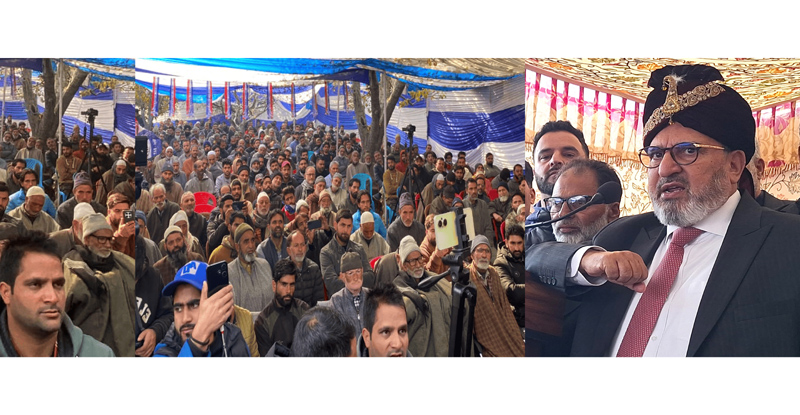
Addressing a workers’ gathering in Kralagund in the Langate constituency, where the party launched a public outreach campaign, Bukhari also called on the elected UT Government to increase the domicile residency requirement from 15 to 35 years and revisit the reservation policy to make it “balanced and judicious.” He expressed concern over ongoing arrests and alleged harassment of Kashmiris outside J&K.
Bukhari said the meeting aimed to reaffirm the Party’s strategy and agenda, asserting that the Apni Party had consistently focused on genuine public issues. He reiterated that the Party had promised general amnesty for detainees and measures to ensure dignity and opportunity for the region’s youth.
Highlighting the Party’s achievements, Bukhari said the Apni Party secured land and job protections for locals after the 2019 constitutional changes. He said that fixing a 15-year residency requirement for domicile eligibility was accomplished through the party’s efforts in New Delhi.
He urged workers to educate people on the need to strengthen domicile laws rather than focus on smaller demands like free electricity. Emphasizing unity among political parties in J&K, he said collective efforts were needed to push the Central Government toward dialogue and the restoration of statehood.
Bukhari also spoke about unemployment, drug abuse, and reservation issues, criticizing the elected government for failing to deliver on key matters. He strongly opposed any proposal to shift the Government Medical College (GMC) from its approved site in Gund Chogal, Handwara, noting that Rs 45 crore had already been spent.
Prominent leaders present included Mohammad Dilawar Mir, Raja Manzoor, Yawar Mir, Shabir Ahmad Shah, Dr Noor Din Shah, Abdul Rashid Bhat, Abdul Rahim Wani, Bilal Arif, Munawar Khaja, Mohammad Amin Bhat, Manzoor Ahmad Ganaie, Farooq Ahmad Wani, Ghulam Hassan Dar, Nazir Ahmad Dar, Abdul Qayoom, Zahoor Ahmad Dar, Shabir Ahmad Lone, among others.
 Follow our WhatsApp channel
