

Excelsior Correspondent
JAMMU/SRINAGAR/LEH, Sept 26: Bharat Sanchar Nigam Limited (BSNL) is set to launch its indigenous 4G services across Jammu & Kashmir and Ladakh on Saturday, marking its silver jubilee year and aligning with the Prime Minister’s vision of Aatmanirbhar Bharat.
The rollout is part of a nationwide expansion with 92,633 new 4G sites, including 639 Digital Bharat Nidhi-funded towers in the two Union Territories.
Click here to watch video
Of these, 465 towers are being commissioned in Jammu & Kashmir and 174 in Ladakh under the 4G Saturation Project.
The network, powered by the indigenously developed C-DoT core with TCS and Tejas RAN integration, will provide coverage to over 756 uncovered villages, benefiting more than three lakh residents.
Officials said the new connectivity will particularly aid students, entrepreneurs, and small businesses in rural and border areas.
Strategic regions including the Kashmir Valley, Doda, Kishtwar, Pir Panjal, Nubra Valley, Pangong Lake and frontier belts such as Durbuk, Galwan Nala and Chushul are also being brought under secure 4G coverage.
BSNL’s 4G network in J&K and Ladakh currently carries around 42,000 GB of daily data traffic and 6,500-7,000 Erlangs of voice calls, reflecting the high demand for reliable services.
The operator has added over one lakh new 4G subscribers in the two UTs, with numbers rising steadily as coverage expands.
Financially, BSNL has turned a corner, posting profits of Rs 262 crore and Rs 280 crore in the last two quarters. The J&K circle also recorded a profit in FY 2024-25 after 12 years.
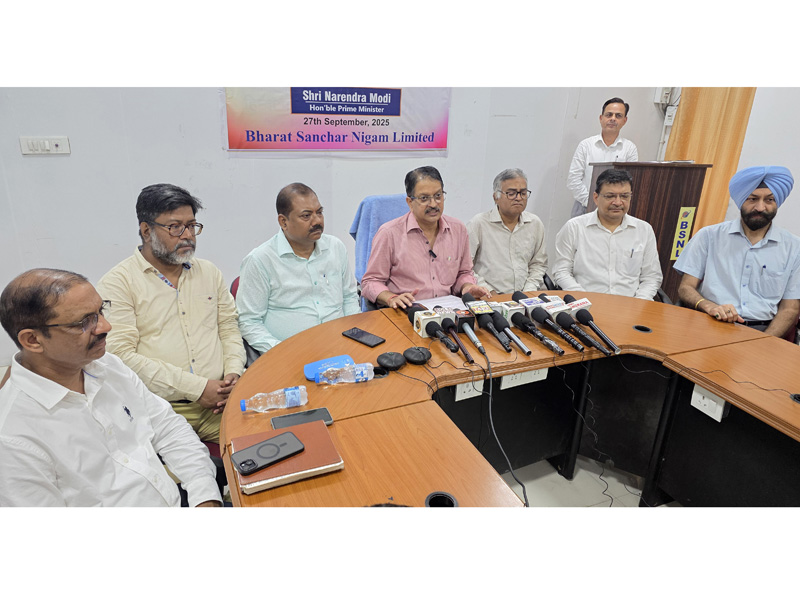
In Jammu, CMD BSNL, A Robert J Ravi, said the silver jubilee coincides with a “new beginning” as BSNL delivers secure, affordable, and resilient connectivity across the country while preparing for 5G deployment.
In Kashmir Valley, BSNL Principal General Manager (PGM) Arvind Pandey said that 262 towers are fully functional under the 4G saturation project, serving remote areas including Keran, Machil, Tangdhar, Narnag, Doodhpathri, Aharbal, Toshmaidan, and Gurbatan. Additionally, he said, 545 towers have been upgraded under phase 9.2. “Some remote areas previously without coverage now have 4G connectivity. Shortcomings are being progressively addressed, and our team is working to improve network quality continuously,” he said.
 Follow our WhatsApp channel
