

Sethi blames Omar of communalizing issue
Excelsior Correspondent
JAMMU, Nov 26: Bharatiya Janata Party (BJP) today demanded amendment in J&K Mata Vaishno Devi Shrine University Act 1999 to provide right admission to believers of Shri Mata Vaishno Devi.
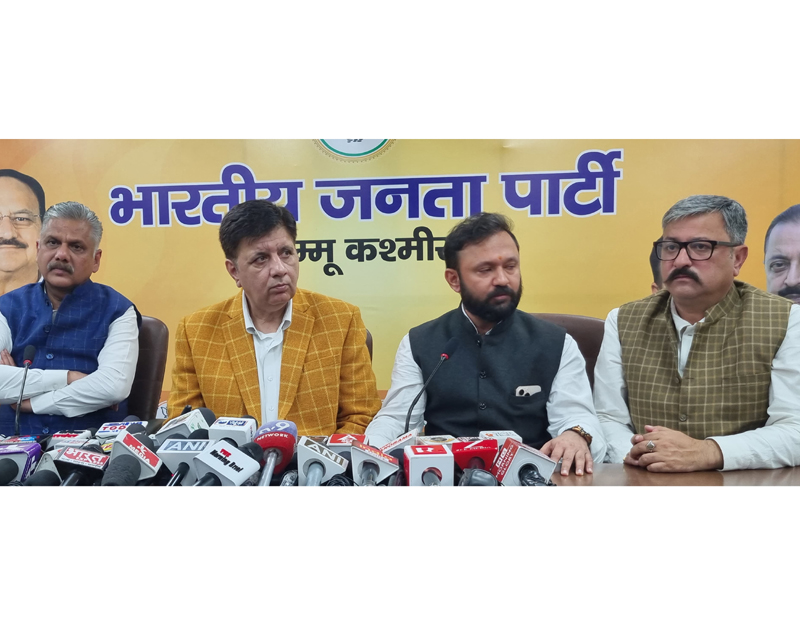
The demand was made at a joint press conference addressed by BJP chief spokesperson, Sunil Sethi, spokespersons , Abhinav Sharma, Ankur Sharma and Zorawar Singh Jamwal here at BJP Headquarters.
They showed their concern over the recent controversy surrounding the selection of 42 Muslim candidates in the Medical College established and funded by the Shri Mata Vaishno Devi Ji Shrine Board.
Sunil Sethi, while cautioning against politicising or communalising the issue criticised Chief Minister, Omar Abdullah for what he described as attempts to project the issue as a Hindu-Muslim conflict.
Sethi said the sensitivities associated with Shri Mata Vaishno Devi Ji Shrine, being a revered Hindu religious institution, must be respected. At the same time, he added that “the rights of the selected candidates can be protected through several available legal and administrative avenues,” urging responsible handling of the situation.
Abhinav Sharma pointed to what he called inadequate publicity of the admission process. According to him, limited dissemination of information deprived many meritorious Hindu students of an opportunity to opt for the college during counseling.
Ankur Sharma strongly criticized, Omar Abdullah for “mocking the sentiments of the Hindu community” by what he described as a “deriding and trivialising” response to the concerns raised.
Sharma argued that the Shri Mata Vaishno Devi University Act, 1999 should be revisited by the Legislature. He stated that the University and the upcoming medical college have their origins, funding, and institutional purpose rooted in the Hindu religious tradition, and therefore possess a distinct religious identity.
 Follow our WhatsApp channel
