

Dr Hakim Singh
The picturesque state of Jammu and Kashmir, much touted for its unmatched natural appearance, boasts an equally deep spiritual and cultural heritage. Among the gems hidden in the peaceful hills of the Chenab valley are two vastly important religious and historical places: Bimalnag and the shrine of Sarthal Devi Mata. These locations, not only held in awe for their holiness but also for their cultural, historical, and developmental significance, capture the essence of the region and are living testimonials to peaceful coexistence of tradition and times.
Bimalnag: A Mythic and Meditative Retreat
Located in the scenic Saroor region of Kishtwar district, Bimalnag is a site where myth and nature merge. Lying nestled amidst dense pine forests, green meadows, and peaceful alpine surroundings, the area is commonly referred to as a “hidden gem” of the Jammu area. It is said in local folktales and oral lore that Bimalnag received its name from Bhima, one of the Pandava brothers of the ancient epic Mahabharata. Bhima was believed to have meditated in this very area when he was exiled, imbuing the area with spiritual energy. At the core of Bimalnag’s sacred geography lies a crystal pond, often regarded as a tirtha (sacred water body) by the inhabitants. The water is thought to have cleansing properties and features prominently in various native rituals. Ascetics and seekers from nearby cities have been attracted to this site since the time immemorial, utilizing it as a meditative and spiritual retreat. To this day, one can still discover the remains of ancient stone temples, believed to be shrines and ascetic rest houses.
Cultural Tapestry and Living Traditions
Apart from its religious origins, Bimalnag possesses immense cultural importance. It is a hub for the conservation of traditional Pahari and tribal culture. On local festivals, especially in the summer season, the region is abuzz with activity. Locals from surrounding hamlets descend on the area in colorful costumes, singing folksongs, performing local dances such as Kud and Geetru, and indulging in community feasts. These celebrations tend to be centered around cycles of agriculture and mythological narratives, which further reinforce the people’s relationship with nature and the divine. Attempts to record and save the oral tradition and folk practices related to Bimalnag have been made in recent years. This renewed cultural pride has also resulted in greater involvement from the younger generations, who are now more actively participating in keeping their ancestors’ heritage alive.
Sarthal Devi Mata: The Shakti of the Mountains
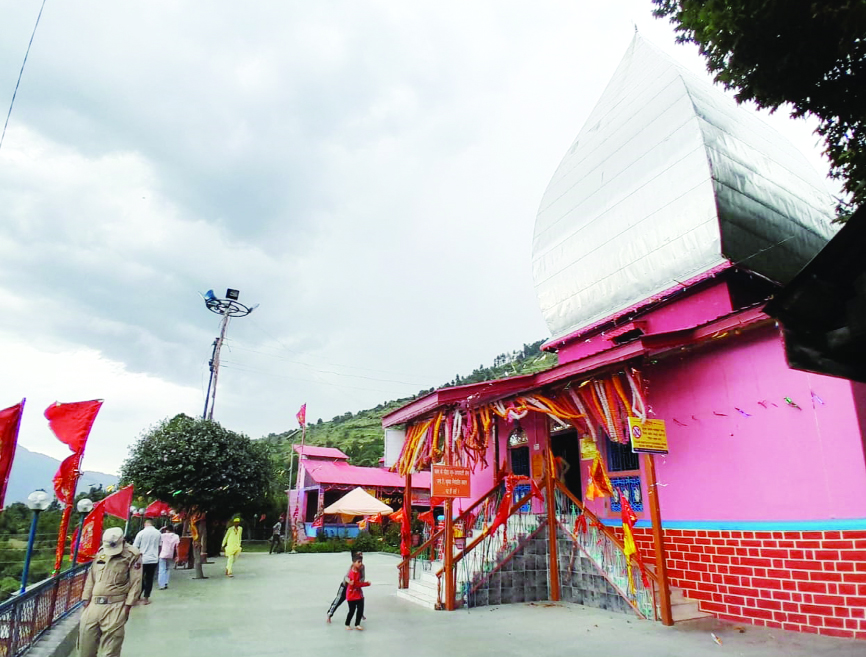
Soaring above the Kishtwar hills, more than 6,000 feet above sea level, lies the holy shrine of Sarthal Devi Mata. This ancient place of worship is devoted to a ferocious and guardian form of Goddess Durga, revered by thousands of followers, primarily from the Dogra and Pahari communities. The origin of the temple dates back to the mythical king Raja Agar Dev, who is said to have sanctified the idol centuries ago. The shrine, constructed of ancient stone and wood architecture, is a watchdog of worship in the grand Himalayan stillness. The most notable religious festival related to this shrine is the Sarthal Yatra that occurs once a year during the Hindu month of Ashadha (June-July). The Yatra is not just a pilgrimage; it is a spiritual carnival. Pilgrims from across the land climb the rugged tracks, carrying palanquins and singing devotional songs. The journey is characterized by shared faith and the ethos of perseverance. On arrival at the shrine, rituals are conducted with tremendous zeal, and the air is filled with conch shells, temple bells, and rhythmic chanting of pilgrims. This festival also serves as a melting pot of customs in which individuals from across social and regional divides congregate in worship. The rites, prasad (sacred offerings), and traditional music all help create an immersive spiritual experience. The local economy also benefits immensely from the pilgrimage inflow during this time.
Development Rooted in Heritage
While Bimalnag and Sarthal Devi Mata are towering religious and cultural icons, their significance in the story of the region’s development cannot be ignored. Realizing the prospective potential of these locations, the government of Jammu and Kashmir, in cooperation with local stakeholders, has initiated efforts to upgrade infrastructure and facilitate sustainable tourism. Enhanced road connectivity to both places is in the process of being developed, with the aim of maintaining the natural ecosystem of the area. Environmentally friendly guest houses, trekking trails, and tourism centers are needed to make the pilgrims and tourists stay longer. These facilities are not only intended to strengthen the local economy but will also generate employment opportunities for the youth of the area. Additionally, both Sarthal and Bimalnag needs to be specifically featured in promotional initiatives and marketing them spiritually enriching destinations by the Department of Tourism. Guided tours, online documentation, and local handicraft exhibitions needs to be showcased as part of a larger initiative to get these heritage sites into national and international focus.
Education, Conservation, and Community Involvement
What is so inspiring about the developmental model around these sites is that there should be community participation. People need to be trained as cultural interpreters, eco-volunteers, and hospitality workers. It may help in making sure that development keeps the community involved and empowers them rather than alienating them. Parallelly, schools should be engaged with cultural organizations to organize heritage walks, environment awareness campaigns, and research initiatives based on regions like Bimalnag and Sarthal. These efforts will help developing a sense of belonging and pride among the youth. Concurrently, conservationists must raise the call for an even-handed approach. Both places are ecologically sensitive areas, and unbridled commercialization would be potentially damaging to their natural and spiritual essence. A model of sustainability that juxtaposes preservation and development is therefore the call of the hour.
A Symbol of Syncretic Culture and Spiritual Unity
The heritage of Bimalnag and Sarthal Devi Mata is also profoundly relevant to contemporary socio-cultural life. These sites are living testaments to India’s syncretic culture, where nature, myth, and religion coexist with ease. They are not exclusively areas of Hindu religious worship but areas where communities from different religious and ethnic backgrounds visit to find peace and blessings. In an era where cultural polarities seek to unravel the fabric of society, these sacred places project a strong message of unity, tolerance, and shared identity. They welcome all visitors not only to pray, but to connect-firmly and respectfully-with the pulse of the land. Echoes from the Hills Bimalnag and Sarthal Devi Mata are not merely places of visitation-they are experiences. They are gentle reminders of olden lore borne on the breeze, pilgrims’ footprints of devotion inscribed upon forest roads, and echoes of everlasting love reflected in every pilgrim’s eyes. Their cultural, religious, developmental, and historical importance intertwines the past, present, and future of Jammu’s highlands. As the custodians of this heritage, it is our common duty to respect, preserve, and celebrate these holy Devi and Devtas of the Himalayas. In honoring these sacred legacies, we not only preserve the timeless glory of our ancestors but also brighten a future where progress walks hand in hand with prayer, and where the enduring spirit of the land continues to breathe through every leaf, stone, and soul that touches its sacred soil.
(The author is a Jammu and Kashmir based writer and columnist.)
 Follow our WhatsApp channel
