

Prof Virender Gupta
From the date of accession of Jammu and Kashmir with India, the valley always have being pampered and got a special treatment by the Government of India, while ignoring Jammu region in all respects. Kashmiri leadership was thrust on the people of Jammu region without taking them into confidence. In order to bring Sheikh Abdullah into the mainstream and to bring a stable peaceful atmosphere in Jammu and Kashmir, particularly in valley, In 1975 Indra Gandhi, the then Prime Minister of India entered into an accord with Sheikh Abdullah, called Gandhi-Sheikh Accord and Sheikh was made Chief Minister of Jammu and Kashmir with the support of the Congress Party. After that slowly and steadily separatist tendencies were encouraged to establish their feet and pro-Pak elements entered in the administration and state polity.
After the death of Sheikh Mohammad Abdullah, his son Farooq Abdullah became the chief minister of state on September 8, 1982. After that whether it was National Conference Government or of alliance with Congress (after 1987 elections), the anti national forces became strengthened. There was spurt in the anti-national activities. AI Fatah, Plebiscite Front and other pro-Pak terrorist organizations started operating and they infiltrated into the government functioning. A large number of new mosques appeared in the valley. Moulvies with suspicious identities appeared on the scene and started preaching Wabhism, the pan-Islamic ideology. Infiltration from across the border started in large number. Subversive elements crossed over to Pakistan for getting armed trainings. Attacks were made on the women not wearing Burkas. On August 14, 1988 Pakistan Independence day was celebrated with great enthusiasm and zeal. Pakistani Flags were hoisted, hartal was observed. Bomb blasts occurred and anti-India slogans were raised, Tricolours were burnt. On October 2, 1988 Mahatma Gandhi Statute was not allowed to be installed in the New Court Complex.
The militancy was on its extreme. A number of prominent citizens, political activists, officers, security personnel, were targeted and killed by militants. There were frequent bomb blasts, causing causalities and injuring security persons and innocent people. There were about 44 terrorist organizations operating in the valley. Announcement were continuously being made from the mosques threatening the minorities and asking Hindus and Sikhs, including the Kashmiri Pandits who had been living in the valley since centuries to leave the valley immediately otherwise their children and women folk would be harmed. Mosques became the centre of so called Islamic revolution. Those were the effective channels of information, coordination and crowd collections. The subversive had penetrated into government departments, educational institutions, hospitals, press, government media, Bar and the Bench and even local police.
There were reports in the media and the it was general feeling among the political circles and the public in general that Kashmir is going to be either independent or become a part of Pakistan. Taking note of the grave situation emerging in the valley, Government of India appointed Jagmohan as the Governor of the State, second time. He took oath as Governor of the state in the evening of 19th January, 1990. Curfew was reinforced strictly and CRPF stared searches in the areas where the terrorists were hiding. The pro-Pakistan and subversive elements and terrorist groups planned to collect millions of people from the villages and the towns at Idgah on January 26, which also happened to be a Friday, and make declaration of Independence, thereby burning of National Tricolours and hoisting flag of Islamic Republic in front of International and National media. The Government deployed large number of Para-military forces on all the routes and paths leading to Idgah to stop the people and also the planner of revolt from reaching the venue. The plan of anti-national forces met a crushing defeat. Thus the state was saved from worse happening. This could be achieved with steadfast and well planned strategy adopted by Jagmohan for which the nation shall always remain indebted to him.
Farooq Abdullah returned to power in 1996, after six years of President’s rule. During 1996 to 2018, there were democratically elected governments led by National Conference and PDP. Due to the wrong policies of the respective governments, terrorism and antinational activities got a boost. Sensitive issues like Women Reservation Bill, Greater Autonomy, restoration of pre-1952 position, opening of trade points with Pakistan across the borders and Self Rule etc., encouraged those who have waged a war against the Indian Union. Numerous detained individuals who were involved in serious offences and terrorist activities were released. The youth again started getting training from across the border and, engaging themselves in anti-national activities. In between, a joint front of terrorist groups and secessionist elements with name as Hurriyat Conference came into existence. Hurriyat Conference not only became a new political front but became a force difficult to be reckoned with. There were frequent bandhs and demonstrations on the calls of Hurriyat Conference, thus creating great chaotic conditions in the valley. Appointments of interlocutors and the process of dialogue to reach out some acceptable solution to the so called Kashmir problem created confusion in the public mind, which further encouraged the terrorist activities, demoralized the forces and weakened the resolve to fight secessionist forces. The Amarnath Yatra land row, in 2008 triggered a large scale protests and agitation in various parts of Jammu region. The atmosphere in the state remained communally charged. Valley witnessed about 3000 cases of stone pelting on armed cases, where 11000 youth were involved during 2017-2018.
The demand of statehood at this juncture can raise a deeper question about the security concerns as Jammu and Kashmir always remains the target of Pakistan sponsored terrorism and secessionism. It is no denying the fact that those who were in power in the state contributed in the deterioration of the situation by encouraging these elements. Can the political leadership of the state give guarantee that what happened in the past shall not happen again?
It may also be mentioned that people of Jammu region have suffered a worst kind of discrimination during the previous regimes. The people of the region have been considered as second class citizens and were neglected in all spheres of development at the hands of political leadership of the valley. The people of Jammu region have been forced to play a second fiddle role in the state political structure. The patriotism of the people of Jammu region, who always stood with the security and interests of the country, has always been considered as discount by the leadership of the country. The region suffered in the matter of development, generation of resources, opening of viable industries, in the allocation of funds, in the matter of employment and in the opening of educational and technical institutions in the previous regimes of National Conference. Attempts were made to infringe upon its historical, geographical and cultural identities. After the accession of Jammu and Kashmir State with India, deliberate and planned attempts were made to change its demography and culture. Even in the present set up of UT, their grievances are not being addressed. The valley is getting preferential treatment vis-à-vis Jammu region. There are acute feelings among the Jummuites that issues concerning Kashmir region get preference over the issues those pertain to Jammu region.
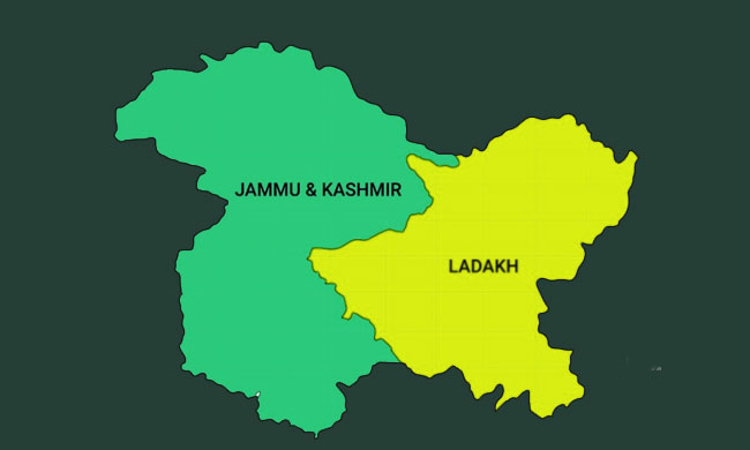
In the light of all this the people of Jammu region have been demanding creation of a separate Jammu State (as per its present geographical boundaries) by dividing the present Jammu and Kashmir. If Government of India feels that statehood cannot be granted to Jammu and Kashmir while looking at the security concerns at this juncture, then let UT be retained for the valley only, and Jammu region be given statehood. People of Jammu region cannot be allowed to suffer and play a role subservient to the valley, for long time because of the uncertain and disturbed situation in the valley as happened since independence.
 Follow our WhatsApp channel
