

Naseeb Bhagat
evsnaseeb@gmail.com
“My wish is to stay always like this, living quietly in a corner of nature.” – Claude Monet
Nature has a vast stock of resources if we talk in terms of water, air, sunlight, minerals, biodiversity, etc., to meet our needs but not our greed. It is our prime duty to protect nature and natural resources so that they can be sustained for future generations also. Our ancestors were wise enough and always took care of resources for their effective management and conservation. They were always cautious towards resources and wisely used them without any wastage and kept water resources clean, be it wells, springs, ponds, or ghats. Likewise, they always preferred local species for plantation as they knew the significance and their associated benefits. In some cultures, such as Kashmiri Pandits, plantations were a ceremonial event on birth and marriage occasions. In Hindu mythology, cutting of fruit-laden trees is considered a sin, and plants are not disturbed after sunset because it is the nesting and resting place for birds after dusk. They were well acquainted with environmental ethics as they incorporated them into every ritual and occasion for the welfare of nature. Our forefathers offered the first fruit of every plant or crop yield to the Almighty God/deity for prosperity and wellness of family members, domestic animals, and agricultural production. Many trees were considered sacred, such as Peepal, Bargad, Tulsi, Banana, Plaash, Chandan, Ber, mango, etc., and their leaves or twigs were used in rituals. Many animals such as monkeys, elephants, snakes, fish, etc., were worshipped as incarnations of God and Goddess.
If we talk about the life of people 200 years back, the lifestyle of people was quite eco-friendly and closely interwoven with nature. Needs were limited, which easily got fulfilled from the nearby environment. Mats, baskets, and buckets made from locally available plants including Sehtoot, Typha, Dhaman, etc., had very low carbon footprints as compared to the present generation. The artistic work such as making baskets, mats, buckets, plates, and cups from plants was more advanced, and nowadays plastics and polythene are replacing all those items. I still remember the days of my childhood in the village when there were a variety of crops and mixed cropping culture was quite common. In wheat crops, mustard was cultivated in rows or sometimes scattered, which was quite common. Similarly, Barseem, a multi-cut fodder or locally called Shattalla, had field margins decorated with flaxseed and sparsely with mustard or rye. In the kandi area, fencing material in the form of hedges of Adusa, Saintha, Garney, etc., was common, which had edible fruits and medicinal values also. There is a large decline in our food crops as 4-5 hybrid varieties have replaced thousands of our traditional varieties of food crops. Crops such as jowar, bajra, and ragi are seldom grown by farmers. The use of agro-chemicals in the form of fertilizers, pesticides, and weedicides has changed the soil quality and chemical composition adversely and also the biota of soil. These chemicals are responsible for soil and water pollution also. The extent of these agro-chemicals is so much magnified that they have entered into the body of man also through the food chain. The only way to counter it is the use of eco-friendly alternatives to these chemicals in the form of manure, compost, and agronomic practices such as legume crops and crop rotations to boost the fertility of fields without using chemical fertilizers. Birds, butterflies, dragonflies, and moths are an integral part of the agrarian ecosystem, but the species number of many of them is decreasing due to pollution or changes in the lifestyle of man.
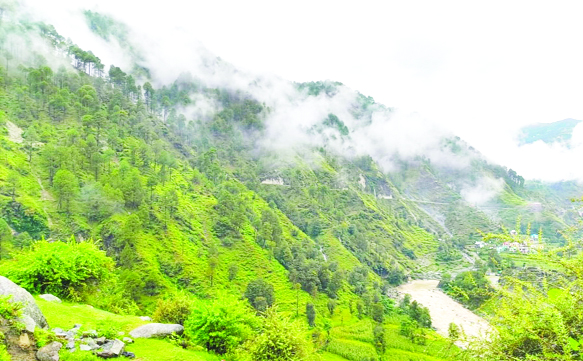
Himalayan ecology is a highly sensitive and fragile ecology. All the stakeholders should get involved in threadbare discussion at the initial stage of any major proposed project in this area, be it construction of roads, mining, or hydroelectric power projects. Expansion of agricultural land at the cost of forest land should not be allowed at any cost. Overexploitation of forest resources and overgrazing of grassland or pastures beyond carrying capacity should be stopped.
No doubt technology has made life comfortable largely by the invention of new sophisticated gadgets and items, but their usage and application need to be executed wisely by us. We need to use them only if required and be wise enough while selecting them, whether they are useful from an environmental point of view also.
Many products have certain labels to define their environmental impacts; these are eco-labels. Consumers must be aware of various such labels so that they can purchase only those products which are eco-friendly or have the least impact on the environment and are energy-efficient also. Nature is supreme, nature is vast, and nature has balancing power. This is the right time to think about nature and work towards the restoration of damage already done; otherwise, nature has balancing power in its own catastrophic way.
(The author is Assistant. Professor in environmental science, GDC Bani)
 Follow our WhatsApp channel
